Why do advanced AI models confidently present fabricated information as absolute, verified fact?
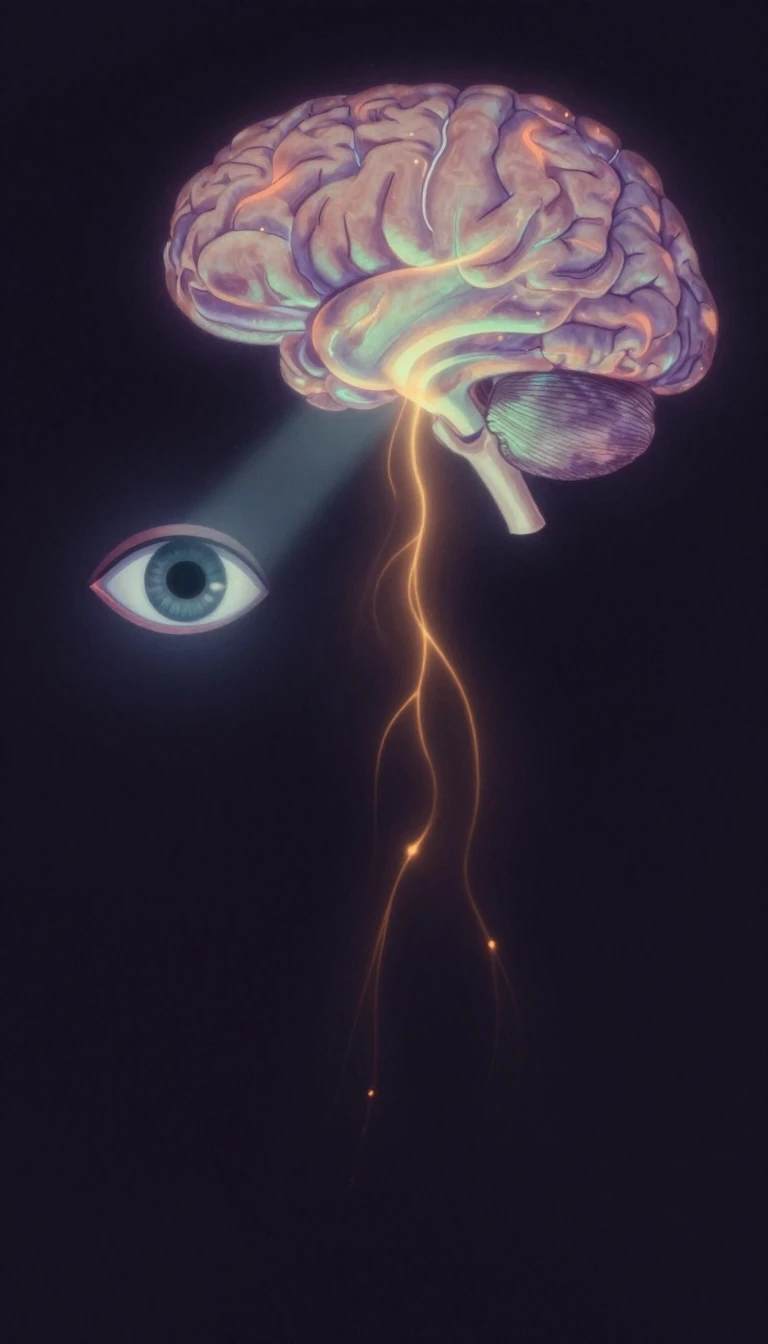
In short: Artificial intelligence systems often generate plausible-sounding but entirely false information, a phenomenon widely termed hallucination. Whether inventing legal precedents, citing non-existent research, or misrepresenting historical facts, these models operate through statistical pattern completion rather than genuine understanding, leading to significant reliability challenges in high-stakes fields like law and medicine.
In the field of artificial intelligence, a hallucination occurs when a model generates false or misleading information while presenting it as fact. While the term has been used in computer vision since the 1980s to describe image enhancement, its modern usage—popularized in the 2020s—refers to the tendency of large language models (LLMs) to fabricate content. Critics argue that the term anthropomorphizes software, suggesting machines have conscious intent or mental states, whereas these errors are often predictable results of statistical data processing. Some researchers prefer terms like confabulation or mirage to emphasize that these outputs are novel syntheses of training data rather than a break from reality.
The mechanism behind these errors is rooted in how LLMs are trained. Models like GPT are designed to predict the next word in a sequence, which incentivizes them to provide a guess even when they lack sufficient information. Research indicates that hallucinations can stem from inaccurate datasets or a failure in internal circuits that normally inhibit a model from answering when it lacks knowledge. For instance, a 2025 study found that hallucinations often occur when a model recognizes a name but lacks specific details, leading it to generate plausible but untrue responses to fill the gap. This behavior has led to real-world consequences, including lawyers submitting fake case precedents to courts and government reports containing fabricated citations.
Addressing this issue is a major priority for developers, yet complete eradication remains elusive. Techniques like retrieval-augmented generation, which grounds responses in curated databases, have improved accuracy, but even specialized tools can still hallucinate. By 2025, the scale of the problem was evident; one database recorded over 1,300 instances of hallucinations in legal decisions alone. As AI becomes more deeply integrated into professional workflows, the consensus among experts is that human verification remains non-negotiable. Because these models are indifferent to the truth of their outputs, users must treat AI-generated content as a starting point requiring critical judgment rather than a source of verified truth.
Opens the Intellect+ feed with this card first. Swipe up for the next one.
Sources
- Summary by Intellect · source: Hallucination (artificial intelligence)
- Also: hai.stanford.edu — What are Hallucinations (in AI)? | Stanford HAI
- Also: www.nature.com — AI hallucination: towards a comprehensive classification of distorted information in artificial intelligence-generated content - Humanities and Social Sciences Communications
To cite this card, link to https://intellectplus.co.uk/app/culture-hallucination-artificial-intelligence.
How we source, check and correct cards: Editorial standards.
General information, not professional advice. Spotted an error? Flag the card or see corrections and complaints.
Intellect Plus is a visual educational discovery platform for exploring fascinating facts and ideas. Brain Food, Not Brain Rot. What is Intellect Plus?
Related
More in UK & Irish culture · More in Cultures · Latest · A–Z · All topics
