How a scientific blind date inspired a cinematic epic about humanity's survival
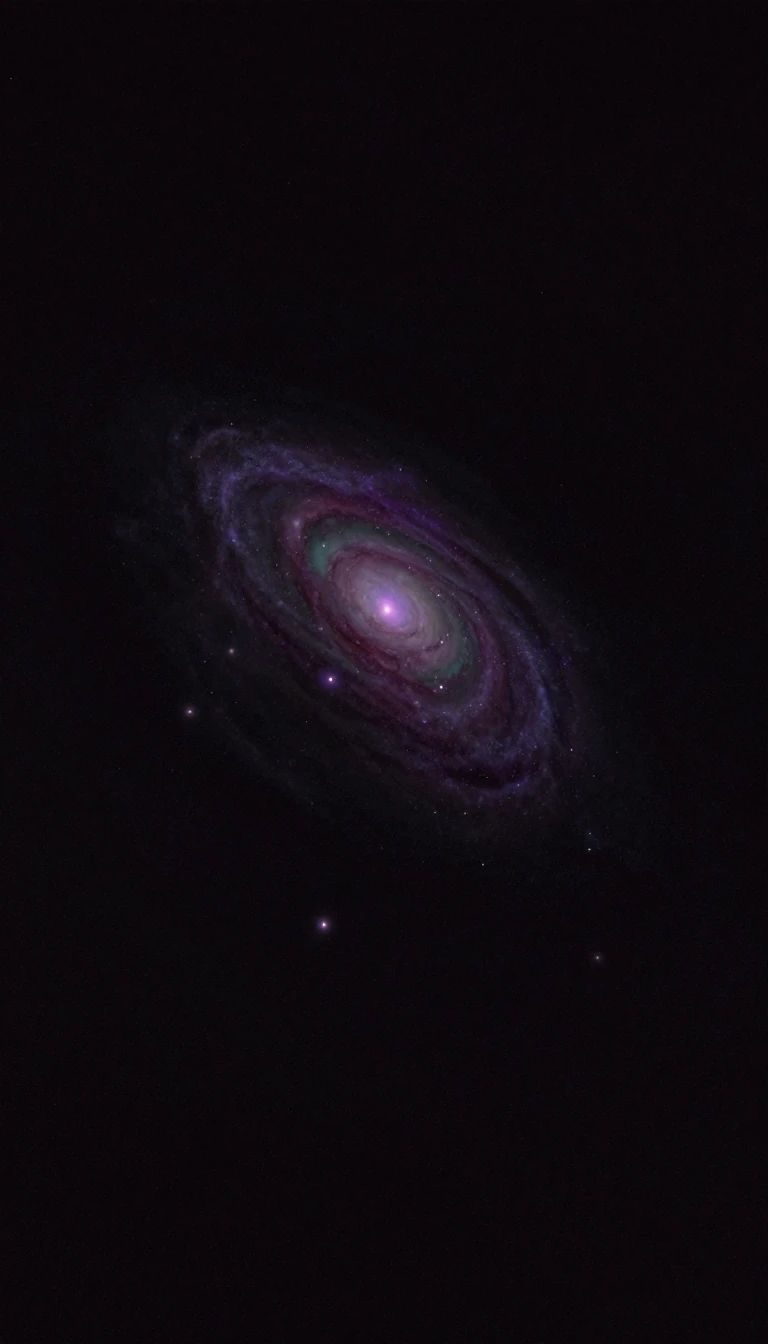
In short: Before it was a blockbuster, Interstellar began as a treatment by a producer and a theoretical physicist. Born from a chance meeting arranged by Carl Sagan, this project transformed from a Spielberg-led concept into a visually stunning exploration of gravity, time dilation, and the desperate search for a new home.
The origins of Interstellar trace back to 2006, rooted in a collaboration between producer Lynda Obst and theoretical physicist Kip Thorne. Their partnership was famously facilitated by Carl Sagan, who had set the two on a blind date. Working from an eight-page treatment, they envisioned a scenario where the universe's most exotic events suddenly became accessible to humans, a concept that originally attracted Steven Spielberg to direct.
When the project shifted to Christopher Nolan, the narrative expanded into a dystopian future. Drawing inspiration from the 1930s Dust Bowl, the film depicts an Earth ravaged by widespread crop blights and catastrophic dust storms. To achieve authentic scale, production designer Nathan Crowley planted 500 acres of corn specifically to be destroyed during the apocalyptic sequences, while large fans were used to blow synthetic cellulose dust through the air in locations like Fort Macleod.
The film's scientific depth was anchored by Thorne, who served as an executive producer and scientific consultant. His involvement ensured that complex phenomena, such as the gravitational effects of the black hole Gargantua, were grounded in physics. This commitment to realism extended to the cinematography; Hoyte van Hoytema utilized 35 mm Panavision anamorphic format and IMAX 70 mm, even installing cameras in the nose cone of a Learjet to capture the vastness of space.
Despite its massive $681 million initial worldwide gross, the film's production was marked by extreme secrecy. To protect the script, Nolan filmed under the pseudonym 'Flora's Letter,' named after one of his children. The resulting epic, which won an Academy Award for Best Visual Effects, remains a landmark of modern science fiction, blending practical effects with profound questions about time and human connection.
Opens the Intellect+ feed with this card first. Swipe up for the next one.
Sources
- Summary by Intellect · source: Interstellar (film)
To cite this card, link to https://intellectplus.co.uk/app/culture-interstellar-film.
How we source, check and correct cards: Editorial standards.
General information, not professional advice. Spotted an error? Flag the card or see corrections and complaints.
Intellect Plus is a visual educational discovery platform for exploring fascinating facts and ideas. Brain Food, Not Brain Rot. What is Intellect Plus?
Related
More in UK & Irish culture · More in Cultures · Latest · A–Z · All topics
