Size is a matter of perspective when defining the planet's most massive living entities.
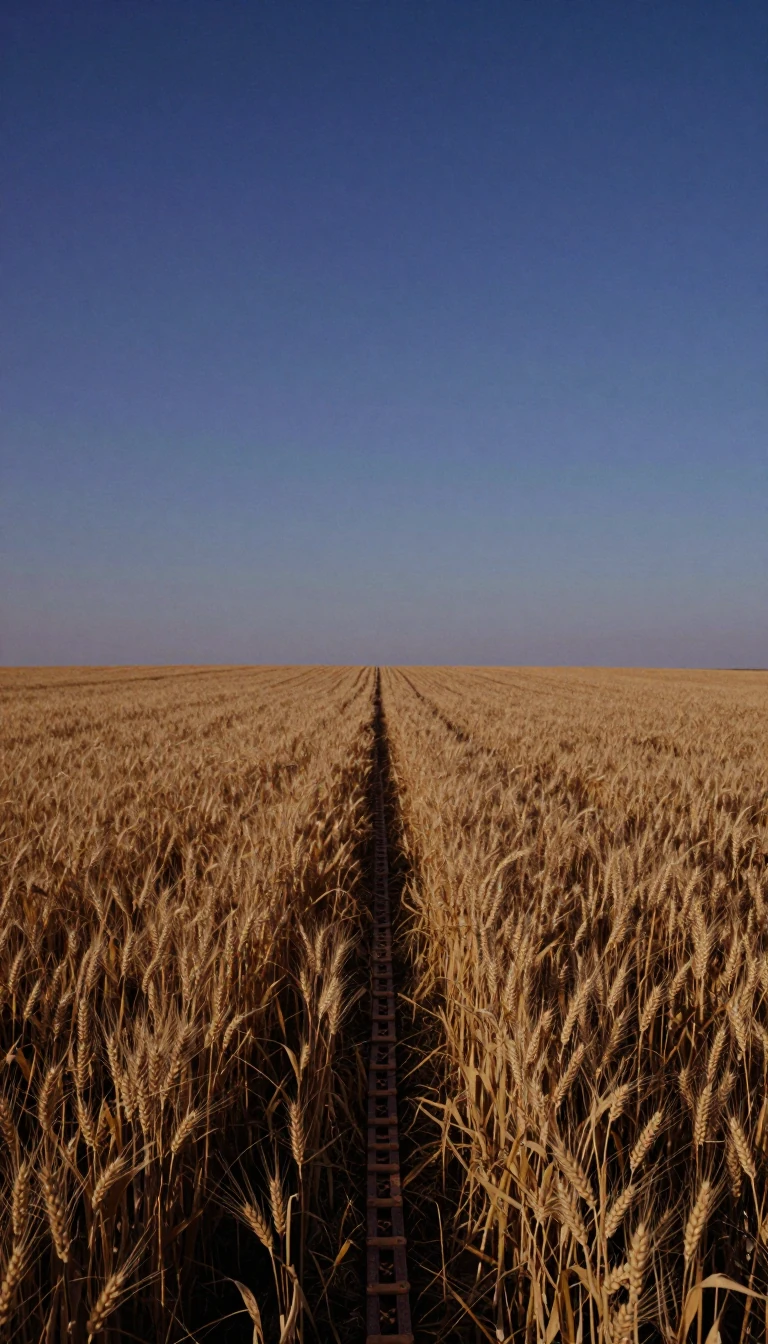
In short: Defining the largest organism depends on how you measure: mass, area, or volume. While blue whales dominate the animal kingdom, the true giants are often clonal colonies or hidden fungal networks. From microscopic bacteria visible to the naked eye to seagrass meadows spanning miles, nature defies simple categorization.
Determining the world's largest organism is complex because biology offers many metrics. While the blue whale is the most massive animal to ever exist, land-based life often takes a different form. Clonal colonies, where genetically identical individuals remain physically connected, can sprawl across vast territories. Pando, a quaking aspen colony in Utah, is a primary example of mass-based dominance, while the seagrass Posidonia australis in Australia covers an astounding 200 square kilometers, far exceeding Pando in both area and potential mass.
Fungi also reach staggering proportions. In Oregon, a single honey fungus colony, Armillaria ostoyae, occupies nearly 9 square kilometers. Scientists estimate this organism is 2,400 years old, though it remains debated whether the entire mycelial network is truly a single, connected entity. Meanwhile, the largest individual fruiting bodies—the mushrooms we actually see—are produced by species like Phellinus ellipsoideus, which can weigh up to 500 kilograms, dwarfing the more familiar, smaller mushrooms found in forests.
At the microscopic scale, the boundaries of size are equally surprising. The bacterium Thiomargarita magnifica can reach 2 centimeters in length, making it visible without a microscope and roughly 5,000 times larger than typical bacteria. Similarly, the virus Megaklothovirus horridgei, discovered in 2018, is large enough to be seen under light microscopy. These discoveries challenge our understanding of how small organisms can grow, proving that the title of 'largest' is constantly being redefined by new scientific observation and genetic analysis.
Ultimately, these records are rarely static. Whether it is the ancient, 100,000-year-old Posidonia oceanica in the Mediterranean or the giant kelp of the Pacific, the diversity of life forms ensures that no single organism holds every title. As researchers continue to map genetic connections and explore remote environments, our list of Earth's titans will likely continue to evolve.
Opens the Intellect+ feed with this card first. Swipe up for the next one.
Sources
- Summary by Intellect · source: Largest organisms
To cite this card, link to https://intellectplus.co.uk/app/culture-largest-organisms.
How we source, check and correct cards: Editorial standards.
General information, not professional advice. Spotted an error? Flag the card or see corrections and complaints.
Intellect Plus is a visual educational discovery platform for exploring fascinating facts and ideas. Brain Food, Not Brain Rot. What is Intellect Plus?
Related
More in US culture · More in Cultures · Latest · A–Z · All topics
