Pahlavi: An ancient writing system where words were written in Aramaic but read in Persian.
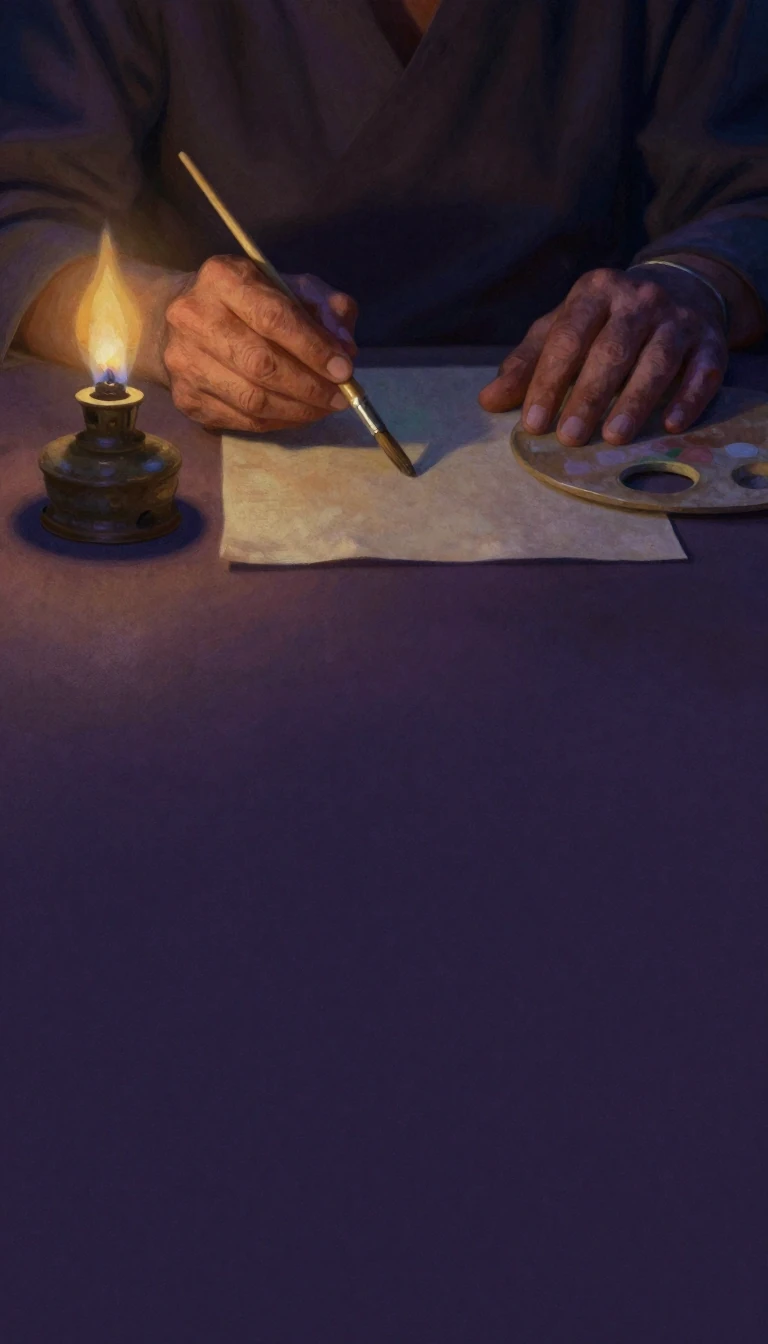
In short: Pahlavi was not a language, but a complex writing system used for Middle Iranian dialects. It relied on huzwārišn—Aramaic words used as logograms—meaning a scribe might write the Aramaic word for dog while the reader understood the Persian word for it. It was a system of profound, intentional ambiguity.
The Pahlavi script originated from Imperial Aramaic, adopted by the Parthian Arsacids as a chancellery language. Because it was an exclusively written system applied to various Middle Iranian languages, it functioned as a distinct entity rather than a language itself. Its defining feature was the use of huzwārišn, or archaisms, where Aramaic vocabulary served as symbols for Iranian concepts. For instance, the Aramaic word for bread, ⟨LḤMʾ⟩, was used to represent the Persian word nān. This practice likely evolved from the administrative habits of the Achaemenid Empire, similar to how Japanese adapted Chinese characters.
The system existed in several forms, most notably Inscriptional Pahlavi and Book Pahlavi. Inscriptional Pahlavi, used by Sasanian emperors in the 3rd to 6th centuries, featured 19 non-joining characters. Book Pahlavi, the most common variety, was a cursive script with only 13 graphemes representing 24 sounds. This extreme reduction in characters led to significant orthographic coalescence, where different letters became indistinguishable. Consequently, reading Pahlavi required heavy reliance on context; a single written form could theoretically represent multiple, entirely different words. This ambiguity was so severe that religious texts were sometimes transcribed into the phonetically clearer Avestan alphabet, a system known as Pazand.
Pahlavi literature, which includes the 6th- or 7th-century Pahlavi Psalter found in China, remained in use by Zoroastrian clergy long after the Islamic conquest and the adoption of the Arabic script in the 9th century. While the script was deciphered by Antoine Isaac Silvestre de Sacy between 1787 and 1791, it remains a challenge for modern computing. While Inscriptional Pahlavi, Inscriptional Parthian, and Psalter Pahlavi were added to the Unicode Standard between 2009 and 2014, the more common Book Pahlavi remains unsupported as of March 2026, leaving much of this ancient literary heritage locked in its original, ambiguous form.
Opens the Intellect+ feed with this card first. Swipe up for the next one.
Sources
- Summary by Intellect · source: Pahlavi scripts
To cite this card, link to https://intellectplus.co.uk/app/culture-pahlavi-scripts.
How we source, check and correct cards: Editorial standards.
General information, not professional advice. Spotted an error? Flag the card or see corrections and complaints.
Intellect Plus is a visual educational discovery platform for exploring fascinating facts and ideas. Brain Food, Not Brain Rot. What is Intellect Plus?
Related
More in Language · More in Cultures · Latest · A–Z · All topics
