The ancient art of drying meat into a spicy, mosaic-patterned sausage
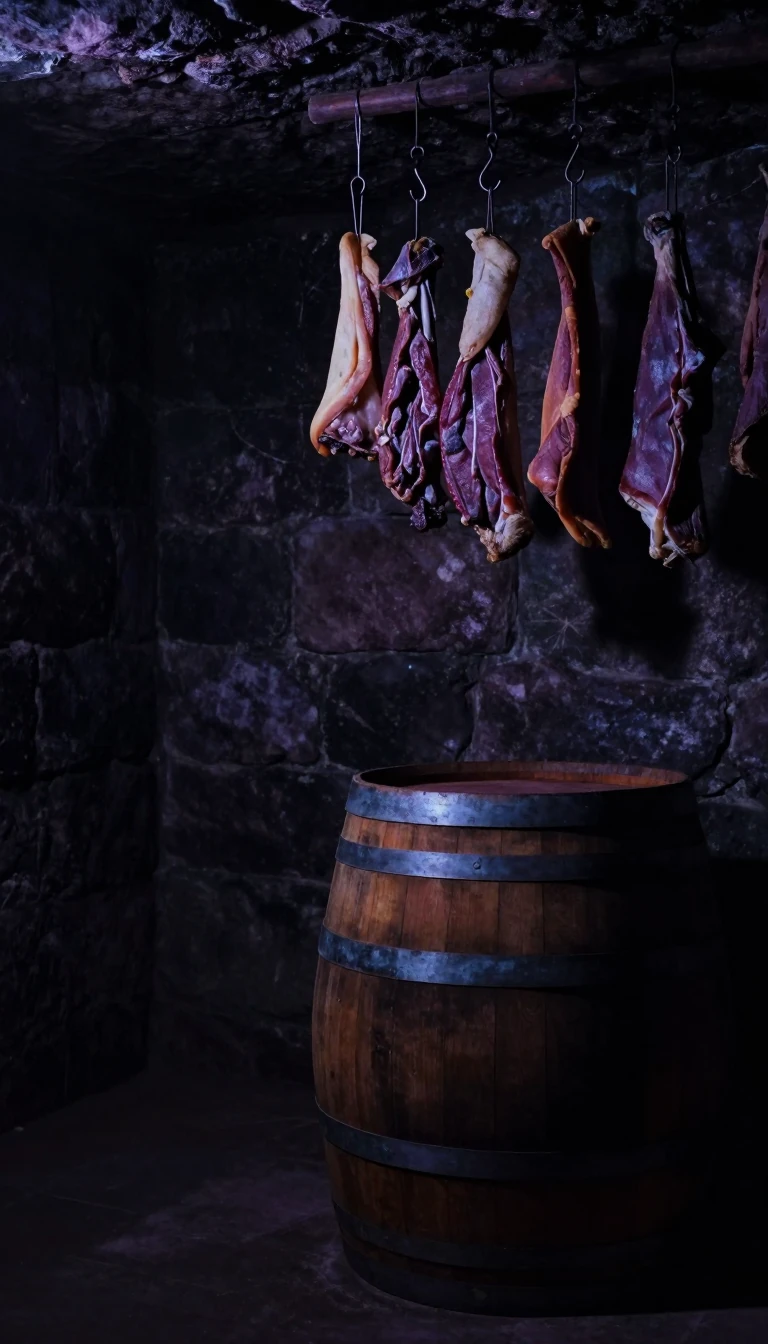
In short: Long before modern refrigeration, nomadic traditions relied on fermentation and drying to preserve protein. From the 11th-century Turkic manuscripts to modern Turkish breakfasts, the story of sujuk is a masterclass in culinary engineering and the science of moisture control.
Sujuk, also known as sucuk or sujuq, is a fermented, spicy sausage with deep roots in Turkic meat-preservation traditions. Its linguistic history traces back to the Old Turkic term 'suğut,' which was documented by Mahmud al-Kashgari in his 11th-century work, Dīwān Lughāt al-Turk. The name itself is derived from the Turkic root '-suɣur,' meaning to drain or dry, with a diminutive suffix. While some believe it originated in the Armenian world, it became a cornerstone of Ottoman and Turkish cuisine, spreading across the Balkans, the Middle East, and Central Asia.
The production of sujuk is a precise biological process. It begins with grinding beef or lamb—primarily beef in Turkey—through 14–16mm plates. The meat is then mixed with curing salt containing 0.5% sodium nitrite and stored at 8–12 °C for 8–16 hours. A defining characteristic is its mosaic structure, created when the meat is re-ground through much finer 1.6–5mm plates after being mixed with fats like beef tallow or tail fat. This intricate texture is a hallmark of high-quality sausage.
The transformation relies on a controlled fermentation and ripening stage. Initially, the sausages are kept in high humidity at 22–23 °C. Over several days, temperature and relative humidity are gradually lowered to 18 °C and 88% RH, driving the pH down to a target of 4.9–5.0. The process concludes with a post-fermentation drying stage, which continues until the moisture content drops below 40%. This careful management of salt, temperature, and air ensures a shelf-stable, nutrient-dense product that can be enjoyed pan-fried in eggs or added to stews.
Opens the Intellect+ feed with this card first. Swipe up for the next one.
Sources
- Summary by Intellect · source: Sujuk
To cite this card, link to https://intellectplus.co.uk/app/culture-sujuk.
How we source, check and correct cards: Editorial standards.
General information, not professional advice. Spotted an error? Flag the card or see corrections and complaints.
Intellect Plus is a visual educational discovery platform for exploring fascinating facts and ideas. Brain Food, Not Brain Rot. What is Intellect Plus?
Related
More in Traditions & customs · More in Cultures · Latest · A–Z · All topics
