Villa La Rotonda: A Renaissance Masterpiece Designed to Harmonize Symmetry with a Sloping Landscape
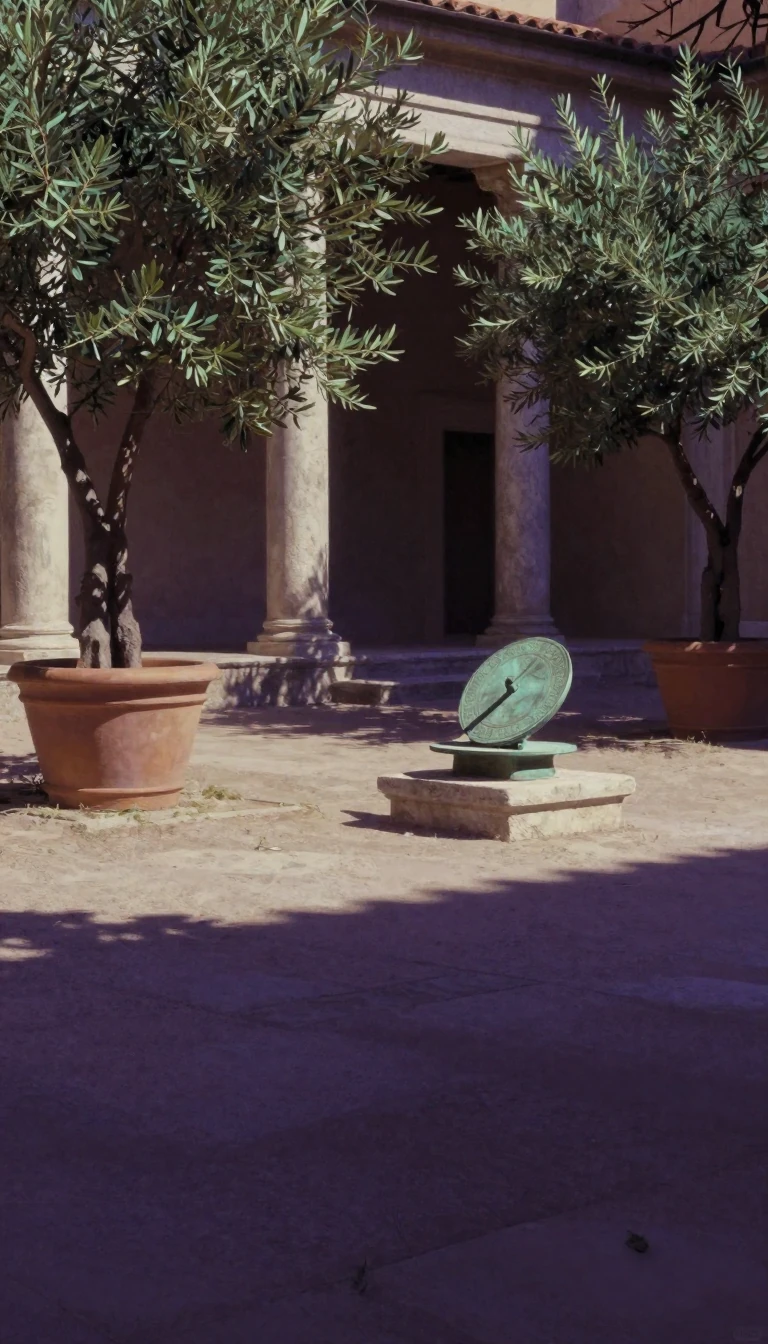
In short: Andrea Palladio’s iconic Villa La Rotonda is a triumph of mathematical precision, yet its perfect symmetry is a clever illusion. By subtly adjusting its facades to match the surrounding topography, Palladio created a building that appears perfectly balanced while seamlessly integrating into the natural theater of the Venetian countryside.
Begun in 1567 for the nobleman Paolo Almerico, Villa La Rotonda—also known as Villa Capra—defied the conventions of its time. While most villas were designed as functional farmhouses, Palladio conceived this as a suburban palazzo, a temple-like structure intended for leisure rather than agriculture. Its design is defined by a square plan with four identical porticos, each graced by Ionic columns and statues of classical deities, all centered around a soaring, domed circular hall.
The villa's orientation is a masterclass in solar design. Rotated 45 degrees from the cardinal points, the building ensures that its south and west facades receive equal sunlight throughout the day. This precision extends to the interior, where rooms are proportioned according to the strict architectural rules Palladio published in his 1570 work, I quattro libri dell'architettura. Though Palladio died in 1580, the project was completed by Vincenzo Scamozzi, who modified the original dome design to include an oculus inspired by the Roman Pantheon.
What makes the villa truly remarkable is its relationship with the landscape. While it appears perfectly symmetrical, the structure incorporates subtle variations in its steps and retaining walls to accommodate the sloping hill on which it sits. This deliberate asymmetry allows the building to harmonize with the Bacchiglione river and the surrounding hills, creating a panoramic theater of nature. Since its designation as a UNESCO World Heritage Site in 1994, the villa has remained a global architectural touchstone, influencing structures ranging from Thomas Jefferson’s Monticello to palaces in Poland and Ukraine.
Opens the Intellect+ feed with this card first. Swipe up for the next one.
Sources
- Summary by Intellect · source: Villa La Rotonda
To cite this card, link to https://intellectplus.co.uk/app/design-villa-la-rotonda.
How we source, check and correct cards: Editorial standards.
General information, not professional advice. Spotted an error? Flag the card or see corrections and complaints.
Intellect Plus is a visual educational discovery platform for exploring fascinating facts and ideas. Brain Food, Not Brain Rot. What is Intellect Plus?
Related
More in Architecture · More in Design · Latest · A–Z · All topics
