Federico Fellini’s 1987 masterpiece blurs the lines between documentary, autobiography, and pure cinematic fiction.
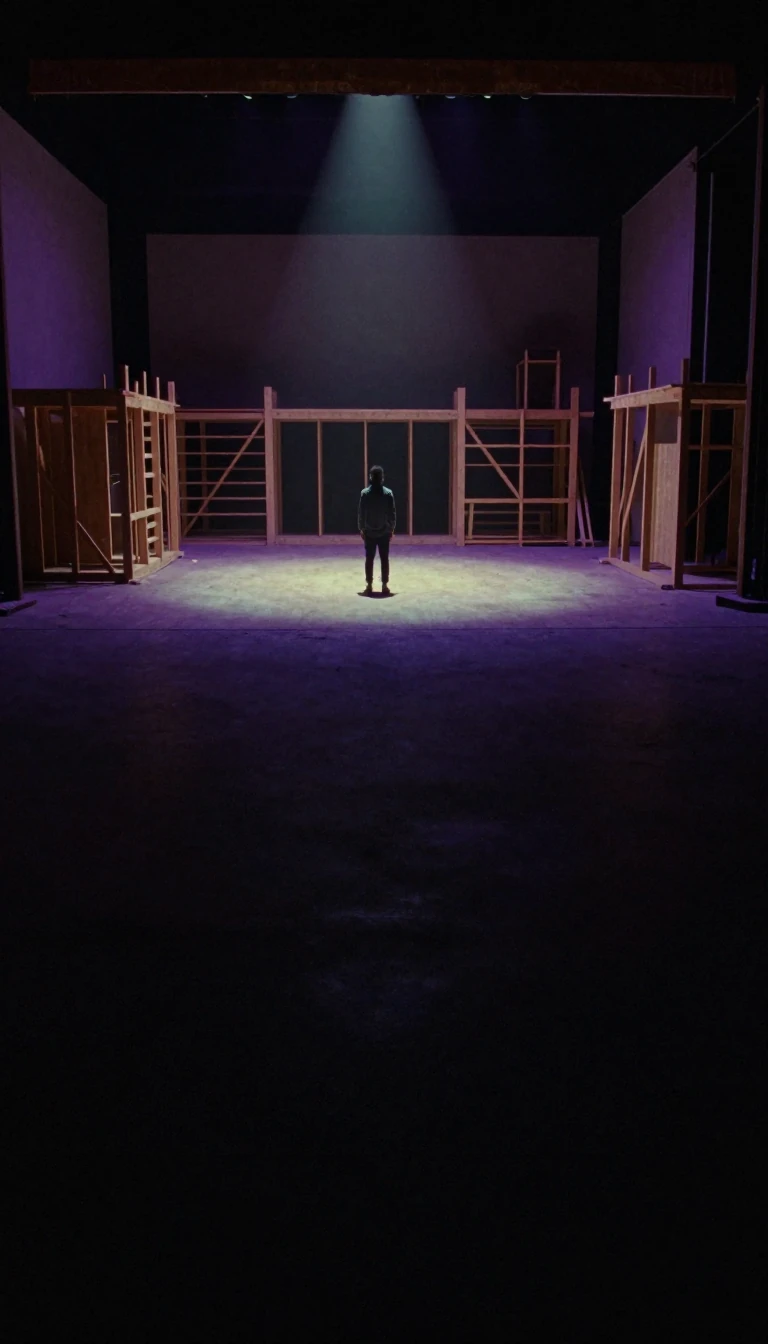
In short: In Intervista, Federico Fellini invites a Japanese television crew to document his creative process at Cinecittà. What begins as a straightforward interview quickly dissolves into a meta-narrative, where the director’s past, his present film-in-progress, and his own memories collide to reveal the true, chaotic nature of filmmaking.
Released in 1987, Intervista serves as a complex, self-referential portrait of Fellini’s career. The film operates as a nested structure, weaving together four distinct layers: a documentary-style news report, a dramatized autobiography of Fellini’s first visit to Cinecittà in 1938, the production of a fictitious adaptation of Franz Kafka’s Amerika, and the overarching film itself. By allowing these realities to intermingle, Fellini challenges the viewer to distinguish between genuine behind-the-scenes footage and carefully constructed illusions.
The narrative is driven by the director’s attempt to manage a production that is constantly on the verge of collapse. As Fellini and his assistant director, Maurizio Mein, scramble to cast actors and build sets, the film captures surreal moments, such as Marcello Mastroianni appearing in a commercial as Mandrake the Magician or a visit to Anita Ekberg’s home where she and Mastroianni revisit their iconic scenes from La Dolce Vita. These vignettes are punctuated by the presence of real-life figures, including American filmmaker David Lynch, who visited the set during production.
Intervista was met with significant critical success, earning universal acclaim from critics and securing the 40th Anniversary Prize at the 1987 Cannes Film Festival, as well as the Golden Prize at the 15th Moscow International Film Festival. Despite its meta-fictional playfulness, the film remains a poignant reflection on the passage of time and the act of creation. As Fellini notes in the film’s final voiceover, he ironically offers his producers a ray of light to conclude a project that they feared was too gloomy, cementing his legacy as a master of cinematic artifice.
Opens the Intellect+ feed with this card first. Swipe up for the next one.
Sources
- Summary by Intellect · source: Intervista
- Also: Wikidata — Intervista · CC0
To cite this card, link to https://intellectplus.co.uk/app/entertainment-intervista.
How we source, check and correct cards: Editorial standards.
General information, not professional advice. Spotted an error? Flag the card or see corrections and complaints.
Intellect Plus is a visual educational discovery platform for exploring fascinating facts and ideas. Brain Food, Not Brain Rot. What is Intellect Plus?
Related
More in Films · More in Entertainment · Latest · A–Z · All topics
