The Moroccan tagine is a masterclass in engineering for water-scarce environments
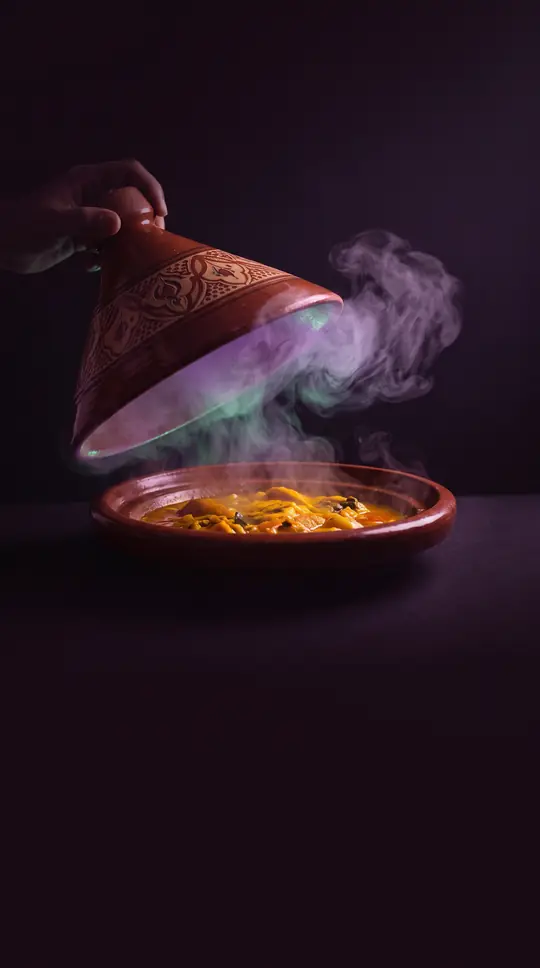
In short: The iconic conical lid of a Moroccan tagine is not just for show. It is a precise piece of culinary engineering designed to trap steam and recycle condensation. This allows for slow-braising meats and vegetables with minimal water, a vital innovation for regions where water supplies have historically been limited.
The tagine, named after the earthenware vessel in which it is prepared, is a slow-cooked stew central to North African cuisine. The pot itself consists of a shallow, circular base and a tall, cone-shaped cover. This design facilitates a unique cooking process: as the ingredients heat, steam rises into the lid, condenses, and drips back down into the dish. This cycle allows the food to braise and steam simultaneously using very little liquid. Food author Paula Wolfert describes this as a magical process that effectively braises, steams, and bakes ingredients within a single vessel.
The etymology of the word traces back to the Ancient Greek 'tágēnon', meaning frying pan, reflecting a long history of Mediterranean earthenware cooking. While the general concept of a clay cooking vessel is widespread, the specific cone-shaped lid is attributed to Tafraout, Morocco. Traditionally, these pots were heated over charcoal using a clay brazier called a kanun or majmar. Because the ceramic is sensitive to thermal shock, modern cooks often use a diffuser to distribute heat evenly on gas or electric stoves, preventing the pot from cracking.
Beyond its technical utility, the tagine is a cornerstone of diverse cultural traditions. It is a staple of Sephardic cuisine, prepared by communities ranging from Moroccan and Tunisian Jews to those in the United States and Israel. It is frequently served at Shabbat dinners and holidays like Rosh Hashanah, often accompanied by bread or couscous. Whether featuring lamb with prunes or vegetable medleys with carrots and zucchini, the dish highlights a sophisticated balance of spices like ginger, saffron, and cinnamon, often pairing sweet and savory elements to create complex, layered flavors.
Opens the Intellect+ feed with this card first. Swipe up for the next one.
Sources
- Summary by Intellect · source: Tagine
To cite this card, link to https://intellectplus.co.uk/app/food-tagine.
How we source, check and correct cards: Editorial standards.
General information, not professional advice. Spotted an error? Flag the card or see corrections and complaints.
Intellect Plus is a visual educational discovery platform for exploring fascinating facts and ideas. Brain Food, Not Brain Rot. What is Intellect Plus?
Related
More in Cooking, food and drink · More in Food & Drink · Latest · A–Z · All topics
