The 40 Hz rhythm that may bind your conscious experience together
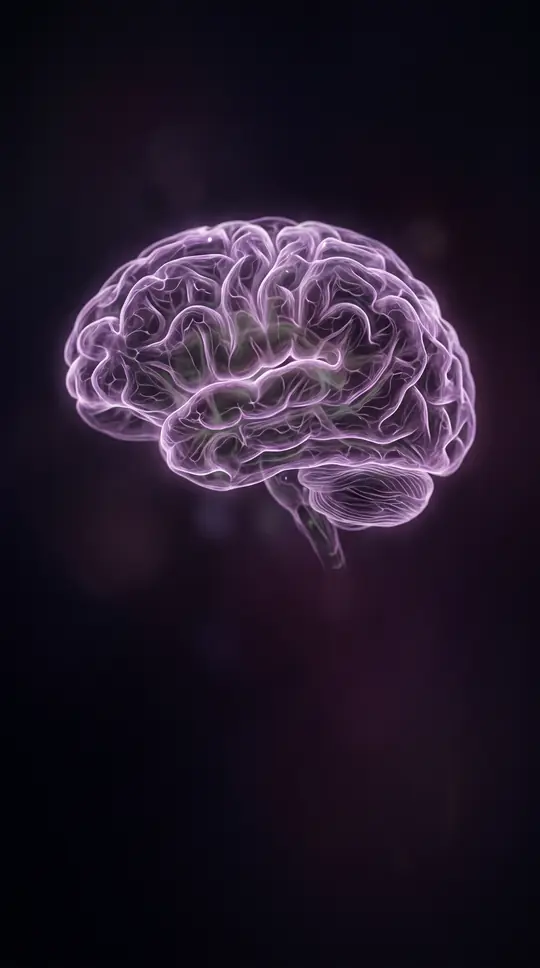
In short: Could a specific neural frequency be the glue of your consciousness? Scientists are investigating 40 Hz gamma waves as the mechanism that synchronizes distant brain regions, potentially binding separate sensory inputs into a single, unified perception. It is the difference between seeing a collection of colors and experiencing a coherent object.
Gamma waves are neural oscillations occurring between 30 and 100 Hz, with the 40 Hz frequency serving as a primary point of interest. These rhythms are associated with large-scale brain network activity and high-level cognitive phenomena, including working memory, attention, and perceptual grouping. Research suggests that gamma oscillations reflect feedforward connections between distinct brain regions, contrasting with the feedback loops associated with alpha waves.
A leading hypothesis, the thalamocortical dialogue, proposes that consciousness in awake states and dreaming arises from 40 Hz oscillations throughout the cortical mantle. In this model, specific loops provide the content of cognition, while a nonspecific loop provides the temporal binding required for the unity of experience. Some researchers suggest a mechanism where a wave originates in the thalamus and sweeps the brain 40 times per second, drawing different neuronal circuits into synchrony to bring a precept into the attentional foreground.
The role of gamma waves is central to understanding various neurological conditions. In schizophrenia, decreased gamma amplitude and synchrony are linked to deficits in visual and Gestalt perception. Conversely, altered gamma activity is observed in Alzheimer's disease, where it may serve as a biomarker. Interestingly, 40 Hz stimulation—via light, sound, or tactile stimuli—has shown potential in reducing amyloid beta load in mouse models and providing mild cognitive improvements in human patients. Even in extreme states, such as cardiac arrest, a transient surge of synchronized gamma oscillations has been observed in both rats and humans.
While the biological mechanisms remain partially unknown, the plasticity of gamma activity is evident in meditation. Long-term practitioners, such as Tibetan Buddhist monks, exhibit increased gamma-band activity at baseline and significant synchrony during practice. This suggests that through intensive training, the brain can be modulated to enhance focus and stress management, potentially underpinning the psychological benefits of contemplative states.
Opens the Intellect+ feed with this card first. Swipe up for the next one.
Sources
- Summary by Intellect · source: Gamma wave
- Also: Molecular neurodegeneration — Mystery of gamma wave stimulation in brain disorders. · CC BY
To cite this card, link to https://intellectplus.co.uk/app/health-gamma-wave.
How we source, check and correct cards: Editorial standards.
General information, not professional advice. Spotted an error? Flag the card or see corrections and complaints.
Intellect Plus is a visual educational discovery platform for exploring fascinating facts and ideas. Brain Food, Not Brain Rot. What is Intellect Plus?
Related
More in Sleep · More in Health · Latest · A–Z · All topics
