Your legs contain a second heart that pumps blood against the force of gravity.
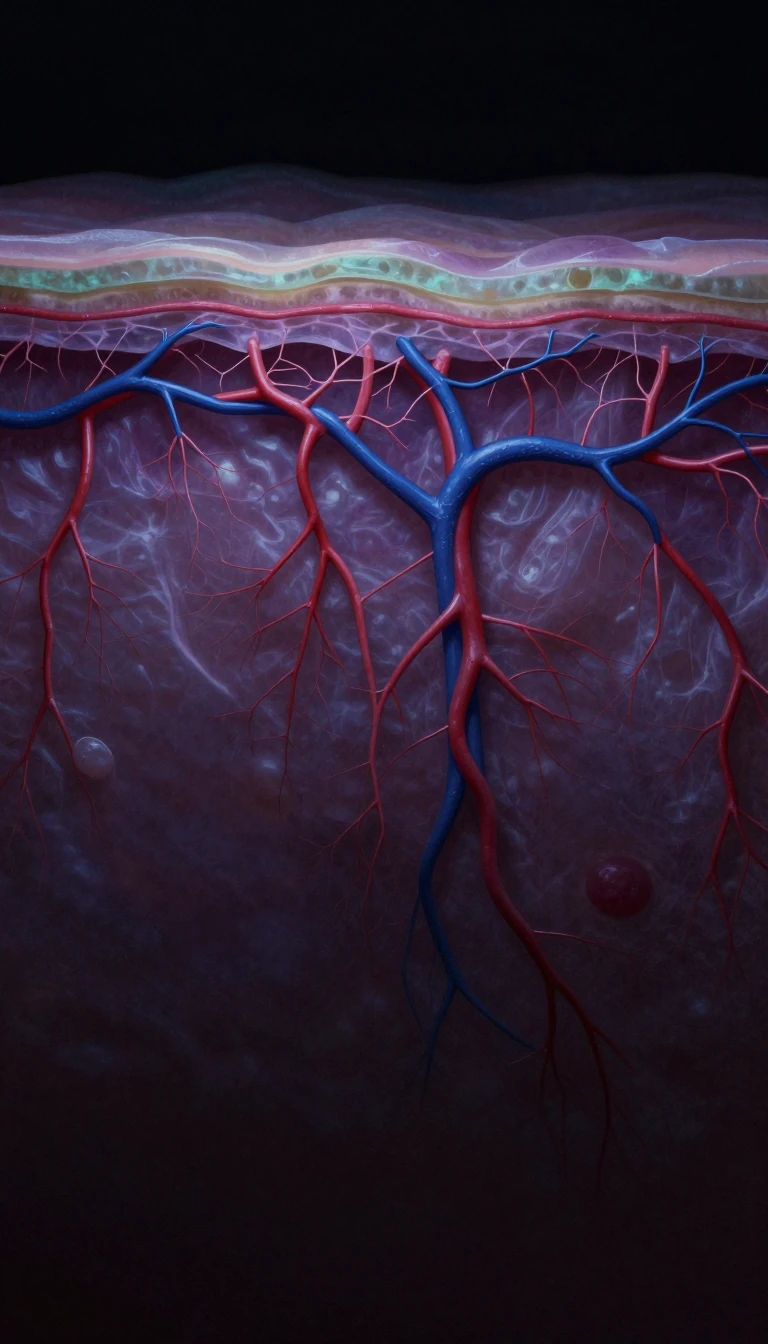
In short: While your chest heart beats constantly, your lower legs rely on a secondary pump system to return oxygen-poor blood to your heart. Every time you take a step, your calf muscles squeeze deep veins, forcing blood upward. This mechanical process is essential for maintaining circulation throughout your entire body.
The human circulatory system relies on a complex network of veins to return oxygen-depleted blood to the heart. Unlike arteries, which carry oxygen-rich blood under high pressure, veins operate at lower pressures and feature thinner, less muscular walls. To ensure blood flows in the correct direction, many veins are equipped with one-way valves that prevent backflow.
Deep veins, located within muscles and along bones, perform the heavy lifting of circulation, particularly in the legs where they handle about 90% of the blood returning to the heart. Because these vessels must defy gravity, they rely on external forces to maintain flow. Breathing creates a suction effect, but the most critical mechanism is the contraction of leg muscles, often referred to as the peripheral or second heart.
This second heart functions as a dynamic pump that activates with movement. When you place your foot on the ground, your body weight compresses veins in the foot, pushing blood toward the calf. As you lift your heel, calf muscles squeeze the deep veins, propelling blood further toward the thighs. This system is highly responsive; the pumping pace automatically adjusts to your activity level, whether you are walking or running, ensuring that tissues and organs receive the nutrients required for optimal function.
While deep veins are surrounded by muscle, superficial veins lie just beneath the skin. These smaller vessels collect blood from outer tissues and transport it to the deep system via perforating veins. These connecting veins are also equipped with valves that close during muscle contraction to prevent blood from leaking backward into the superficial network. If these valves are damaged, it can lead to conditions like varicose veins.
Opens the Intellect+ feed with this card first. Swipe up for the next one.
Sources
- Summary by Intellect · source: Veins: Anatomy and Function
- Also: Primary vein
To cite this card, link to https://intellectplus.co.uk/app/health-primary-vein.
How we source, check and correct cards: Editorial standards.
General information, not professional advice. Spotted an error? Flag the card or see corrections and complaints.
Intellect Plus is a visual educational discovery platform for exploring fascinating facts and ideas. Brain Food, Not Brain Rot. What is Intellect Plus?
Related
More in Anatomy and morphology · More in Health · Latest · A–Z · All topics
