The brain's nutshell: how a tiny nucleus governs your every movement
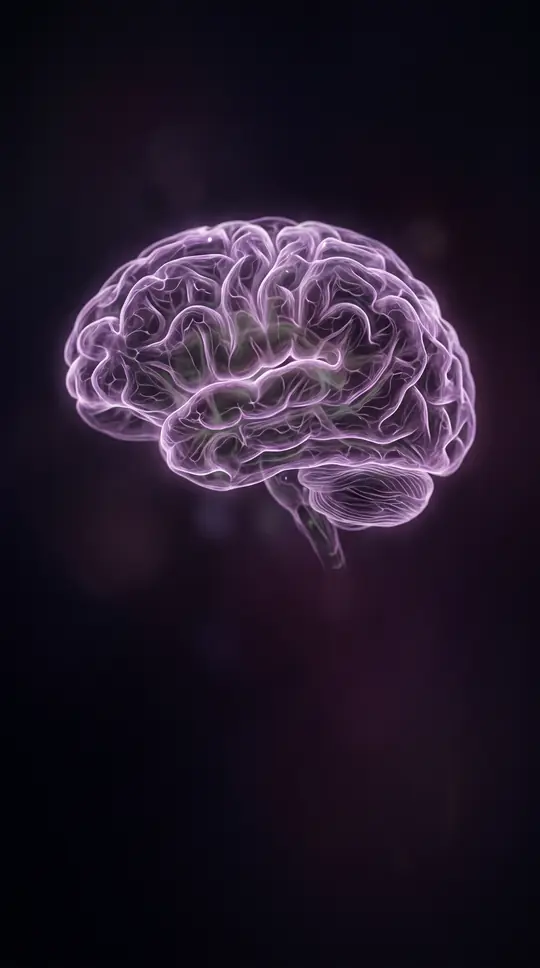
In short: Deep within your forebrain lies the putamen, a rounded structure known as the 'nutshell.' Far from being a passive passenger, this subcortical nucleus acts as a vital regulator of motor execution, learning, and even the complex emotions of contempt and disgust.
Part of the basal ganglia, the putamen works alongside the caudate nucleus to form the dorsal striatum. It serves as a critical junction in the brain's motor circuitry, receiving input from the cerebral cortex and communicating with the thalamus, globus pallidus, and substantia nigra. This complex network utilizes neurotransmitters like GABA, acetylcholine, and enkephalin to manage everything from the preparation of a movement to its actual execution. The structure is part of the lentiform nucleus when paired with the globus pallidus. It also receives excitatory signals from the thalamus's centromedian and parafascicular nuclei.
The putamen’s influence extends beyond simple motion. It is deeply involved in various forms of learning, including reinforcement and implicit learning. Research suggests that different regions of the striatum are specialized; for instance, injecting muscimol into the anterior putamen can impair the learning of new sequential movements, whereas the middle-posterior area remains unaffected. Furthermore, the putamen is implicated in the 'hate circuit,' where its activity correlates with the perception of disgust and contempt. In primates, the rostral-most portion of this area is specifically dedicated to higher-order cognitive functions. It also plays a role in the processing of pre-frontal regions related to executive functioning.
Because of its interconnectedness with the substantia nigra, the putamen is central to understanding neurodegenerative conditions. In Parkinson's disease, the loss of dopaminergic neurons in the substantia nigra pars compacta disrupts the pathways through the putamen, leading to difficulties in motor planning. Interestingly, recent studies also highlight how the putamen's role in cognitive flexibility—the ability to switch between tasks—changes as we age, with connectivity patterns between the putamen and the parietal lobe shifting significantly between young and older adults. In young adults, connectivity between the left and right putamen and the left inferior parietal lobe can predict better cognitive flexibility. However, this relationship reverses in older adults, showing how neurometabolic dynamics shift during the aging process.
Opens the Intellect+ feed with this card first. Swipe up for the next one.
Sources
- Summary by Intellect · source: Putamen
To cite this card, link to https://intellectplus.co.uk/app/health-putamen.
How we source, check and correct cards: Editorial standards.
General information, not professional advice. Spotted an error? Flag the card or see corrections and complaints.
Intellect Plus is a visual educational discovery platform for exploring fascinating facts and ideas. Brain Food, Not Brain Rot. What is Intellect Plus?
Related
More in Brain · More in Health · Latest · A–Z · All topics
