 Intellect Plus
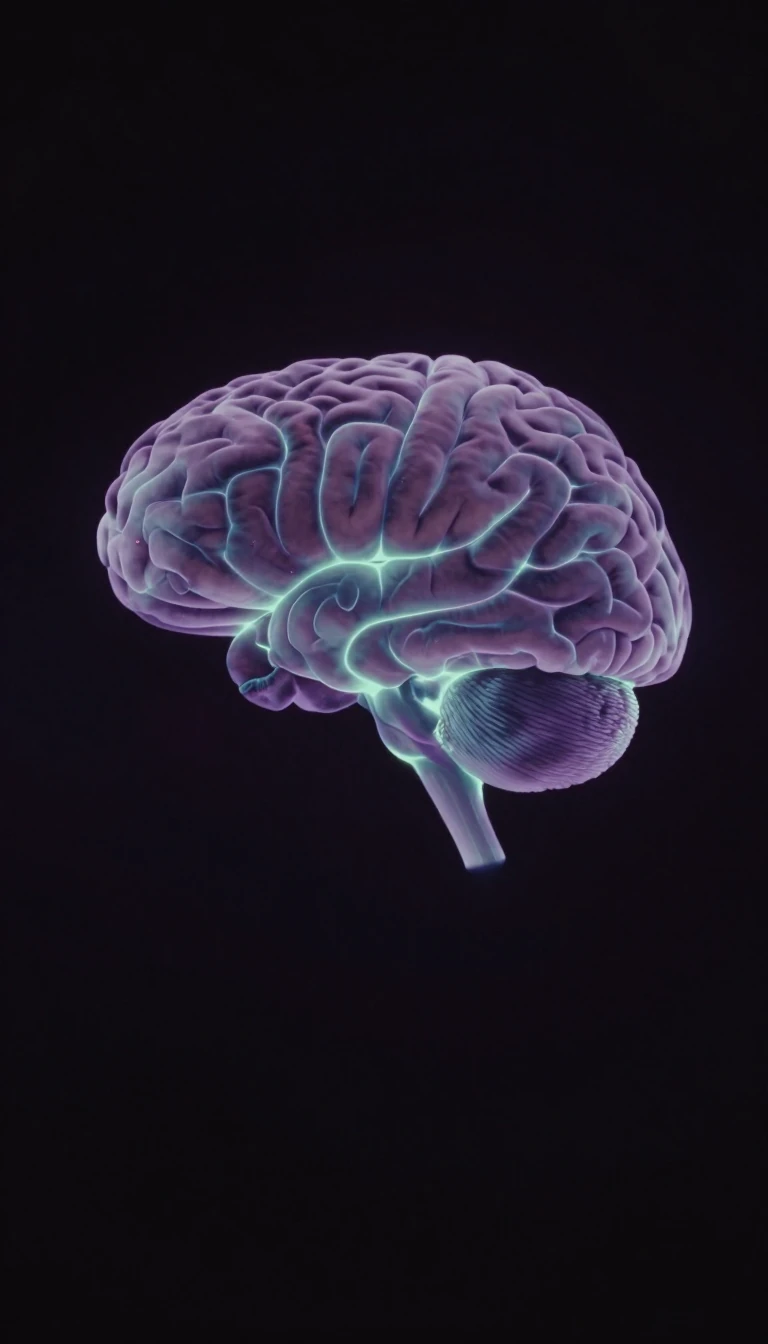
Brain
44 cards. Each one is a 40-second story with a five-minute read behind it.
 Your brain is not a static organ but a dynamic mapMost people believe the adult brain is fixed, but neuroscience reveals it remains adaptable throughout life. This video explains how you can actively use neuroplasticity to build …
- The biological foundation of behavior accounts for nearly a tenth of psychologyUnderstanding the physical architecture of the human brain is essential to understanding human behavior. This video provides a comprehensive overview of brain anatomy and function…
- The 60% fat organ that governs your entire existenceYour brain is not a muscle, but it is the most complex command center in the human body. Weighing about 3 pounds in an average adult, this intricate web of billions of neurons pro…
- Mapping the Architecture of Human Thought and EmotionThis video provides a detailed 3D anatomical breakdown of the human brain, moving from large structures to the cellular networks that drive your daily life.
- How a three-pound snarl of tissue creates your entire realityThis video uses a physical model to break down the brain's complex divisions and parts. It serves as an essential primer for understanding how biological structures translate into…
- The brain's architecture balances conscious thought with automatic survivalYour brain is a masterpiece of division. While your cerebrum handles complex reasoning and personality, other structures work silently to keep you breathing and balanced. From the…
- The psychology of the 'FOMO' feed: Why we share our dataWhy does a simple summary of your music taste turn into a global social media phenomenon? It is a masterclass in how data visualization, multi-list interfaces, and the fear of mis…
- The invisible engine driving the world's most used business softwareIt is not a standalone program, yet it automates your entire workflow. From Excel to Word, Visual Basic for Applications (VBA) acts as a hidden layer of logic, allowing different …
- The rugged 'tin can' that powered 1980s productivityIn an era of fragile electronics, one company built a computer designed like industrial test equipment. It was heavy, durable, and intentionally limited—a 'turnkey' appliance that…
 How mathematicians reshape messy data into predictable patternsIn the chaotic world of statistics, raw data often arrives with uneven variance and skewed distributions. To make sense of this noise, researchers use power transforms—a family of…
 Why we peel back the layers of others like an onionHuman connection isn't a light switch; it is a gradual process of peeling back layers. Social penetration theory explains how we move from superficial small talk to deep intimacy …
 How mathematicians predict the most extreme events in natureWhen we study the world's most intense storms or highest floods, we aren't just looking at averages. We are looking at the tails. The Generalized Extreme Value distribution provid…
 The computer that turned technophobes into office workersIn 1985, computers were expensive toys for the tech-savvy. Amstrad disrupted this by creating a machine so affordable it was marketed as a typewriter replacement. By focusing on o…
 Why modern brands are transforming into media publishing housesInstead of pushing products, leading companies are now focusing on delivering valuable, free information. From extreme sports films to personal finance guides, the goal has shifte…
- The word processor that inspired Game of Thrones is still used todayWhile modern software prioritizes visual polish, a 1970s legacy program remains the preferred tool for some of history's most famous authors. Discover how WordStar’s unique comman…
 Why some messages spread like wildfire while others vanish instantlyVirality isn't a random accident or a lucky sneeze. It is a deliberate psychological and structural phenomenon. To move from a simple post to a global phenomenon, a message must n…
 The danger of believing humans are born as blank slatesIf the human mind were truly a tabula rasa, any environment could be engineered to produce perfect citizens. But cognitive psychologist Steven Pinker argues this belief is a dange…
 Will machines eventually possess spiritual experiences and free will?Futurist Ray Kurzweil argues that as computers achieve human-level intelligence, they won't just mimic our logic—they may develop their own spiritual lives. According to his visio…
- The mathematical art of distilling infinite data into a single 'word'Imagine condensing years of complex medical records or massive streams of noisy communication into a single, compact summary without losing a drop of information. This is the powe…
 Why your sense of self is often a group projectWe often believe our identities are purely personal, but psychology suggests much of our self-worth is actually borrowed. Social Identity Theory reveals that we construct our sens…
- To survive the machine age, humans may need to become cyborgsEngineer Kevin Warwick argues that human limitations in sensorimotor abilities are being rapidly outpaced by machines. To avoid being overtaken, he suggests we must use technology…
- Why we treat our friendships like a balance sheetDo you ever wonder why you stop reaching out to a friend who never reciprocates? Social exchange theory suggests your brain is performing a silent cost-benefit analysis. It treats…
 The mental bridge: how consciousness reaches beyond itself to find meaningIs your mind a container for the world, or a bridge to it? In phenomenology, intentionality is the unique power of consciousness to be directed toward an object. It is the mechani…
- Why your friends are statistically more popular than youIt is a mathematical certainty that, on average, your friends have more friends than you do. This isn't just a social quirk; it is a structural property of networks. Because popul…
- Why your brain prefers the crowd over your own judgmentFrom financial bubbles to organic food trends, humans possess a deep-seated instinct to mirror the group. This isn't just a social quirk; it is an evolutionary shortcut. Our brain…
- The math of 'sufficient' statistics: Why some data matters more than othersIn a world of overwhelming data, how do we isolate what actually matters? The exponential family of distributions provides a rigorous mathematical framework to do just that. By id…
 The brain is not a machine, but a self-organizing danceYour brain doesn't follow a simple blueprint; it behaves like a bustling city or a shifting ecosystem. It is a complex adaptive system where the whole is greater than its parts. U…
- Is your digital avatar a mirror or a mask for your true self?Virtual worlds offer a profound escape, allowing us to explore facets of our personality hidden by real-world social norms. But as we inhabit these persistent, shared spaces, a fa…
 Why we mirror others: the biological blueprint of social influenceHumans are biologically wired to pay attention to others and learn from them. This shared expectation of appropriate behavior, known as social norms, shapes nearly all group dynam…
 The goal of computing is to become as invisible as oxygenImagine a world where you no longer carry devices or learn complex jargon to interact with technology. Instead, computation becomes a seamless utility—like electricity or air—embe…
 The invisible language of life: how nature communicates through signalsFrom the chemical warnings released by plants to the electrical pulses in your brain, signaling is the fundamental mechanism of existence. It is the process of embedding informati…
- The brain's nutshell: how a tiny nucleus governs your every movementDeep within your forebrain lies the putamen, a rounded structure known as the 'nutshell.' Far from being a passive passenger, this subcortical nucleus acts as a vital regulator of…
 From Roman roads to musical notes: the math of connectionHow do we measure the invisible architecture of our world? Network science treats everything from social ties and biological systems to ancient infrastructure as a map of nodes an…
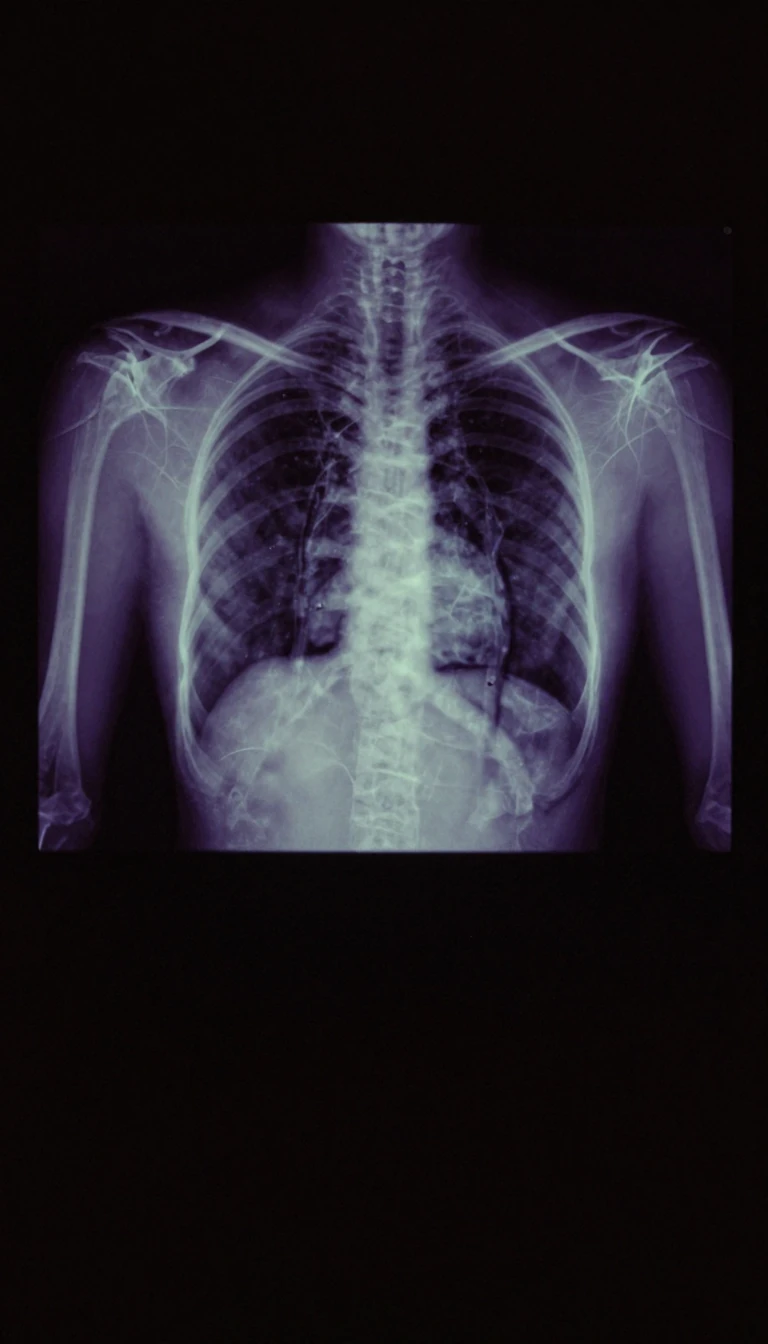 Can AI solve the mysteries of the human body?From identifying lethal cancers to accelerating drug discovery, artificial intelligence is moving beyond simple automation. It is now being used to decode complex biological syste…
- Can we map the human mind into a mathematical network?Ben Goertzel argues that intelligence isn't just processing power; it is the ability to detect patterns and achieve complex goals. By modeling knowledge as a probabilistic network…
- Is your mind the software of your brain?The Computational Theory of Mind suggests your thoughts are not just biological impulses, but complex algorithms. This influential framework views cognition as a system of informa…
 To save millions of lives, global health progress must accelerate 11-foldWhile technological change appears to be accelerating exponentially, our progress in preventing preterm birth and reducing child mortality has flatlined for a decade. To meet 203 …
- Why your brain's size might have nothing to do with your IQA larger brain doesn't automatically mean higher intelligence. From island species shrinking their skulls to humans evolving complex social systems, biology shows that brain volum…
- Simulating the human brain to unlock secrets of Alzheimer's diseaseSince experimental manipulation of the human brain is restricted, researchers are building high-fidelity simulations to study health and disease. These tools range from 3D human t…
- The brain's internal switchboard: how we decide what actually mattersHow does your brain decide to ignore a passing car but react instantly to a sudden sharp pain? It relies on a specialized neural system designed to filter the chaos of the world, …
 How your brain learns to dance to the rhythm of the worldFrom pendulum clocks to fetal development, your brain is wired to synchronize with external rhythms. This process, known as brainwave entrainment, suggests that our very perceptio…
- The human brain is five orders of magnitude more energy efficientModern AI faces a looming power crisis, requiring massive data centers and dedicated nuclear plants to stay online. To solve this, engineers are looking to the human brain—the mos…
- Your brainstem may be failing to signal your breath before a seizureThe respiratory center in your brainstem is the autopilot for your breathing. However, research suggests that for people with epilepsy, this autopilot might be malfunctioning even…
- Your brain might be shrinking by 1% every single yearAging isn't just about memory loss; it's a physical restructuring of your neural architecture. While some regions remain stable, others undergo significant volume reduction and st…