A lost Hellenistic city in Afghanistan reveals the reach of Greek culture in Asia.
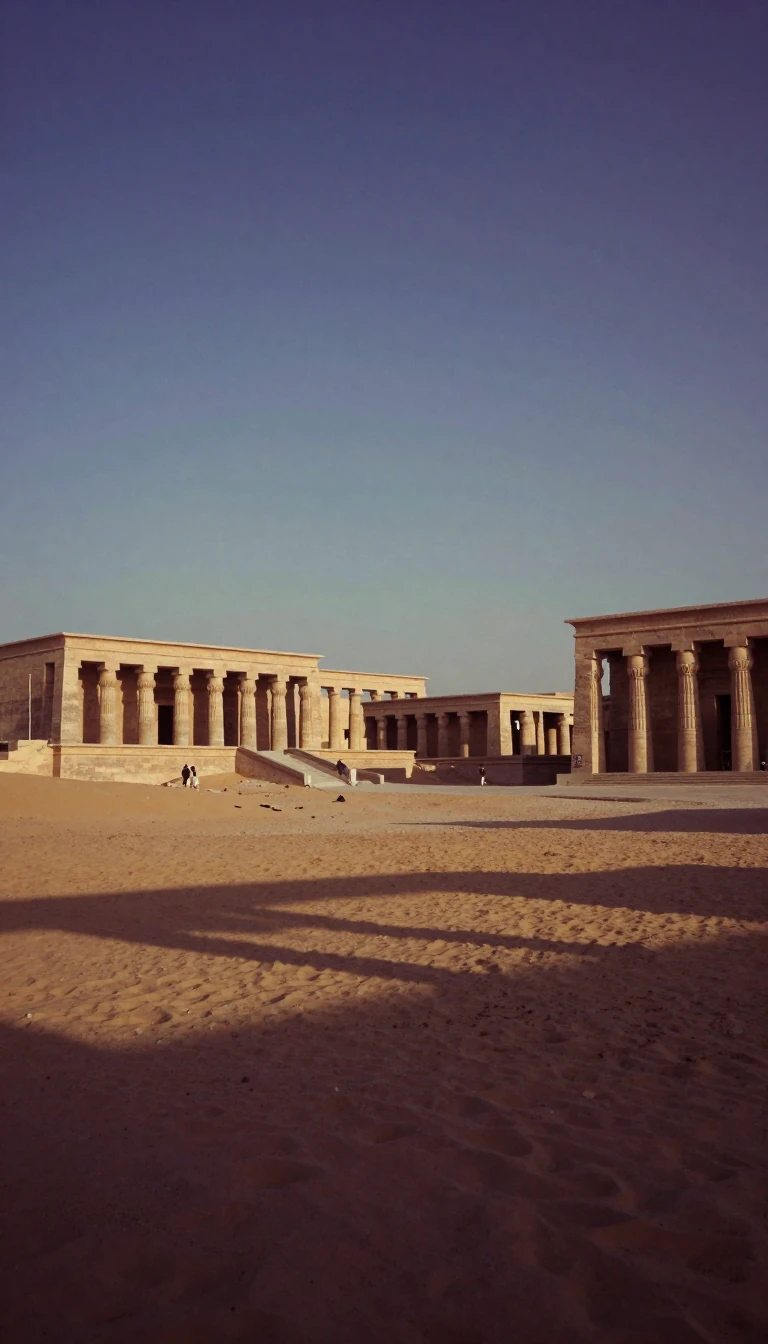
In short: Deep in the mountains of modern-day Afghanistan lies Ai-Khanoum, a city founded by the successors of Alexander the Great. Rediscovered by a king on a hunting trip in 1961, this ancient metropolis served as a sophisticated Greco-Bactrian stronghold, complete with a massive theatre, a royal palace, and a library.
Founded between 300 and 285 BC, likely by Seleucus I Nicator or Antiochus I Soter, Ai-Khanoum stood at the confluence of the Amu Darya and Kokcha rivers. While early theories linked the city to Alexander the Great, modern consensus suggests it was a deliberate Seleucid foundation designed to secure economic and military control over the region. The city was strategically positioned to manage access to the Hindu Kush mines, which were the world's only source of lapis lazuli, and served as a vital bulwark against northern threats.
The city reached its zenith under Eucratides I in the mid-second century BC. During this period, the palace complex was expanded into a sprawling administrative and treasury hub, featuring a Rhodian peristyle with 118 Corinthian columns. Excavations revealed a library containing philosophical dialogues and theatrical works, alongside a treasury filled with Indian loot, including jewellery and mythological artefacts. The city's administration was distinctly Greek in structure, though it incorporated local Bactrian-Iranian officials, as evidenced by inscriptions on storage vessels.
Ai-Khanoum’s decline was as dramatic as its rise. Following the assassination of Eucratides I in around 144 BC, the city faced successive waves of nomadic invasions. By 145 BC, the Greco-Bactrian kingdom had largely collapsed. Although the site saw sporadic reoccupation, it was eventually abandoned, with final traces of habitation dating to the 2nd century AD. The site remained largely undisturbed until 1961, when King Mohammed Zahir Shah spotted a Corinthian capital while hunting, leading to decades of French-led archaeological study that was eventually halted by the Soviet-Afghan War.
The site remains a subject of intense scholarly interest, particularly regarding the cultural synthesis of Hellenistic and local traditions. The discovery of a parchment fragment—potentially a lost work by Aristotle or a local philosophical text—highlights the intellectual life of this remote outpost. Despite extensive looting during the late 20th century, the ruins of Ai-Khanoum provide a rare, tangible link to the complex political and cultural landscape of the ancient East.
Opens the Intellect+ feed with this card first. Swipe up for the next one.
Sources
- Summary by Intellect · source: Ai-Khanoum
To cite this card, link to https://intellectplus.co.uk/app/history-ai-khanoum.
How we source, check and correct cards: Editorial standards.
General information, not professional advice. Spotted an error? Flag the card or see corrections and complaints.
Intellect Plus is a visual educational discovery platform for exploring fascinating facts and ideas. Brain Food, Not Brain Rot. What is Intellect Plus?
Related
More in Ancient · More in History · Latest · A–Z · All topics
