The periodic table was not just a scientific breakthrough but a bold, debated prediction.
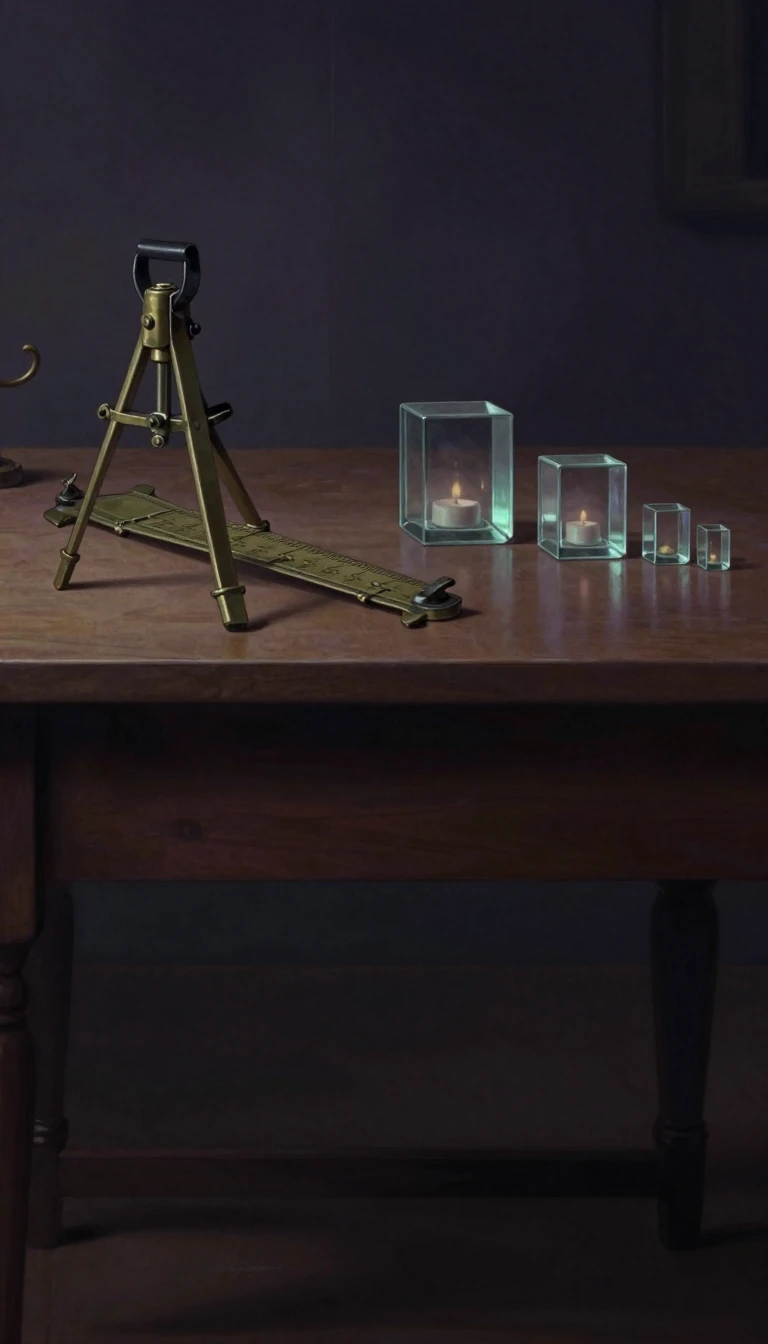
In short: Before the periodic table became a cornerstone of chemistry, it was a controversial, fragmented puzzle. While many scientists struggled to organize the elements, Dmitri Mendeleev used his system to predict the existence of undiscovered matter. His audacity turned a simple classification tool into a powerful, predictive law of nature.
The journey toward the periodic table spanned centuries, evolving from ancient philosophical concepts of elements like earth, air, fire, and water to the rigorous scientific classification we recognize today. Early attempts to organize matter were hindered by inaccurate atomic weight measurements, as many chemists incorrectly assumed only monatomic gases existed. It was not until the 1860 Karlsruhe Congress that a scientific consensus on atomic masses finally provided the foundation needed for more reliable systems.
Several chemists contributed to this evolution, including Alexandre-Émile Béguyer de Chancourtois, who created a three-dimensional spiral chart, and John Newlands, who proposed an eight-group classification based on musical octaves. However, it was the rivalry between Dmitri Mendeleev and Lothar Meyer that defined the era. While Meyer focused on presenting theories for his students, Mendeleev was famously bold, using his table to suggest that existing atomic weights were wrong and to predict the properties of missing elements like eka-boron, eka-aluminium, and eka-silicium.
Mendeleev’s predictions were initially met with skepticism, and he struggled to incorporate the rare-earth metals into his framework. Yet, the subsequent discovery of gallium in 1875, scandium in 1879, and germanium in 1886—all matching his detailed descriptions—transformed his table from a pedagogical aid into a universally accepted scientific law. By 1890, the periodic table was firmly established, proving that the arrangement of elements was not merely a convenient list, but a reflection of a deeper, recurring order in the physical world.
Opens the Intellect+ feed with this card first. Swipe up for the next one.
Sources
- Summary by Intellect · source: History of the periodic table
- Also: periodic-table.rsc.org — Periodic Table: History
To cite this card, link to https://intellectplus.co.uk/app/history-history-of-the-periodic-table.
How we source, check and correct cards: Editorial standards.
General information, not professional advice. Spotted an error? Flag the card or see corrections and complaints.
Intellect Plus is a visual educational discovery platform for exploring fascinating facts and ideas. Brain Food, Not Brain Rot. What is Intellect Plus?
Related
More in History by topic · More in History · Latest · A–Z · All topics
