In our modern world, has the map finally replaced the territory we inhabit?
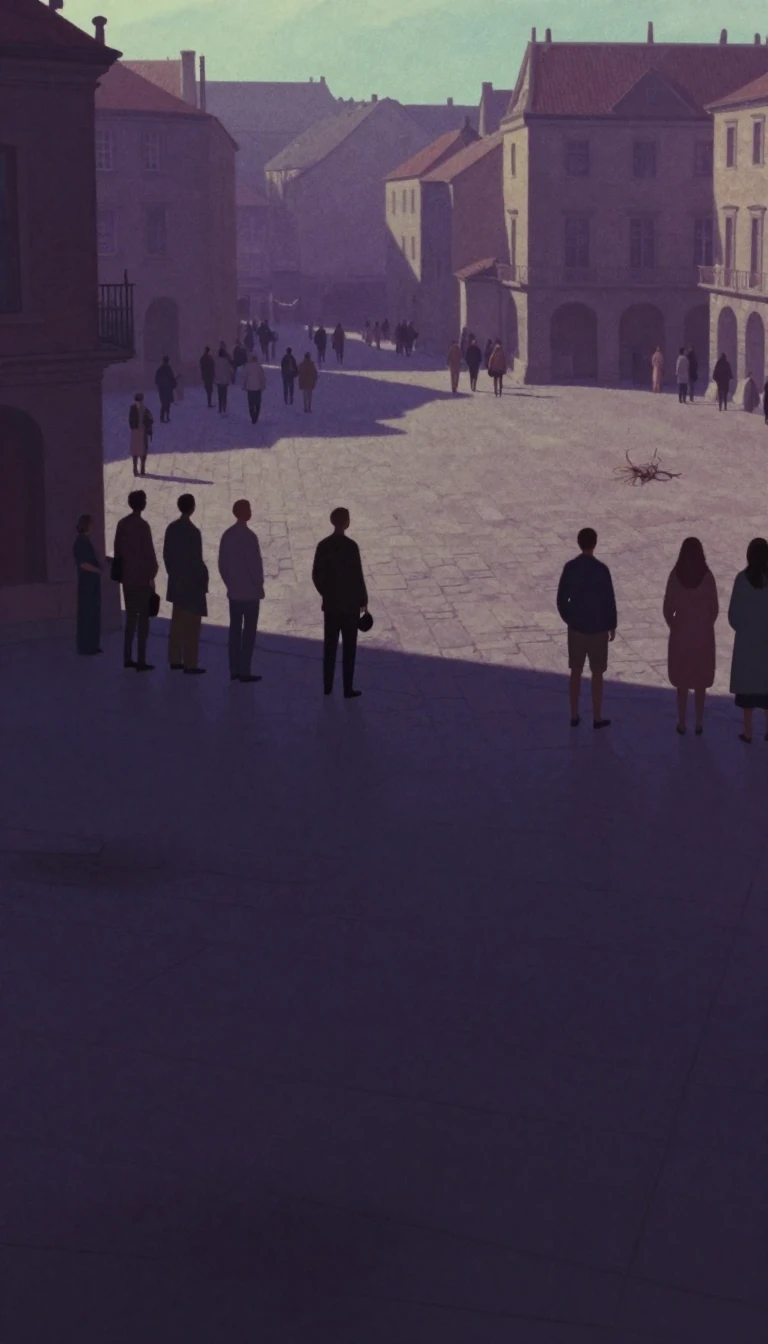
In short: Jean Baudrillard’s 1981 essay argues that contemporary society has replaced reality with symbols and signs. We no longer live in a world of original objects, but in a simulation where images precede reality. This hyperreality renders the distinction between the map and the territory obsolete, leaving us in a self-referential loop.
In his 1981 work Simulacra and Simulation, Jean Baudrillard posits that modern existence is defined by the 'precession of simulacra'—a state where signs and symbols no longer represent a tangible reality but instead precede and construct it. Drawing on a fable by Jorge Luis Borges about an empire that created a map as detailed as its own territory, Baudrillard suggests that in our postmodern epoch, the territory has vanished. We now inhabit the map, a simulation where reality is merely a crumbling remnant of the representations we have built to replace it.
Baudrillard categorizes the evolution of the image into three orders. The first, premodern, treats the sign as a faithful copy of a real object. The second, born of the Industrial Revolution, introduces mass-produced commodities where the copy competes with the original. The third, associated with late capitalism, features simulacra that have no original at all. In this final stage, signs refer only to other signs, creating a 'hyperreal' environment where the distinction between the artificial and the authentic is erased. This process is driven by media, consumer culture, and the abstraction of value through money.
The implications of this theory are profound, suggesting a 'termination of history' where the lack of oppositional elements in society leads to a passive, imploded 'silent majority.' While the framework has deeply influenced cultural theory and science fiction—notably serving as an 'interpretative grid' for the film The Matrix—it is not without critics. Scholars like Vivian Sobchack argue that Baudrillard’s focus on the 'techno-body' as an objectified, affectless construct ignores the lived, visceral experience of human pain and subjectivity, which resists such totalizing abstraction.
Baudrillard himself later expressed skepticism toward the rigid application of his own 'three orders' model, noting that while he once found value in such genealogical approaches, the order of simulation is ultimately antinomical to them. Despite these internal contradictions, the work remains a foundational critique of how media-saturated cultures perceive and interact with the world, challenging the assumption that our shared existence is grounded in any objective truth.
Opens the Intellect+ feed with this card first. Swipe up for the next one.
Sources
- Summary by Intellect · source: Simulacra and Simulation
- Also: press.umich.edu — Simulacra and Simulation | Jean Baudrillard & Sheila Faria Glaser
To cite this card, link to https://intellectplus.co.uk/app/history-simulacra-and-simulation.
How we source, check and correct cards: Editorial standards.
General information, not professional advice. Spotted an error? Flag the card or see corrections and complaints.
Intellect Plus is a visual educational discovery platform for exploring fascinating facts and ideas. Brain Food, Not Brain Rot. What is Intellect Plus?
Related
More in Empires & civilisations · More in History · Latest · A–Z · All topics
