From Assyrian crystals to atomic probes: a brief history of seeing the invisible
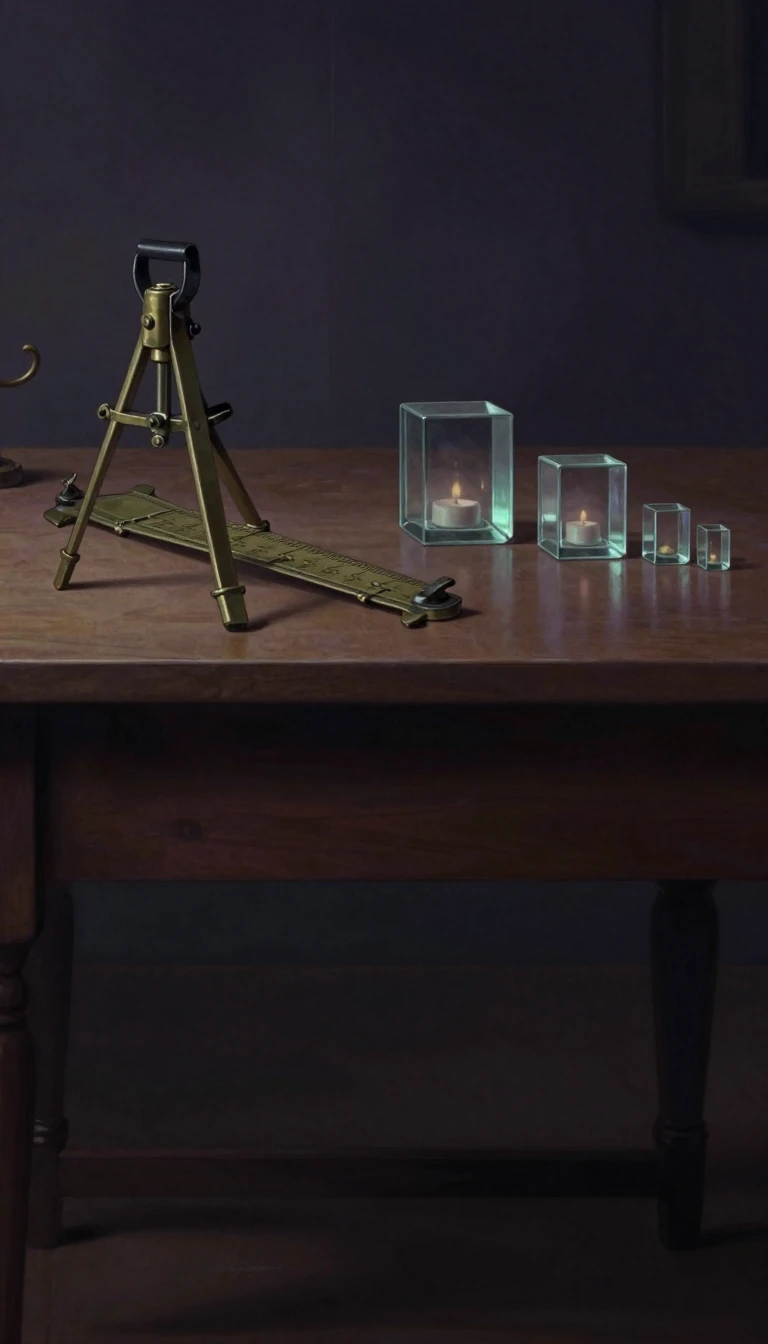
In short: The microscope did not appear overnight. It evolved from ancient magnifying lenses into sophisticated tools capable of resolving individual atoms. This journey spans millennia, moving from simple glass disks to complex electron and scanning technologies that fundamentally changed our understanding of the biological and physical world at the smallest scales.
The origins of magnification are ancient, with the Nimrud lens—a rock crystal disk dating to c. 700 BC—serving as a potential early tool. By the 13th century, the proliferation of eyeglasses likely encouraged the use of simple, single-lens magnifiers. The compound microscope, however, remains shrouded in debate. While Johannes Zachariassen claimed in 1655 that his father, Zacharias Janssen, invented it in 1590, historians often view this testimony as dubious due to significant discrepancies in the account.
By the early 17th century, the technology began to formalize. Cornelis Drebbel showcased a compound microscope in London in 1619, and by 1625, Giovanni Faber had coined the term microscope. Early pioneers like Robert Hooke, who discovered cells in cork bark in 1665, and Antonie van Leeuwenhoek, who refined simple microscopes to view protists in 1674, pushed the boundaries of observation. Design improvements followed, such as Edmund Culpeper’s 1725 double tripod microscope and Joseph Jackson Lister’s 1825 development of lenses that corrected spherical and chromatic aberration.
The 19th and 20th centuries saw a shift toward scientific precision. Ernst Abbe’s discovery of the sine condition in the 1860s moved microscope design from trial and error to a rigorous discipline. The 20th century brought revolutionary leaps: Max Knoll and Ernst Ruska built the first transmission electron microscope in 1931, and Erwin Wilhelm Müller achieved the feat of seeing individual atoms in 1951. Later innovations, including Marvin Minsky’s 1957 confocal microscope and the 1981 development of the scanning tunneling microscope by Gerd Binnig and Heinrich Rohrer, continue to refine our ability to probe the nanoscopic realm.
These advancements have transformed fields from biology to materials science. The ability to identify individual atoms via the atom probe, introduced in 1967, and the 1988 development of three-dimensional resolution, highlight how far the technology has progressed. From the curiosity of a burning glass to the precision of modern scanning helium microscopes, the history of microscopy is a testament to the human drive to visualize the unseen.
Opens the Intellect+ feed with this card first. Swipe up for the next one.
Sources
- Summary by Intellect · source: Timeline of microscope technology
To cite this card, link to https://intellectplus.co.uk/app/history-timeline-of-microscope-technology.
How we source, check and correct cards: Editorial standards.
General information, not professional advice. Spotted an error? Flag the card or see corrections and complaints.
Intellect Plus is a visual educational discovery platform for exploring fascinating facts and ideas. Brain Food, Not Brain Rot. What is Intellect Plus?
Related
More in History by topic · More in History · Latest · A–Z · All topics
