Was the blind poet Al-Ma'arri a radical atheist or a misunderstood orthodox believer?
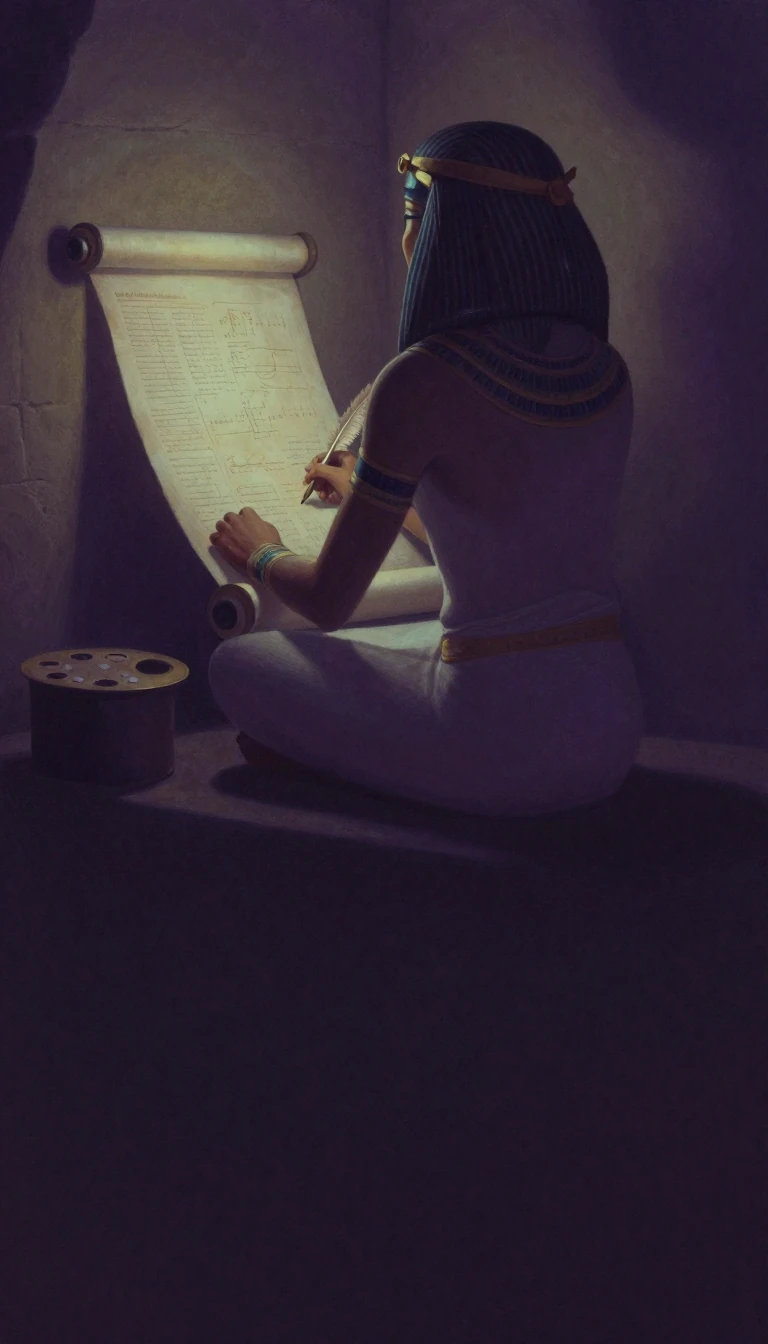
In short: For centuries, scholars have debated whether the 11th-century Syrian poet Al-Ma'arri was a daring freethinker or a pious Muslim. While his biting verses against religious corruption earned him a reputation as a heretic, modern textual analysis suggests many of these controversial lines were deliberate forgeries by his political enemies.
Born in 973 in Ma'arrat al-Nu'man, Al-Ma'arri lost his sight to smallpox at age four. Despite this, he became a towering literary figure, known for his asceticism, veganism, and profound pessimism. He famously described himself as a 'double prisoner' of his blindness and his self-imposed isolation. His major works, including 'The Tinder Spark' and 'The Epistle of Forgiveness', showcase a mastery of language that made him a celebrity in Baghdad's literary salons.
The controversy surrounding his faith stems from his fierce critiques of religious hypocrisy and the corruption of scholars. Early Western orientalists, relying on potentially corrupted Eastern manuscripts, labeled him a skeptic who viewed religion as a 'fable'. However, scholars like Abd al-Aziz al-Maymani have argued that many heretical verses attributed to him were pseudepigraphic fabrications. In his own lifetime, Al-Ma'arri complained to the Aleppine ruler Thimal bin Salih about contemporaries who altered his work, calling himself 'a lied-about old man'.
His defense is bolstered by his final dictated manuscript, 'The Light of the Spark', which contains unambiguous affirmations of Islamic theology, including the Day of Judgment. Even medieval critics like Ibn al-Wardi, who initially accused him of heresy, retracted their claims after studying this late-life work. Furthermore, Andalusian manuscripts of his poetry—transmitted by trusted students—lack the heretical interpolations found in Eastern versions, suggesting that his reputation as a radical was largely a product of regional political distortion rather than his own genuine beliefs.
Today, Al-Ma'arri remains a polarizing figure. In 2013, during the Syrian Civil War, militants from the al-Nusra Front destroyed a 1944 statue of the poet, citing his alleged heresy. This act highlights how his legacy continues to be weaponized in modern conflicts, even as academic consensus increasingly moves toward viewing him as a complex, orthodox thinker whose work was systematically misrepresented by his detractors.
Opens the Intellect+ feed with this card first. Swipe up for the next one.
Sources
- Summary by Intellect · source: Al-Ma'arri
To cite this card, link to https://intellectplus.co.uk/app/ideas-al-ma-arri.
How we source, check and correct cards: Editorial standards.
General information, not professional advice. Spotted an error? Flag the card or see corrections and complaints.
Intellect Plus is a visual educational discovery platform for exploring fascinating facts and ideas. Brain Food, Not Brain Rot. What is Intellect Plus?
Related
More in Philosophers · More in Ideas & Philosophy · Latest · A–Z · All topics
