Why do cultures across history build towers, plant trees, and worship mountains?
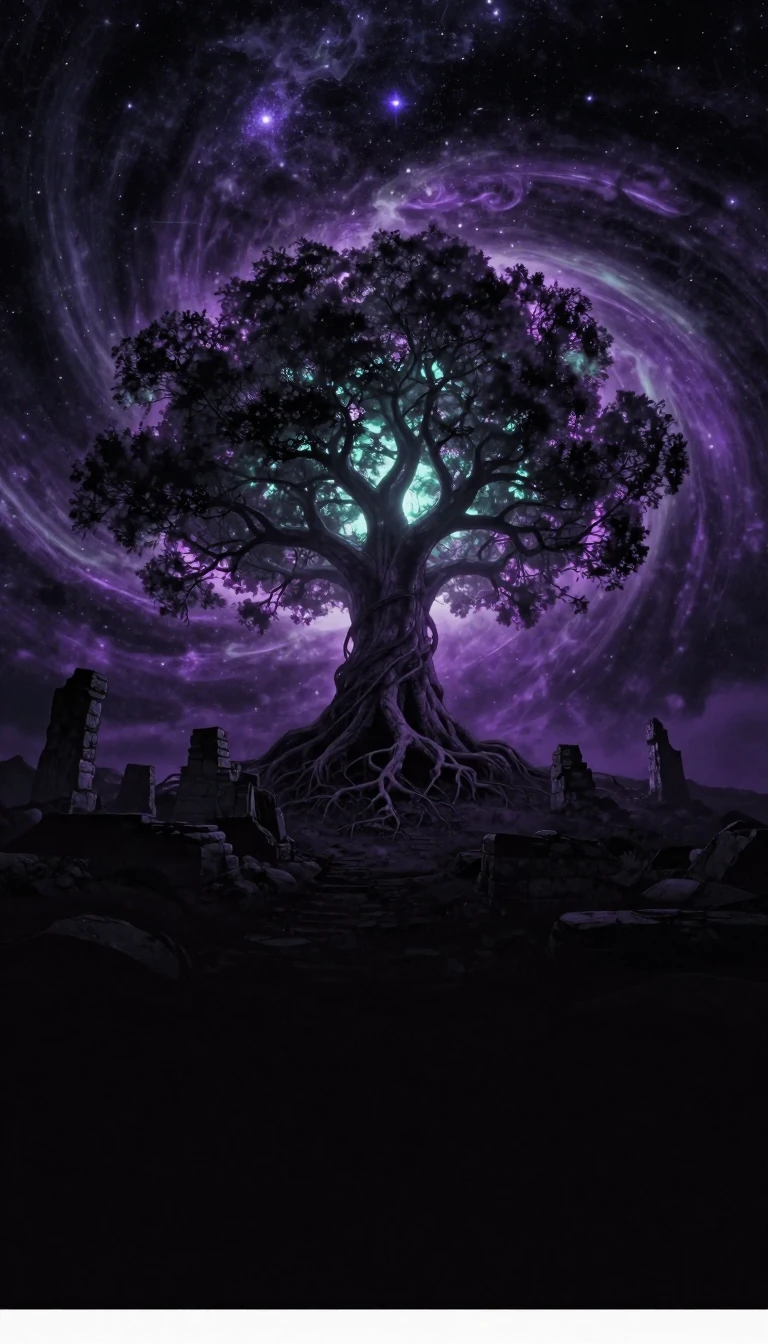
In short: From the Norse World Ash to the modern skyscraper, humanity is obsessed with the axis mundi. This cosmic pillar serves as the vital link between the earthly, heavenly, and underworld realms. It is the sacred center of the world, a fixed point where order triumphs over the chaos of the unknown.
The term axis mundi, popularized by religious historian Mircea Eliade in the 1950s, describes a universal mythological concept: the connection between Heaven and Earth. Whether represented as a mountain, a tree, or a man-made structure, the axis mundi acts as a microcosm of order. In this view, the space one occupies is the center of the world, while everything beyond its boundaries represents foreign, unorganized chaos. By establishing this center, cultures create a stable point from which they can explore the world or ascend toward higher spiritual states.
These symbols take many forms. Mountains like Mount Meru, Mount Kailash, and Mount Ararat are frequently cited as sacred centers, as are man-made structures like ziggurats, pagodas, and steeples. Even the human body is often conceptualized as an axis, with disciplines like yoga and tai chi treating the body as a pillar between heaven and earth. In some traditions, the axis is a living thing; the Cosmic Tree, such as the Norse Yggdrasil or the Bodhi tree of the Buddha, unites the sky, earth, and underworld through its branches, trunk, and roots. These sites are not merely locations but repositories of potential knowledge, often guarded by symbolic figures like serpents.
The concept is deeply tied to the human desire for transcendence. Whether through the shamanic journey, Dante’s descent and ascent in The Divine Comedy, or the climb up a temple staircase, the axis mundi provides a path for moving between realms. It reflects a metaphysical belief that the macrocosm of the universe is mirrored in the microcosm of human life. By engaging with this axis, humanity seeks to gain insights into universal principles, bridging the gap between the mundane and the divine to achieve liberation or perfection.
Opens the Intellect+ feed with this card first. Swipe up for the next one.
Sources
- Summary by Intellect · source: Axis mundi
To cite this card, link to https://intellectplus.co.uk/app/ideas-axis-mundi.
How we source, check and correct cards: Editorial standards.
General information, not professional advice. Spotted an error? Flag the card or see corrections and complaints.
Intellect Plus is a visual educational discovery platform for exploring fascinating facts and ideas. Brain Food, Not Brain Rot. What is Intellect Plus?
Related
More in Mythology · More in Ideas & Philosophy · Latest · A–Z · All topics
