Was the most influential Buddhist philosopher of the last millennium a creative innovator or distortionist?
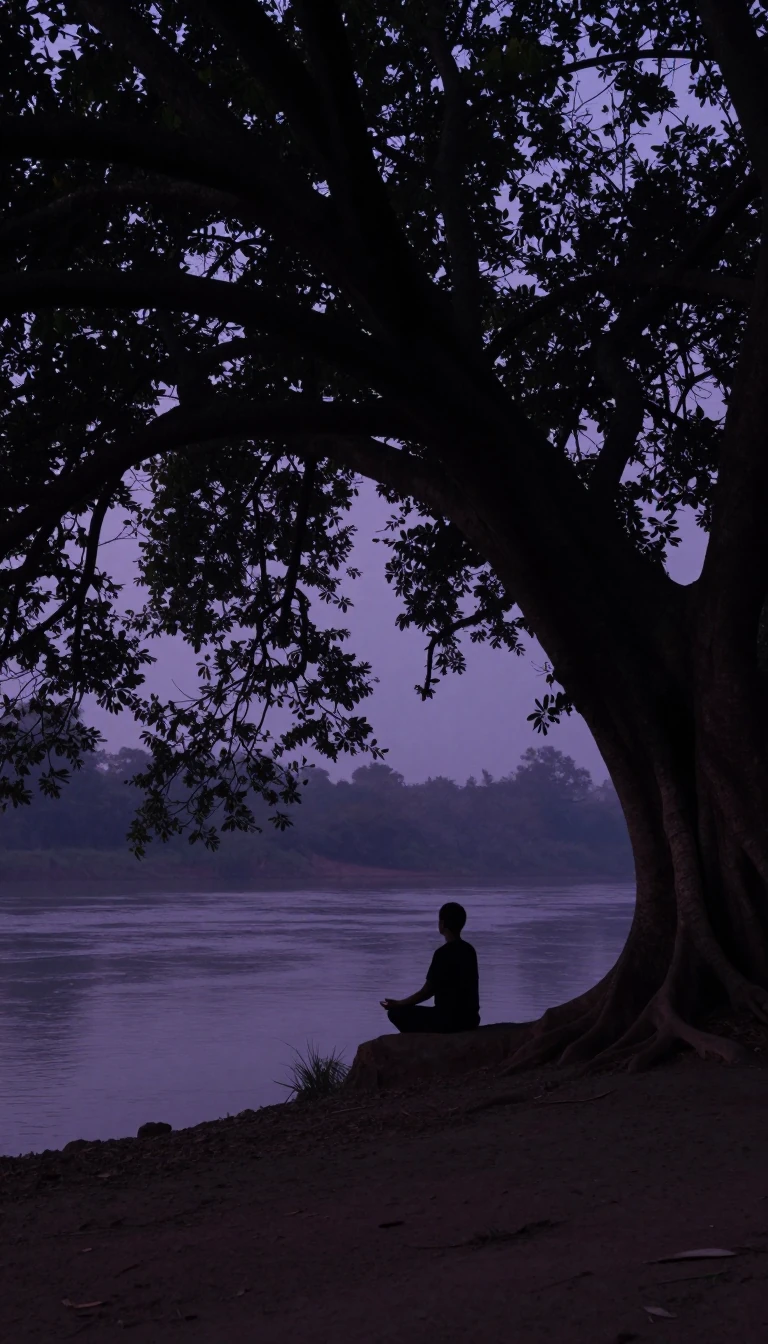
In short: Buddhaghosa, a 5th-century Indian monk, authored the Visuddhimagga, the definitive manual for Theravada meditation. While his systematic work preserved the tradition, modern scholars and practitioners debate whether his interpretations represent the Buddha’s original teachings or a significant, potentially problematic departure from the earliest Buddhist discourses.
Buddhaghosa arrived in 5th-century Sri Lanka from India, settling at the Anuradhapura Mahavihara. Tasked with synthesizing ancient Sinhala commentaries into Pali, he produced the Visuddhimagga, or Path of Purification. His work became the orthodox standard for Theravada Buddhism by the 12th century, largely because it supplanted the original Sinhala texts, which were subsequently lost. His influence was cemented when the Sri Lankan monk Sariputta Thera integrated Buddhaghosa’s commentaries into his own teachings, spreading this lineage throughout Southeast Asia.
Philosophically, Buddhaghosa is a polarizing figure. Some scholars, such as Jonardon Ganeri, praise him as an innovative pioneer who anticipated modern concepts like working memory and global workspace theory. They argue his approach to consciousness—which he termed 'attentionalism'—is a sophisticated, non-representational model of the mind. Conversely, critics like Bhante Henepola Gunaratana and Bhikkhu Sujato argue that his work introduces meditation terminology and paradigms, such as specific absorption concentrations, that are absent from the original Pali suttas. They suggest his scholasticism creates a divergence between traditional academic study and the practical, meditative experience described by the Buddha.
The debate extends to his legacy. While some view his detailed lists as essential for the survival of Buddhist practice, others, like the monk Buddhadasa, argue that uncritical adherence to his work has hindered authentic practice. There is even scholarly disagreement over his biography; while traditional accounts in the 13th-century Culavamsa depict him as a Brahmin from Magadha who was bested in debate by a monk, modern researchers like Oskar von Hinüber suggest he may have been born in Amaravati. Whether he was a singular genius or the head of a collaborative team of translators, his work remains the primary lens through which the Theravada tradition understands its own scriptures.
Opens the Intellect+ feed with this card first. Swipe up for the next one.
Sources
- Summary by Intellect · source: Buddhaghosa
To cite this card, link to https://intellectplus.co.uk/app/ideas-buddhaghosa.
How we source, check and correct cards: Editorial standards.
General information, not professional advice. Spotted an error? Flag the card or see corrections and complaints.
Intellect Plus is a visual educational discovery platform for exploring fascinating facts and ideas. Brain Food, Not Brain Rot. What is Intellect Plus?
Related
More in Dharmic religions · More in Ideas & Philosophy · Latest · A–Z · All topics
