Chaos was not originally a mess, but the gaping void before the world existed
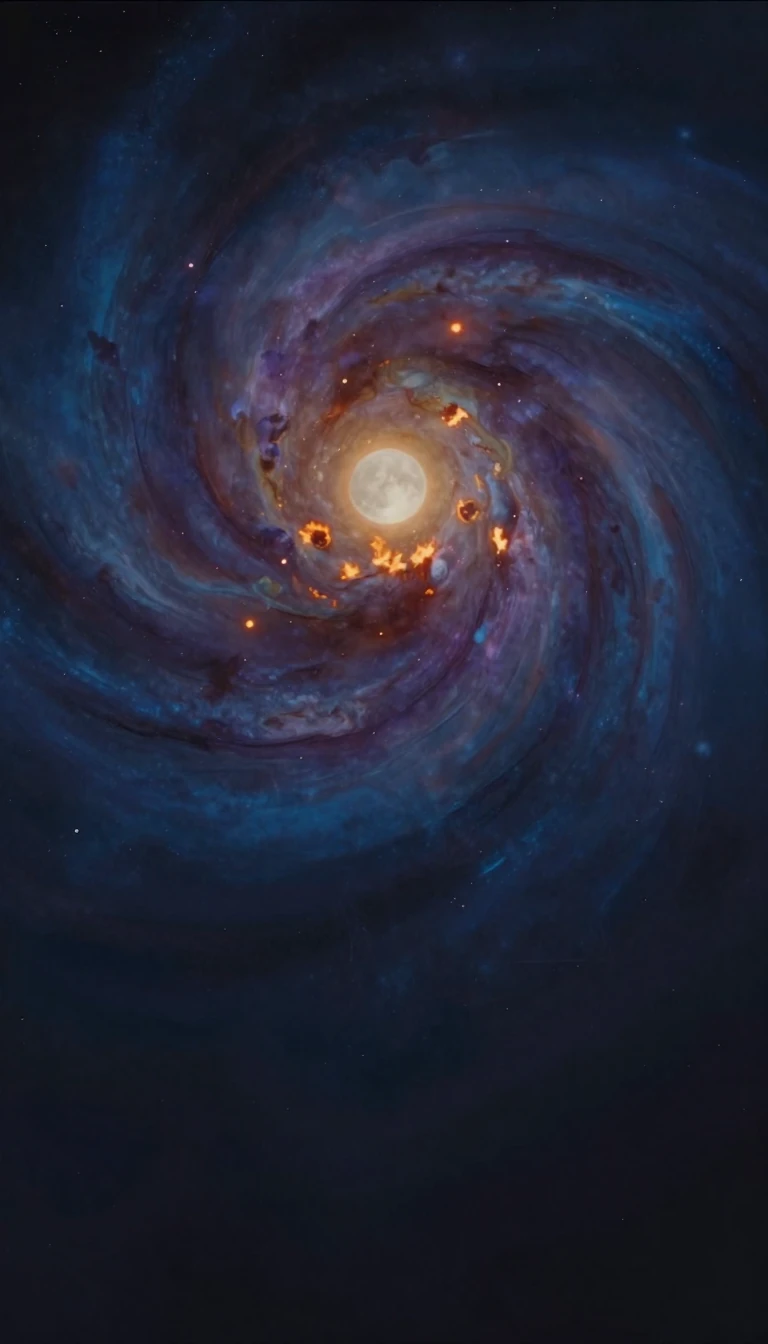
In short: Modern usage defines chaos as total disorder, but the ancient Greek concept of kháos meant something far more profound: a primordial, gaping void. Far from being a mere synonym for confusion, it was the foundational state of reality from which the cosmos, the gods, and all existence eventually emerged.
In early Greek cosmology, particularly in Hesiod's Theogony, Chaos was the first entity to exist. The term derives from the Proto-Indo-European root for 'to gape', linking it to the English word 'yawn'. Rather than a chaotic jumble, it represented an infinite, dark abyss or a vast, windy gap located beneath the Earth. It was a place of potential, a primordial state that preceded the separation of Earth and Sky, and from which beings like Gaia, Tartarus, and Eros were born.
Philosophers and later traditions reinterpreted this void in diverse ways. Pherecydes of Syros viewed it as formless water, while Plato equated it to a 'receptacle'—a shapeless space serving as a wetnurse for becoming. Aristotle later moved the concept into the realm of physics, using it to challenge atomist theories of empty space. By the time of Ovid, the definition had shifted toward the 'shapeless heap' of elements that we recognize today, eventually influencing the alchemical concept of prima materia.
The idea of a primordial state before creation is a recurring theme in comparative mythology, appearing in traditions ranging from the Hawaiian 'Po' to the Babylonian 'Abzu'. While biblical scholars have debated whether the 'watery chaos' of Genesis 1:2 shares roots with these myths, the concept remains a powerful intellectual bridge. It connects ancient cosmogony to modern science; notably, the 17th-century chemist Jan Baptist van Helmont coined the term 'gas' directly from the Paracelsian interpretation of chaos as a formless, primordial congestion of elements.
Opens the Intellect+ feed with this card first. Swipe up for the next one.
Sources
- Summary by Intellect · source: Chaos (cosmogony)
To cite this card, link to https://intellectplus.co.uk/app/ideas-chaos-mythology.
How we source, check and correct cards: Editorial standards.
General information, not professional advice. Spotted an error? Flag the card or see corrections and complaints.
Intellect Plus is a visual educational discovery platform for exploring fascinating facts and ideas. Brain Food, Not Brain Rot. What is Intellect Plus?
Related
More in Greek mythology · More in Ideas & Philosophy · Latest · A–Z · All topics
