Did ancient Egypt have African roots? The controversial legacy of Cheikh Anta Diop.
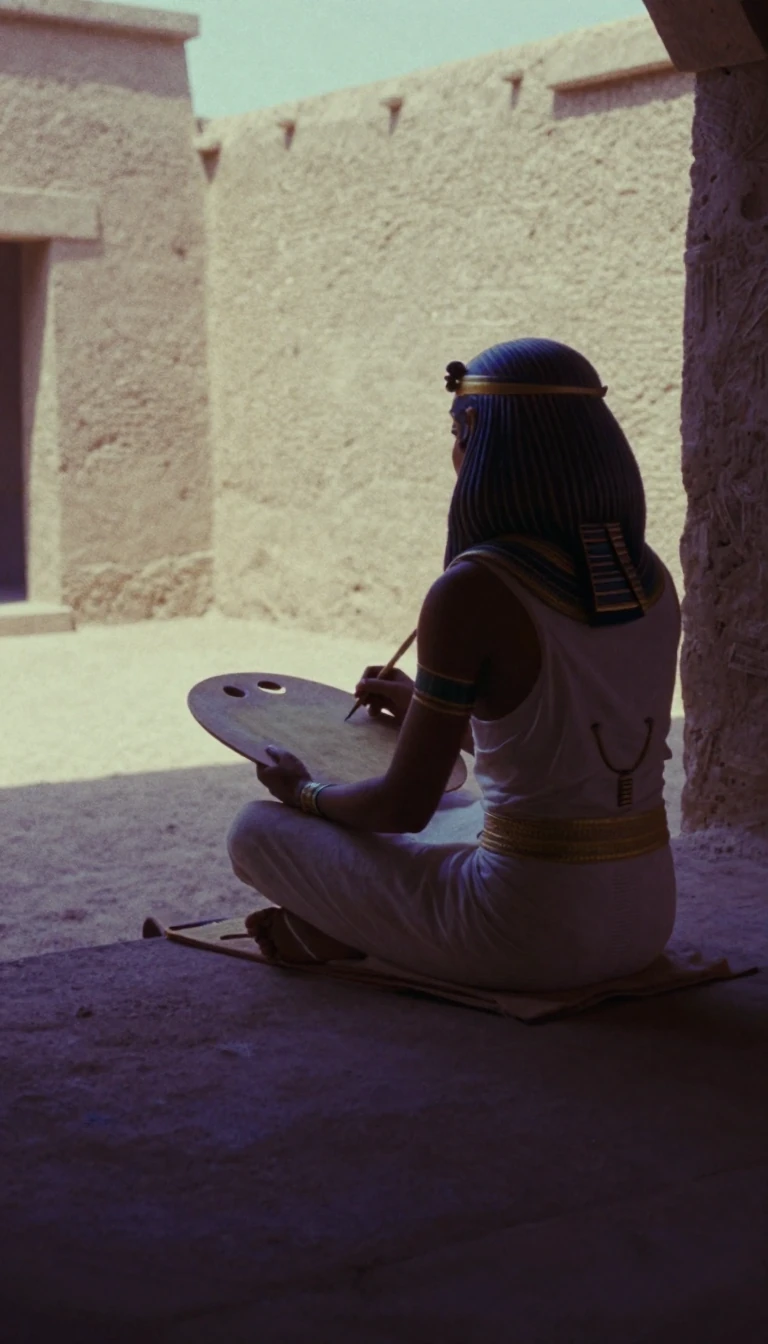
In short: Cheikh Anta Diop, a polymath who studied everything from physics to linguistics, argued that ancient Egyptian civilization was fundamentally African. While his work sparked intense debate and accusations of racialist thinking, his multidisciplinary approach challenged Western historical biases and remains a foundational, if polarizing, pillar of modern African historiography.
Born in 1923 in Senegal, Cheikh Anta Diop moved to Paris in 1946, where he pursued a remarkably diverse education, eventually specializing in nuclear physics and Egyptology. By the 1950s, he began publishing radical theses, most notably in his 1954 work, Nations nègres et culture. Diop argued that ancient Egypt was populated by Black people and that its culture served as the cradle for broader African civilizations, much as Greece and Rome did for Europe. He utilized diverse evidence, including blood types, melanin analysis of mummies, and linguistic comparisons, to support his claims of a shared African cultural continuity.
Diop’s work ignited a firestorm in academic circles. Supporters, including historians like John Henrik Clarke and Bethwell Allan Ogot, praised him for reclaiming African history from colonialist narratives and exposing the Eurocentric biases of traditional Egyptology. However, critics were equally vocal. Scholars like Mary Lefkowitz and Russell Schuh accused him of distorting historical evidence, ignoring established linguistic research, and relying on outdated racial models. Many historians, including Robert O. Collins, have characterized his work as revisionist, arguing that his methodology often lacked the statistical rigor expected in professional historical inquiry.
The debate reached a peak at a 1974 UNESCO symposium, where his conclusions met with both enthusiastic support and sharp objections. Yet, the conversation has continued to evolve. A 2025 UNESCO review of the General History of Africa noted that recent research—incorporating new archaeological and genetic data—has aligned with some of Diop’s earlier hypotheses regarding the migration of Saharan and Southern African populations into the Nile Valley. While his specific claims remain contested, his role in forcing a multidisciplinary, critical re-examination of African history is widely acknowledged, cementing his status as a revolutionary, if divisive, intellectual figure.
Opens the Intellect+ feed with this card first. Swipe up for the next one.
Sources
- Summary by Intellect · source: Cheikh Anta Diop
- Also: www.britannica.com — Cheikh Anta Diop | Senegalese author and scholar | Britannica
To cite this card, link to https://intellectplus.co.uk/app/ideas-cheikh-anta-diop.
How we source, check and correct cards: Editorial standards.
General information, not professional advice. Spotted an error? Flag the card or see corrections and complaints.
Intellect Plus is a visual educational discovery platform for exploring fascinating facts and ideas. Brain Food, Not Brain Rot. What is Intellect Plus?
Related
More in Historians · More in Ideas & Philosophy · Latest · A–Z · All topics
