Why do so many ancient cultures imagine the universe began as an egg?
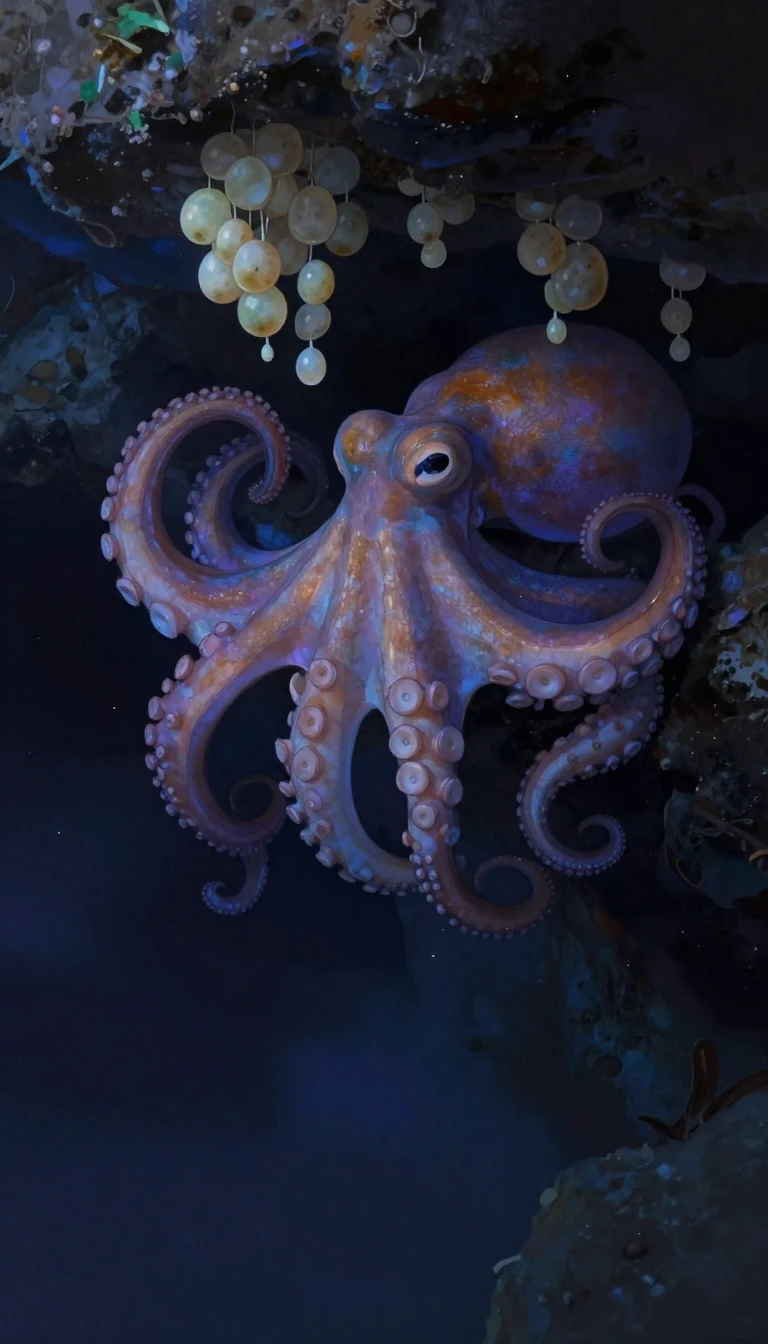
In short: From the Dogon of Burkina Faso to Vedic India and ancient China, the cosmic egg is a recurring motif for creation. This simple, universal shape captures the transition from chaos to order, offering a profound metaphor for how the universe—and life itself—emerged from a singular, contained source.
The cosmic egg, or mundane egg, is a foundational mythological motif across diverse civilizations. At its core, the myth suggests that the universe originated from an egg that either hatched into the cosmos or birthed a primordial being who then fashioned the world. This imagery likely draws on the biological reality of eggs as vessels of nourishment and new life, a concept echoed in the Latin proverb omne vivum ex ovo, meaning all life comes from an egg.
Variations of this theme are remarkably widespread. In Chinese mythology, the creator Pangu is said to have emerged from an egg after 18,000 years, with the light and heavy parts separating to form heaven and earth. Similarly, Dogon mythology describes the creator-god Amma as an egg containing the structure of the universe and 266 signs of essence. In Vedic tradition, the hiraṇyagarbha, or golden embryo, floats on primordial waters, while Finnish epic the Kalevala tells of a world formed from the fragments of eggs laid by a pochard.
The motif has also permeated intellectual history, from ancient Greek and Roman analogies likening the spherical sky to an eggshell and the Earth to its yolk, to modern cosmology. In the 20th century, as the concept of a true singularity faced scrutiny, researchers explored emergent universe scenarios, sometimes invoking the cosmic egg as a metaphor for the primeval atom proposed by Georges Lemaître in 1927. Whether in the mythological accounts of the Hermopolitan Ogdoad or the speculative physics of the mid-1900s, the egg remains a powerful symbol of potentiality, representing the moment before the universe unfolded into its current, complex state.
This enduring fascination highlights a shared human impulse to explain the origins of existence through familiar, organic structures. By framing the cosmos as an egg, ancient thinkers provided a tangible mechanism for the separation of heaven and earth, while modern thinkers use similar concepts to grapple with the complexities of a non-singular beginning.
Opens the Intellect+ feed with this card first. Swipe up for the next one.
Sources
- Summary by Intellect · source: Cosmic egg
To cite this card, link to https://intellectplus.co.uk/app/ideas-cosmic-egg.
How we source, check and correct cards: Editorial standards.
General information, not professional advice. Spotted an error? Flag the card or see corrections and complaints.
Intellect Plus is a visual educational discovery platform for exploring fascinating facts and ideas. Brain Food, Not Brain Rot. What is Intellect Plus?
Related
More in Mythology · More in Ideas & Philosophy · Latest · A–Z · All topics
