Is your smartphone a literal extension of your brain?
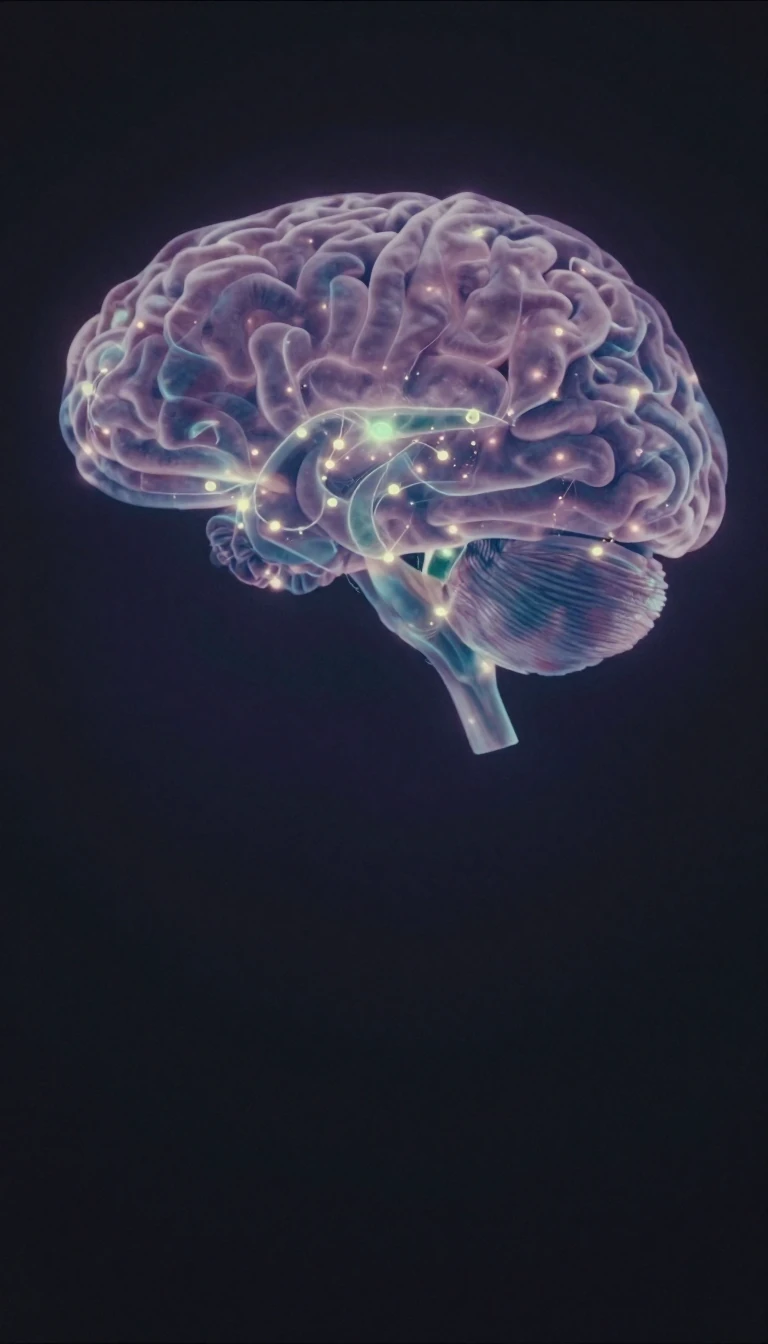
In short: If you rely on a notebook to remember directions or a computer to solve equations, are those objects merely tools, or are they actually part of your mind? The extended mind thesis suggests that the boundary between your biology and your environment is far more porous than we assume.
Proposed by Andy Clark and David Chalmers in 1998, the extended mind thesis (EMT) argues that cognition is not confined to the skull. They advocate for 'active externalism,' where objects in the physical world function as active components of cognitive processes. The core criterion is functional parity: if an external object performs a task with the same purpose and immediacy as an internal process—such as storing information or guiding reasoning—it can be considered part of a 'coupled system' that constitutes a complete cognitive system.
To illustrate this, Clark and Chalmers use the thought experiment of Otto and Inga. Both travel to a museum; Inga uses her biological memory, while Otto, who has Alzheimer’s disease, uses a notebook containing all his directions. The thesis argues that because the notebook is constantly accessible and automatically endorsed by Otto, it functions as a 'fragile biological limb' or organ. Critics argue this ignores the different implementations of their memories, but Clark counters that what matters is how the information is poised to guide behavior and dispositional beliefs.
The theory faces significant pushback, notably the 'causal-constitutional fallacy,' which argues that just because an object influences cognition doesn't mean it constitutes the mind. Critics also warn of 'cognitive bloating,' where everything on the internet might technically become part of our minds. In response, modern interpretations have shifted toward 'complementarity.' Rather than making a hard ontological claim about what the mind *is*, many now view EMT as an explanatory framework for how internal and external elements work together to create consciousness.
Recent research expands this into '4E cognition' (embodied, embedded, enacted, extended). This includes perspectives like Igor Val Danilov’s 2024 proposal that a mother's cognitive process can extend to her fetus via neuronal coupling. In these models, the mind is not a central processor creating internal representations, but a dynamic feedback loop involving bodily structures, cultural factors, and environmental interactions.
Opens the Intellect+ feed with this card first. Swipe up for the next one.
Sources
- Summary by Intellect · source: Extended mind thesis
To cite this card, link to https://intellectplus.co.uk/app/ideas-extended-mind-thesis.
How we source, check and correct cards: Editorial standards.
General information, not professional advice. Spotted an error? Flag the card or see corrections and complaints.
Intellect Plus is a visual educational discovery platform for exploring fascinating facts and ideas. Brain Food, Not Brain Rot. What is Intellect Plus?
Related
More in Philosophy of mind · More in Ideas & Philosophy · Latest · A–Z · All topics
