Is your mind trapped inside your brain, or is it shaped by your body?
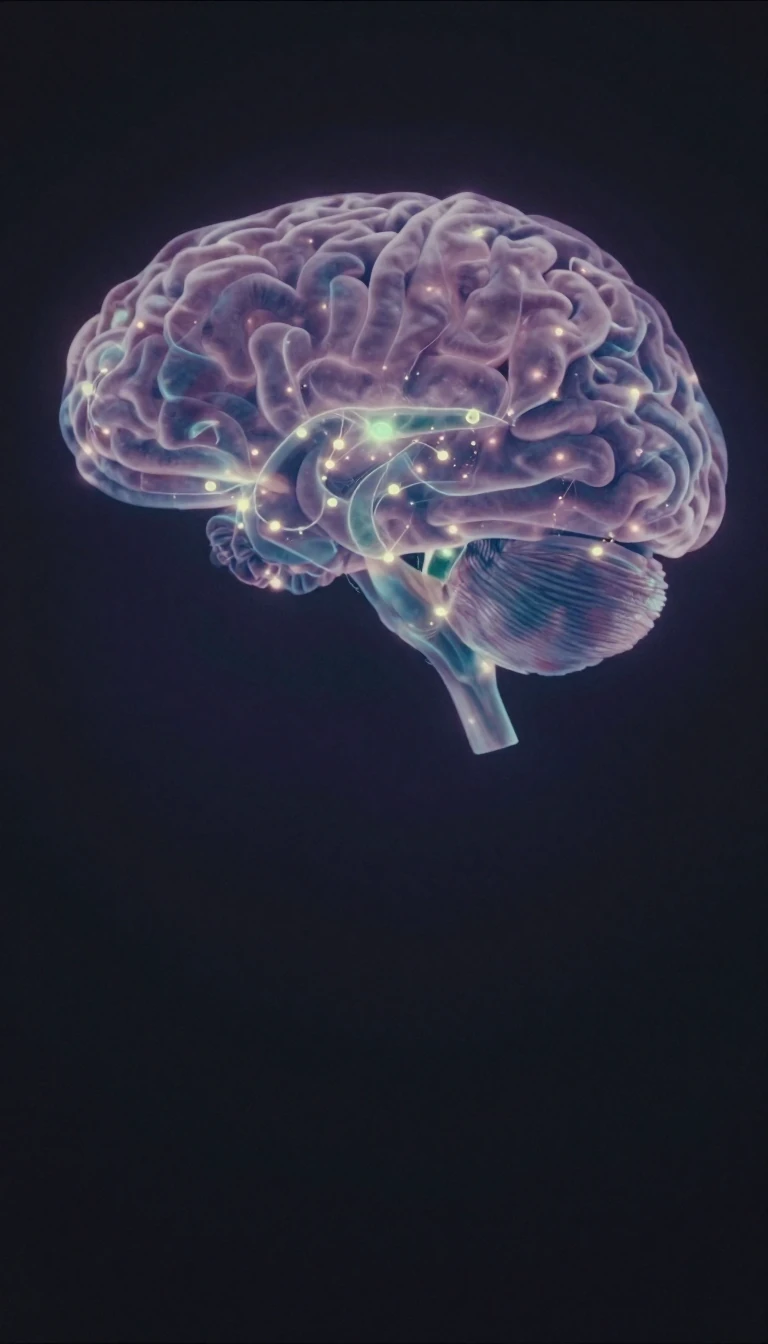
In short: Traditional science once viewed the brain as an isolated computer, processing abstract symbols to navigate the world. Embodied cognition challenges this, arguing that our thoughts, memories, and reasoning are fundamentally rooted in our physical bodies, sensorimotor capacities, and the dynamic environments we inhabit. You think with your entire being.
For centuries, the Cartesian model of the mind dominated, suggesting that mental phenomena were entirely non-physical and distinct from the body. Embodied cognition rejects this dualism, proposing instead that cognition is not merely an internal computation but an activity deeply influenced by our physical form. This perspective draws on diverse fields, including neuroscience, linguistics, and robotics, to argue that an agent's body plays a significant causal or constitutive role in cognitive processing.
The theory emerged as a reaction against the computationalist view that gained traction between the 1950s and 1980s. While computationalism treated the brain as a processor of internal representations, proponents of embodiment—such as George Lakoff and the phenomenologists Edmund Husserl and Maurice Merleau-Ponty—emphasized that cognition is for action. We do not just build accurate models of the world; we interact with it. This is evident in how we use physical metaphors to understand abstract concepts, such as 'grasping' an idea, or how our spatial reasoning relies on the same neural pathways used for physical movement.
Today, this research program has evolved into the '4E' framework: cognition is embodied, embedded, enacted, and extended. This shift suggests that successful behavior in real-world scenarios requires integrating sensorimotor and affective capacities. Rather than a single unified theory, it is a collaborative effort to understand how our biological history, cultural context, and physical interactions with the environment shape the very structure of our thoughts. By moving beyond the 'brain-in-a-vat' metaphor, researchers are uncovering how our lived, corporeal experiences serve as the essential foundation for all human knowledge and meaning.
Ultimately, this approach forces us to reconsider the nature of the mind. If our cognitive capacities are constrained by our bipedal gait, our hands, and our history of movement, then the mind cannot be understood in isolation. It is a dynamic process emerging from the relationship between an agent and its environment, proving that our physical existence is not just a vessel for the mind, but the very medium through which we think.
Opens the Intellect+ feed with this card first. Swipe up for the next one.
Sources
- Summary by Intellect · source: Embodied cognition
To cite this card, link to https://intellectplus.co.uk/app/ideas-embodied-cognition.
How we source, check and correct cards: Editorial standards.
General information, not professional advice. Spotted an error? Flag the card or see corrections and complaints.
Intellect Plus is a visual educational discovery platform for exploring fascinating facts and ideas. Brain Food, Not Brain Rot. What is Intellect Plus?
Related
More in Philosophy · More in Ideas & Philosophy · Latest · A–Z · All topics
