Your brain is a theater where the spotlight creates your reality
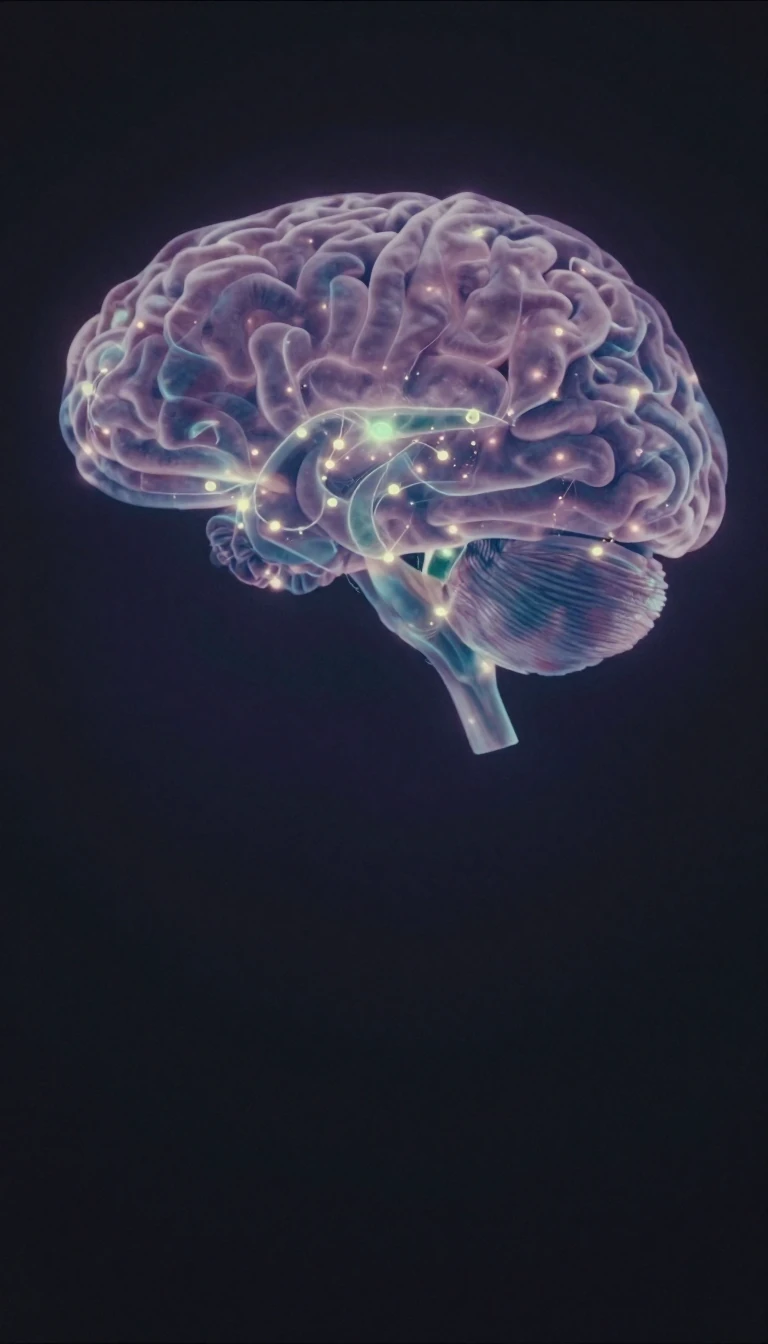
In short: Imagine your mind as a vast stage. While thousands of unconscious processes run in the wings, only a tiny fraction is illuminated by a spotlight. This is the core of Global Workspace Theory: the idea that consciousness isn't a special substance, but a functional broadcast of information.
First introduced by Bernard Baars in 1988, Global Workspace Theory (GWT) suggests that consciousness emerges from the competition and integration of parallel neural processes. Baars drew inspiration from early artificial intelligence 'blackboard systems,' where independent programs share information on a common space. In this model, the brain contains many specialized, unconscious modules—handling things like automatic routines, memory, and motivation—that compete for access to a 'global workspace.'
The theory uses a famous theater metaphor: conscious thought is the material on the main stage, while attention acts as the spotlight. This spotlight brings specific unconscious activities into awareness, allowing that information to be disseminated across the entire cognitive system. This 'broadcast' enables top-down control of planning, problem-solving, and voluntary actions. Crucially, Baars distinguishes this from a 'Cartesian theater'; there is no little 'self' sitting in the audience watching the show. Instead, the audience represents unconscious components of the brain receiving information from the conscious broadcast.
The mechanics of this workspace are fleeting, lasting only a few seconds—significantly shorter than the 10–30 seconds associated with classical working memory. Recent research suggests a sensory memory buffer may hold stimuli for about 300 to 700 milliseconds before data is lost. While GWT is praised for modeling how we handle novel situations and limited capacity, it faces philosophical hurdles. Critics like J.W. Dalton argue it explains the cognitive function of consciousness but fails to solve the 'hard problem'—the mystery of why any mental process feels like something at all.
The theory also faces internal debates regarding its mechanism. While some models focus on the connectivity of regions like the prefrontal cortex and precuneus to create 'neuronal avalanches,' the theory of 'practopoiesis' suggests that fast adaptive mechanisms of individual nerve cells are what truly enable the workspace, regardless of physical connectivity.
Opens the Intellect+ feed with this card first. Swipe up for the next one.
Sources
- Summary by Intellect · source: Global workspace theory
To cite this card, link to https://intellectplus.co.uk/app/ideas-global-workspace-theory.
How we source, check and correct cards: Editorial standards.
General information, not professional advice. Spotted an error? Flag the card or see corrections and complaints.
Intellect Plus is a visual educational discovery platform for exploring fascinating facts and ideas. Brain Food, Not Brain Rot. What is Intellect Plus?
Related
More in Philosophy of mind · More in Ideas & Philosophy · Latest · A–Z · All topics
