The printing press was not a singular invention but a global, centuries-long evolution.
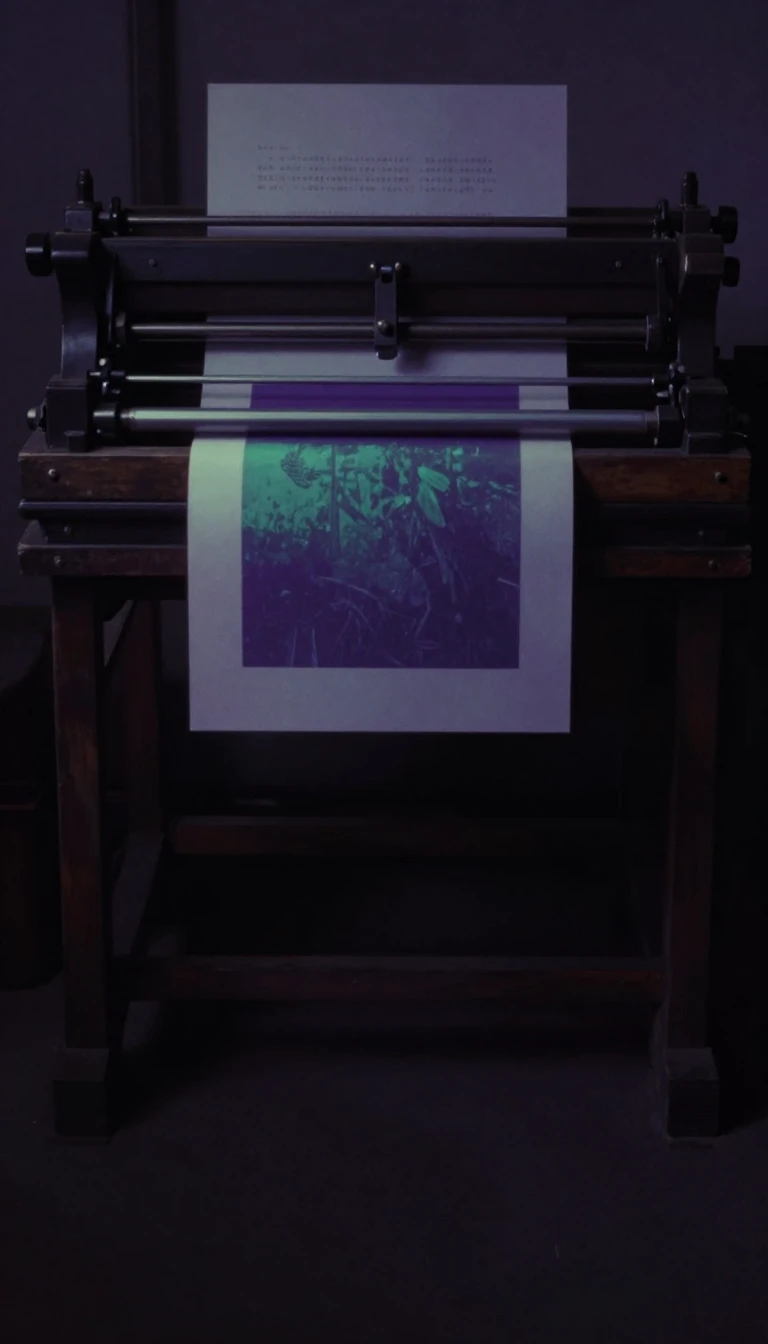
In short: While Johannes Gutenberg is often credited with the printing press, movable type technology emerged in China and Korea centuries earlier. From ceramic pieces in the 11th century to bronze-embedded paper money, the path to the modern book was a complex, multi-continental journey of trial, error, and ingenious material science.
The earliest known movable type system was developed in China around 1040 AD by Bi Sheng, who used ceramic characters. While later critics argued these were fragile, experiments have shown that fired clay type was remarkably durable, capable of surviving a two-metre drop onto marble. Despite its effectiveness for large-scale printing, the technique faced limitations in ink absorption and uneven character sizing, leading to the exploration of wood and eventually metal.
In Korea, the development of metallic movable type reached a significant milestone with the 1377 printing of Jikji, long considered the world's oldest extant book printed with such technology. However, 2022 research suggests that the Song of Enlightenment, printed in 1239, may predate it by 138 years. Unlike European methods, Korean printing relied on sand-casting techniques adapted from coin production, and its use was largely restricted to state-sponsored projects due to a Confucian prohibition on commercial printing.
The arrival of movable type in Europe remains a subject of intense historical debate. While some traditions suggest that travelers or missionaries brought reports of Asian technology to the West, scholars like Joseph P. McDermott argue there is no material evidence of Asian movable type in Europe before 1450. Johannes Gutenberg’s innovation, centered in Mainz, was likely a progressive development rather than a singular breakthrough. By combining his expertise as a goldsmith with new oil-based inks and a hand-mould casting system, he created a durable, standardized process that transformed the production of books.
Whether the European press was an independent invention or influenced by Eastern precursors, the impact was profound. The Gutenberg Bible of 1455 demonstrated the superiority of movable type, setting a standard for quality and efficiency that fostered the Renaissance. While hot metal typesetting eventually replaced these methods in the 20th century, the legacy of these early innovators remains embedded in the history of global communication.
Opens the Intellect+ feed with this card first. Swipe up for the next one.
Sources
- Summary by Intellect · source: Movable type
To cite this card, link to https://intellectplus.co.uk/app/ideas-movable-type.
How we source, check and correct cards: Editorial standards.
General information, not professional advice. Spotted an error? Flag the card or see corrections and complaints.
Intellect Plus is a visual educational discovery platform for exploring fascinating facts and ideas. Brain Food, Not Brain Rot. What is Intellect Plus?
Related
More in Writers · More in Ideas & Philosophy · Latest · A–Z · All topics
