Is your consciousness a separate entity from the physical world you experience every day?
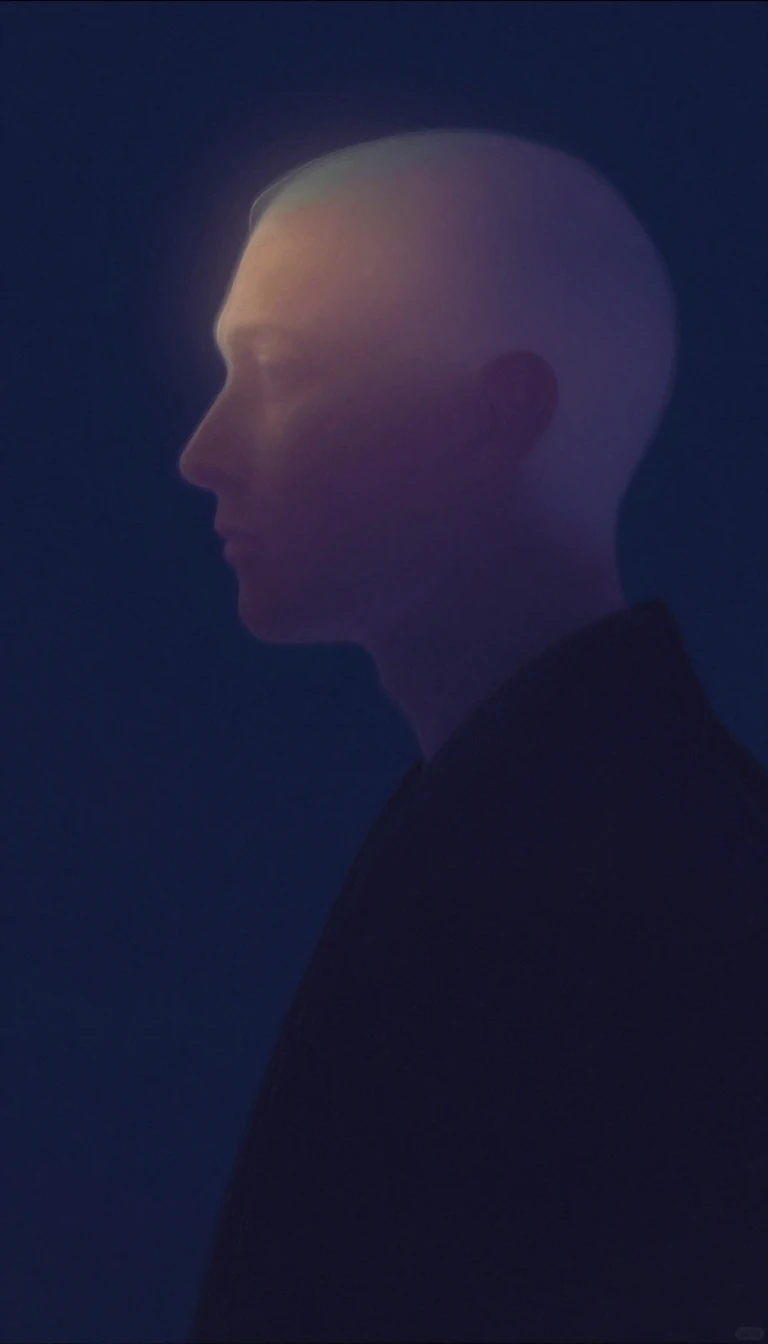
In short: Samkhya, an ancient school of Indian philosophy, proposes a radical dualism. It argues that reality consists of two independent principles: Puruṣa, the pure witness-consciousness, and Prakṛti, the unconscious matter that forms our minds, bodies, and emotions. Understanding this distinction is the key to liberation from suffering and the cycle of rebirth.
At the heart of Samkhya lies a strict dualism between Puruṣa and Prakṛti. Puruṣa is absolute, independent, and pure consciousness—a witness that cannot be described, objectified, or reduced. In contrast, Prakṛti is the unconscious, active source of all physical and mental phenomena. While we often identify our 'self' with our thoughts, ego, or emotions, Samkhya classifies these as products of Prakṛti. Consciousness only appears to be linked to these mental states because it illuminates them, much like light revealing the shapes of objects in a room.
The evolution of the manifest world begins when the equilibrium of Prakṛti’s three constituent qualities—Sattva (poise), Rajas (activity), and Tamas (inertia)—is disturbed by its contact with Puruṣa. This interaction triggers the emergence of twenty-three principles, or tattvas, ranging from intellect and ego to sensory capacities and the gross elements like earth and water. Because Samkhya adheres to the theory of Sat-kārya-vāda, it maintains that effects are pre-existent in their causes; thus, the universe is not created from nothing but is a real transformation of primordial matter.
Suffering, or Duḥkha, arises from ignorance (Avidyā) when the eternal Puruṣa mistakenly identifies itself with the products of Prakṛti. Liberation, or Moksha, is achieved through the development of discriminative knowledge, allowing the Self to realize its true nature as distinct from the empirical ego. Interestingly, Samkhya suggests that this bondage is ultimately a process occurring within Prakṛti itself, rather than something that truly affects the immutable Puruṣa. By systematically enumerating these twenty-five principles, the school provides a rational framework for ending the cycle of transmigration and attaining isolation, or Kaivalya.
The school’s methodology relies exclusively on three reliable means of knowledge: direct perception, inference, and the testimony of reliable sources. While its roots trace back to ancient Vedic speculations, the system was formally established with the Samkhyakarika in the 4th century CE. It remains a foundational influence on other Indian philosophies, particularly the Yoga school, which utilizes Samkhya's theoretical cosmology to guide its spiritual practices.
Opens the Intellect+ feed with this card first. Swipe up for the next one.
Sources
- Summary by Intellect · source: Samkhya
To cite this card, link to https://intellectplus.co.uk/app/ideas-samkhya.
How we source, check and correct cards: Editorial standards.
General information, not professional advice. Spotted an error? Flag the card or see corrections and complaints.
Intellect Plus is a visual educational discovery platform for exploring fascinating facts and ideas. Brain Food, Not Brain Rot. What is Intellect Plus?
Related
More in Eastern religions · More in Ideas & Philosophy · Latest · A–Z · All topics
