 Intellect Plus
Eastern religions
135 cards. Each one is a 40-second story with a five-minute read behind it.
 The Middle East is not a monolith of Arabs and MuslimsWhile global headlines often treat the Middle East as a singular cultural block, it is actually a complex tapestry of distinct ethnicities, languages, and religious sects. Underst…
 Is Eastern religion fundamentally different from Western faith?A skeptic explores whether Eastern religions are inherently atheistic and how they compare to Western traditions. This exploration examines if these belief systems carry the same …
 Is ultimate reality a person, a force, or an absence?Western perspectives often frame God as a personal creator who judges and listens. This video explores how Eastern traditions shift that focus toward infinite consciousness, natur…
 Why do two branches of Christianity diverge so fundamentally?While both faiths share a core belief in God, the Catholic and Orthodox churches have developed distinct identities. This video explores the fundamental differences that separate …
 Why the concept of karma lacks scientific evidence or moral clarityEastern traditions often promise that our actions dictate our destiny through karma. While this provides a comforting sense of cosmic justice, critics argue it relies on mere coin…
 The history of faith is written by the survivorsMost religions from human history have vanished, leaving behind only whispers of forbidden rituals and suppressed beliefs. This video examines real, once-active faiths that were e…
 Can a single word capture the essence of an entire religion?This compilation explores nine Eastern religions through a minimalist lens. It distills complex spiritual frameworks into nine individual words to help newcomers grasp core concep…
 Do the foundations of Eastern religions hold up to logic?This video examines the structural integrity of major Eastern faiths, specifically Hinduism and Buddhism. It argues that these belief systems lack historical grounding and logical…
 Abhidharma: The Ancient Buddhist Attempt to Map the Ultimate Fabric of RealityLong before modern psychology, Buddhist scholars developed the Abhidharma—a rigorous, technical system designed to strip away conventional language. By breaking down human experie…
- Is the Buddhist doctrine of no-self actually a strategy rather than a truth?Buddhism is famous for the concept of anatta, or non-self, which posits that no permanent essence exists within us. Yet, scholars debate whether this is a literal denial of the so…
 Are the Aranyakas ancient wilderness manuals or simply complex guides to ritual sacrifice?The Aranyakas, composed around 700 BC, occupy a transitional space in Vedic literature. While their name suggests a forest origin, their true purpose remains debated. Are they dan…
 How Japan’s largest religious organization manages 80,000 shrines without a single codified doctrine.The Association of Shinto Shrines oversees the vast majority of Japan’s sacred sites, yet it lacks a unified set of beliefs. Instead, this administrative giant relies on shared tr…
 Beyond magic: The Atharvaveda is a profound, often misunderstood pillar of ancient Indian thoughtOften dismissed as a mere collection of sorcery and spells, the Atharvaveda is actually a complex, multifaceted scripture. While it does contain folk healing and protective charms…
- Ayyavazhi: The 19th-Century South Indian Movement That Challenged Feudalism Through Spiritual OnenessEmerging in 19th-century South India, Ayyavazhi is a distinct dharmic faith centered on the teachings of Ayya Vaikundar. By promoting social equality and challenging caste-based d…
 Is the gap between death and rebirth a literal place or a constant state?Bardo, the liminal space between lives, was once a point of fierce debate among early Buddhist schools. While some rejected the idea of an intermediate existence entirely, others …
 The Tibetan Book of the Dead is a misnomer for a profound guide to consciousness.Commonly known as The Tibetan Book of the Dead, the Bardo Thodol is actually a terma text from the 14th century. It serves as a manual for navigating the intermediate states betwe…
 Bhajan: The ancient Indian tradition of singing to bridge the human and divineBhajan is an Indian devotional song tradition that transcends rigid rules. Rooted in the Sanskrit word for sharing and reverence, these songs serve as a musical vehicle for spirit…
 Bhakti yoga is the ancient Indian path of achieving liberation through intense divine love.Far from a simple ritual, Bhakti yoga is a sophisticated spiritual technology centered on the art of devotion. By focusing emotions and senses on a personal deity, practitioners s…
- A bhikkhu is not defined by robes or alms, but by a specific spiritual intent.The term bhikkhu literally translates to beggar, yet true monasticism in Buddhism transcends outward appearances. While these monastics historically wandered and lived on alms, th…
- Were Buddhist nuns intentionally made subordinate to monks, or is that a later invention?The bhikkhunī order, or fully ordained Buddhist nuns, has existed since the time of the Buddha. While scriptures suggest they were made subordinate to monks, modern scholars argue…
 Bodhicitta is the awakening mind that seeks enlightenment for the sake of all beings.In Mahayana Buddhism, bodhicitta is the defining spark that transforms a practitioner into a bodhisattva. It is both a compassionate aspiration to liberate others from suffering a…
- Ancient Vedic manuals for ritual perfection that defined the spiritual landscape of early India.The Brahmanas are a secondary layer of the Vedas, acting as essential instruction manuals for sacrificial rites. Beyond mere ritualism, these texts contain early scientific observ…
 Can cultivating four specific mental states actually lead to a divine, eternal afterlife?The Brahmavihara, or four sublime attitudes, are ancient virtues practiced through meditation to achieve boundless states of mind. While early traditions promised rebirth in a hea…
 Is your true self already perfect, hidden beneath layers of mental clutter?Buddha-nature is the radical Mahayana Buddhist idea that every sentient being possesses an innate, luminous essence of enlightenment. Rather than a goal to be achieved, this pure …
 Is the Buddha a human, a god, or a transcendent force of the universe?The title Buddha means awakened one, but the definition of that awakening shifts wildly across traditions. While some view the historical founder as a mortal man who achieved prof…
 How Ancient Greek Colonists and Modern Scholars Shaped the Western Understanding of BuddhismBuddhism in the West is not a recent phenomenon but a millennia-old dialogue. From Greco-Buddhist art in ancient Pakistan to the rationalist interpretations of 19th-century intell…
- Was the Buddha's path to liberation originally about insight or a specific meditative state?Buddhist meditation is often simplified into calming the mind or gaining insight, but historical analysis suggests the core practice was once the four dhyanas. Scholars argue that…
 Buddhist monasticism is a diverse, ancient tradition that defies simple definitions of religious life.Far from a uniform practice of silent meditation, Buddhist monasticism has evolved over millennia into a complex, pan-Asian institution. From the wandering ascetics of the Buddha'…
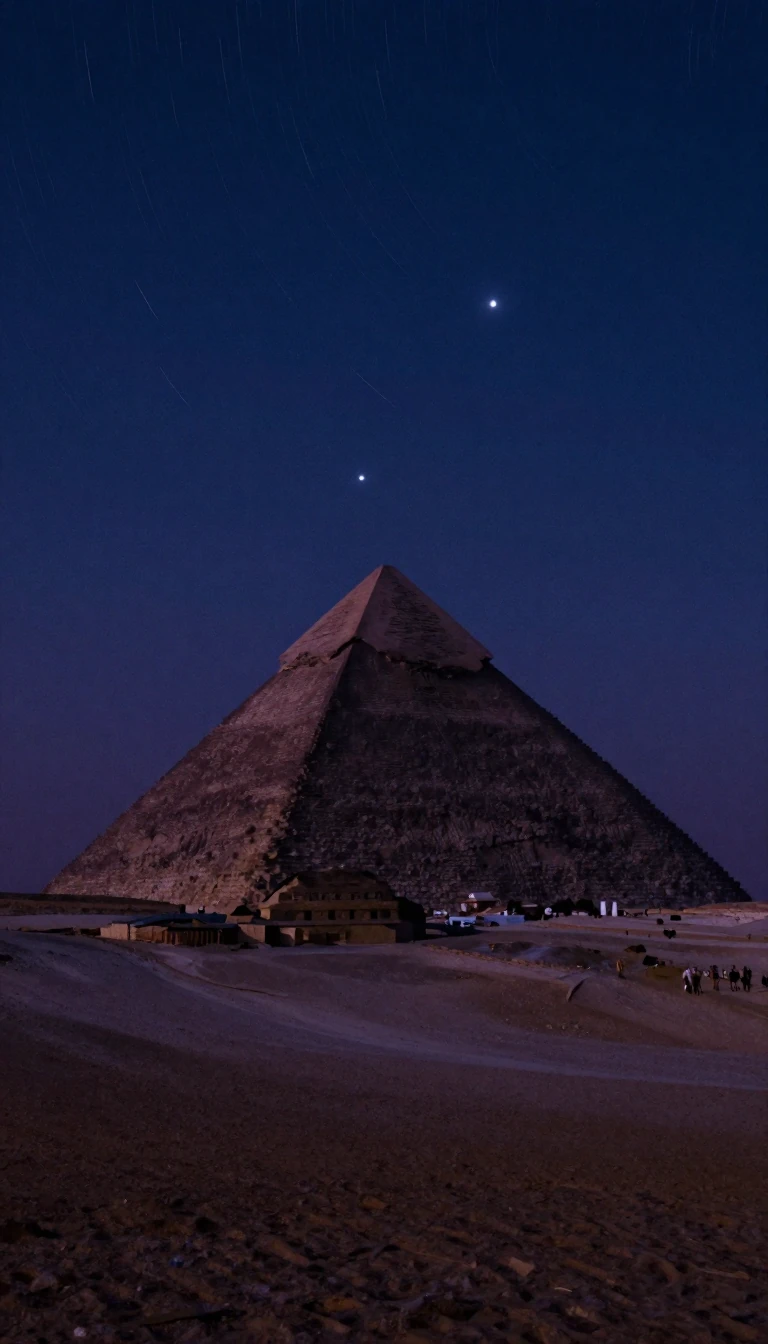 Buddhist temples are designed to represent the pure environment of a Buddha and the universe.Far more than mere buildings, Buddhist temples serve as symbolic maps of the cosmos. From the rock-cut halls of ancient India to the climate-adapted wooden structures of Russia, t…
 The Butsudan is a sacred home for the Buddha and the spirits of ancestors.In many Japanese households, a wooden cabinet serves as the spiritual anchor of the home. Known as a butsudan, this ornate altar functions as a bridge between the living and the d…
 Are the seven chakras you know actually ancient, or a modern Western invention?The vibrant rainbow-colored chakra system popularized today is a recent synthesis, not an ancient Indian constant. While the term chakra appears in early Vedic texts as a metaphor…
 Chan Buddhism: A tradition defined by direct insight rather than written scripturesChan Buddhism emerged in China as a unique Mahayana tradition emphasizing direct, meditative insight into one's own Buddha-nature. While often associated with the legendary silent…
 How a foreign faith transformed into the bedrock of Chinese spiritual lifeBuddhism arrived in China as an alien philosophy, often confused with Taoism. Over centuries, it evolved into a uniquely Sinicized tradition, blending Indian Mahayana doctrine wit…
 Can total sensory deprivation unlock the mind's hidden capacity for visionary experience?In the traditions of Tibetan Buddhism and Bön, advanced practitioners enter complete darkness for periods ranging from hours to decades. This intense isolation is not merely a tes…
 Is the ancient Chinese concept of de actually a bank account for your fortune?Translating the Chinese term de is notoriously difficult. While often rendered as virtue, scholars like Arthur Waley argued it functions more like a stock of credit at a bank of f…
 Why the wheel on India's flag represents an ancient path to enlightenment and powerThe dharmachakra, or wheel of dharma, is more than a religious icon. Originating from ancient Indian chariot warfare, it evolved into a potent symbol of both royal authority and s…
- What is the Dharmakāya, the inconceivable truth body at the heart of Buddhist reality?In Mahāyāna Buddhism, the dharmakāya is the unmanifested, inconceivable reality from which all Buddhas arise and return. Far from a simple physical form, it represents the ultimat…
- Can you master your own mind by learning to wake up inside your dreams?Dream yoga, or milam, is an ancient Tibetan tantric practice designed to cultivate awareness within the dream state. By mastering lucidity, practitioners aim to realize the illuso…
 Why the ancient concept of duḥkha means far more than just human sufferingOften translated as suffering, the Sanskrit term duḥkha captures a deeper, pervasive sense of unease or incompleteness. Whether viewed as a poorly fitting axle on a cart or an uns…
 Dzogchen: The Ancient Tibetan Path to Discovering Your Innate, Unchanging State of AwarenessDzogchen, or Great Perfection, is a profound tradition within Tibetan Buddhism that bypasses complex rituals to focus on the direct realization of one's true nature. By recognizin…
 Why Japanese worshippers leave wooden plaques to communicate their deepest desires to the godsEma are small wooden plaques used in Japan to send prayers to the kami. Once a luxury for the wealthy, these offerings have evolved from live horses into artistic symbols, and tod…
 Why the word enlightenment is a misleading translation for the Buddhist concept of bodhiWe often think of enlightenment as a sudden flash of divine illumination. But in early Buddhism, the term bodhi—the root of Buddha—actually means to wake up. It is a process-orien…
 Is the ancient Indian timeline a record of history or a mythological cycle?Hindu tradition maps the past through the Epic-Puranic chronology, a vast framework of royal genealogies and cosmic ages. While some scholars seek to anchor these stories in archa…
- Why some Hindus worship the elephant-headed Ganesha as the supreme, singular divine beingWhile most Hindus invoke Ganesha as the god of beginnings, the Ganapatya sect elevates him further, declaring him the Parabrahman—the supreme reality. This distinct tradition, whi…
 Is the world's most famous Vedic mantra actually missing a syllable?The Gayatri Mantra, a cornerstone of Hindu liturgy and Vedic tradition, is technically incomplete. While it is celebrated as a twenty-four-syllable masterpiece, the original text …
- How a Fourteenth-Century Monk Created the Most Influential School of Tibetan BuddhismFounded by the philosopher Je Tsongkhapa, the Gelug school rose from a single monastery to become the dominant political and religious force in Tibet. By synthesizing rigorous mon…
 Is the ultimate reality of your mind a groundless ground that exists before time?In the Dzogchen tradition, the ground is the primordial state of every sentient being. It is not a thing to be achieved, but a reality to be recognized. This atemporal, empty cons…
- More than a house of worship, the gurdwara is an open gateway to the guru.A gurdwara is far more than a religious building; it is a community hub designed to dissolve social barriers. Whether providing free meals in the langar hall or offering shelter t…
 The ancient Sanskrit term for a mentor carries a weight far beyond mere teaching.In Indian traditions, a guru is not just an instructor but a spiritual guide who dispels the darkness of ignorance. This reverential figure helps students navigate the complexitie…
 In Shinto, purification is not just about morality but clearing away bad luckHarae is the essential Shinto practice of cleansing pollution, sin, and misfortune. Whether through ritual washing, salt sprinkling, or the rhythmic waving of a paper wand, these …
- Is the most recited Buddhist scripture a profound ancient truth or a Chinese invention?The Heart Sutra is the heartbeat of Mahayana Buddhism, famously declaring that form is emptiness and emptiness is form. While millions chant it daily, scholars are locked in a fie…
- A Hindu temple is a mathematical map of the universe, not just a building.Far from being mere houses of worship, Hindu temples are intricate, geometric models of the cosmos. Designed using ancient Sanskrit architectural manuals, these structures use pre…
 Why everything you see is already fraying at the edgesThe ancient realization that nothing lasts is a cornerstone of human thought. From the Buddhist doctrine of anicca to the Greek concept of panta rhei, philosophers have long wrest…
 Is Ishvara a creator god, a king, or the very fabric of reality?The Sanskrit term Ishvara defies simple translation. Depending on the era and school of Hindu philosophy, it has been interpreted as a personal deity, a supreme ruler, the univers…
 Did ancient Indian fatalists believe that free will was an impossible, non-existent illusion?The Ājīvikas were an ancient Indian school of thought that rejected free will entirely. They argued that every event in the universe, from human choices to the movement of atoms, …
 From sacred tool to status symbol: the complex history of the prayer bead malaThe japamala is a loop of beads used across Indian religions to track mantras and prayers. While its exact origins remain a mystery, this simple garland evolved from a private spi…
- The Jataka tales are ancient stories of the Buddha's past lives and spiritual growth.Long before he became the Buddha, Gautama lived countless lives as kings, outcasts, and animals. These Jataka tales, one of Buddhism's oldest literary genres, use these past exper…
 How an 11th-century Buddhist school vanished but shaped all of Tibetan practiceThe Kadam school, founded by the Bengali master Atisa in 11th-century Tibet, ceased to exist as an independent institution by the 16th century. Yet, its core teachings—including t…
 Kagura: The ancient Japanese ritual dance where the performer becomes a godKagura is a Shinto tradition where dance serves as a bridge between humanity and the divine. Through rhythmic movement and trance, performers aim to channel deities, transforming …
 The Kagyu school of Tibetan Buddhism is a lineage defined by oral transmission.Known as the Oral Lineage, Kagyu traces its roots to 11th-century Indian masters. It evolved from a tradition of solitary, householder yogis into a structured monastic system. Tod…