Could a machine's blueprint be the ancestor of DNA?
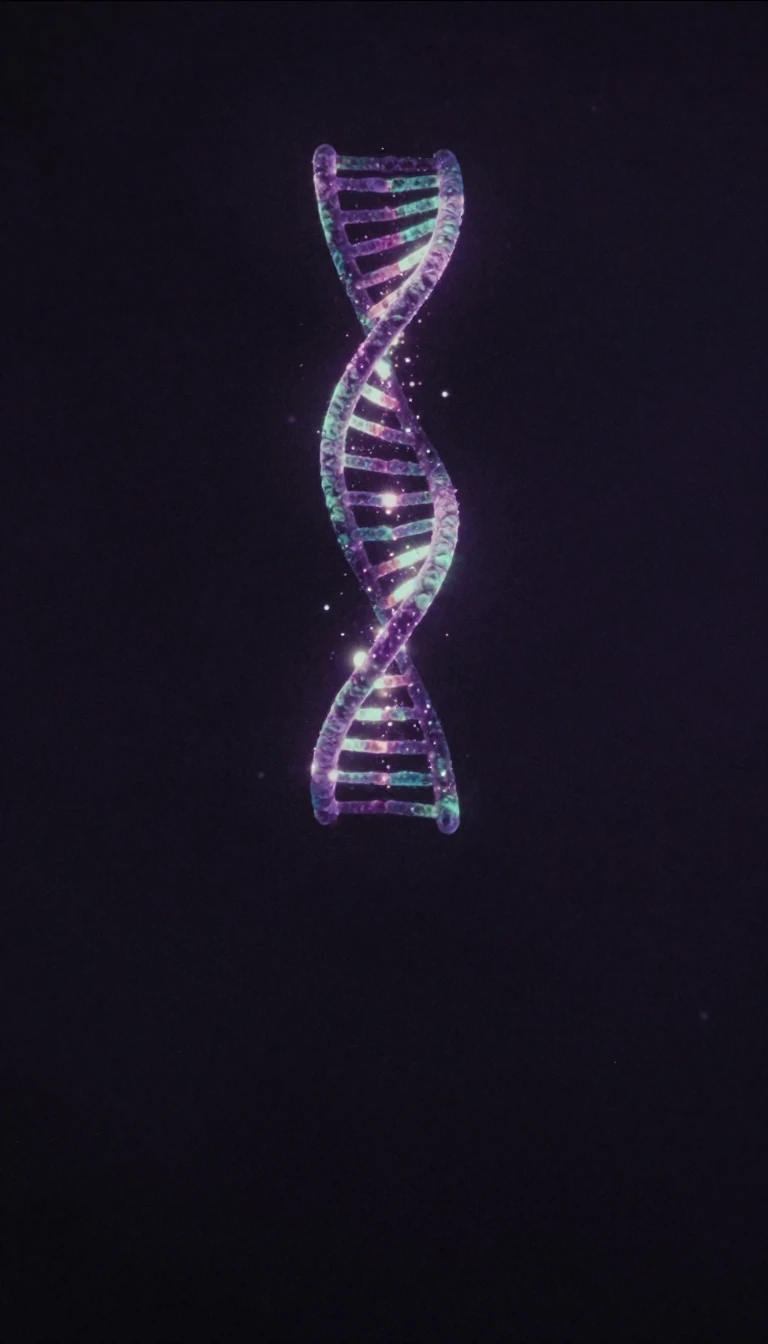
In short: Long before we understood the double helix, mathematicians were designing machines that could evolve. By theorizing about robots that copy instructions separately from their physical bodies, pioneers like John von Neumann accidentally predicted the fundamental mechanism of biological life.
The concept of self-replicating machines—autonomous robots capable of using environmental raw materials to reproduce—is far from a modern sci-fi trope. While the idea of machines reproducing parts dates back centuries, the rigorous scientific study of true autonomy began in earnest in the mid-20th century. In the 1940s, John von Neumann proposed the 'universal constructor,' a kinematic model where a machine uses a memory tape to instruct a manipulator to assemble parts from a 'sea' of raw materials.
Von Neumann’s most profound insight was that for open-ended evolution to occur, inherited information must be copied and passed to offspring separately from the machine itself. This theoretical framework preceded the discovery of the DNA molecule's structure by Watson and Crick, mirroring how genetic information is translated and replicated within a cell. His work sought to find the complexity threshold required for machines to undergo natural selection, much like biological organisms.
The vision for these 'clanking replicators' has expanded from abstract mathematics to practical space exploration. In 1956, Edward F. Moore suggested 'artificial living plants' that could use sunlight and seawater to grow. Later, in 1980, a NASA-led study proposed self-replicating lunar factories using electric carts and robotic loaders to process regolith. Today, researchers explore 'bootstrapping'—using In Situ Resource Utilization to start space industries that could become self-sufficient in just 20 to 40 years, potentially enabling 'massless exploration' of the solar system.
Opens the Intellect+ feed with this card first. Swipe up for the next one.
Sources
- Summary by Intellect · source: Self-replicating machine
To cite this card, link to https://intellectplus.co.uk/app/ideas-self-replicating-machine.
How we source, check and correct cards: Editorial standards.
General information, not professional advice. Spotted an error? Flag the card or see corrections and complaints.
Intellect Plus is a visual educational discovery platform for exploring fascinating facts and ideas. Brain Food, Not Brain Rot. What is Intellect Plus?
Related
More in Thought experiments · More in Ideas & Philosophy · Latest · A–Z · All topics
