How did the ancient world sound before the invention of modern musical notation?
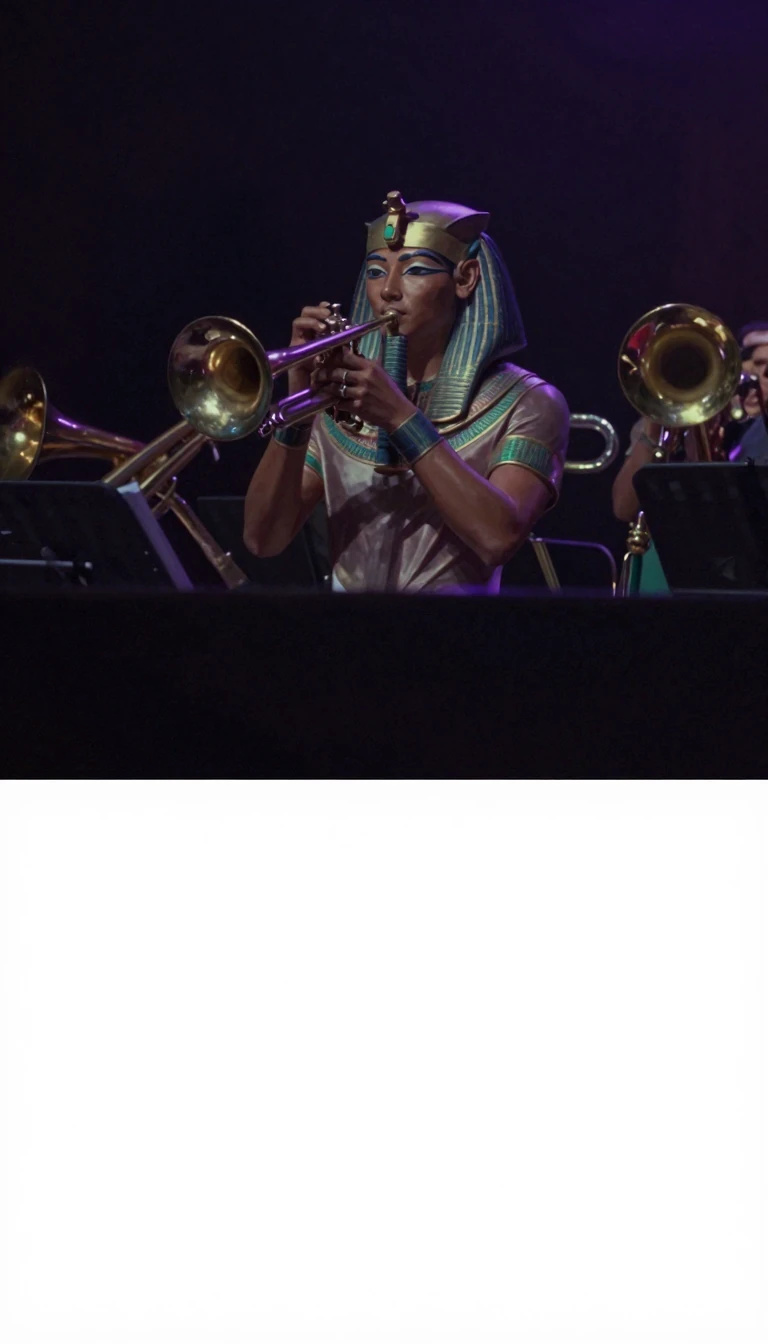
In short: Ancient music was a global phenomenon, yet much of its sound remains a mystery. While civilizations from Egypt to China developed sophisticated instruments and complex theories, the lack of standardized notation means we are often left with fragments, speculative reconstructions, and the echoes of myths rather than clear scores.
Ancient music encompasses the diverse practices of literate civilizations before approximately 500 CE. Across regions like Mesopotamia, India, and Greece, music was frequently defined by monophony, improvisation, and the primacy of text. Because most traditions relied on oral transmission, the transition to written records was slow. The earliest known notated example is the Hurrian Hymn No. 6 from the 14th century BCE, while Western diastematic notation did not emerge until the 9th to 12th centuries CE.
In Egypt, music was integral to culture, with instruments like harps and flutes appearing in Old Kingdom tomb paintings. Despite scholarly attempts to reconstruct these sounds, most theories remain speculative, as only artifacts like the Tutankhamun trumpets offer a glimpse into their true timbre. Similarly, in Mesopotamia, the discovery of lyre fragments at Ur in 1929 provided physical evidence, yet restorations have rarely been deemed satisfactory. Cuneiform tablets from Nippur and Ugarit offer some of the oldest recorded melodies, though interpretations of these notations vary widely among experts.
Indian and Greek traditions offer deeper theoretical insights. The Natya Shastra, written between 200 BCE and 200 CE, established fundamental principles of consonance and the emotional power of musical modes, or jatis, which prefigure modern ragas. Meanwhile, the Greeks integrated music into the quadrivium, viewing it as a mathematical discipline linked to astronomy through the theory of musica universalis. Roman music, by contrast, largely synthesized the traditions of conquered territories, including Greece and Egypt, to serve military, religious, and civic life.
Today, the study of ancient music relies on a combination of archaeological finds, literary references, and the analysis of surviving fragments. While groups like Ensemble Kérylos attempt to recreate these lost sounds, the inherent ambiguity of ancient texts ensures that the music of the past remains a subject of ongoing debate and discovery rather than a settled historical fact.
Opens the Intellect+ feed with this card first. Swipe up for the next one.
Sources
- Summary by Intellect · source: Ancient music
To cite this card, link to https://intellectplus.co.uk/app/music-ancient-music.
How we source, check and correct cards: Editorial standards.
General information, not professional advice. Spotted an error? Flag the card or see corrections and complaints.
Intellect Plus is a visual educational discovery platform for exploring fascinating facts and ideas. Brain Food, Not Brain Rot. What is Intellect Plus?
Related
More in Music · More in Music · Latest · A–Z · All topics
