How a Venetian organist turned church architecture into the birth of Baroque music
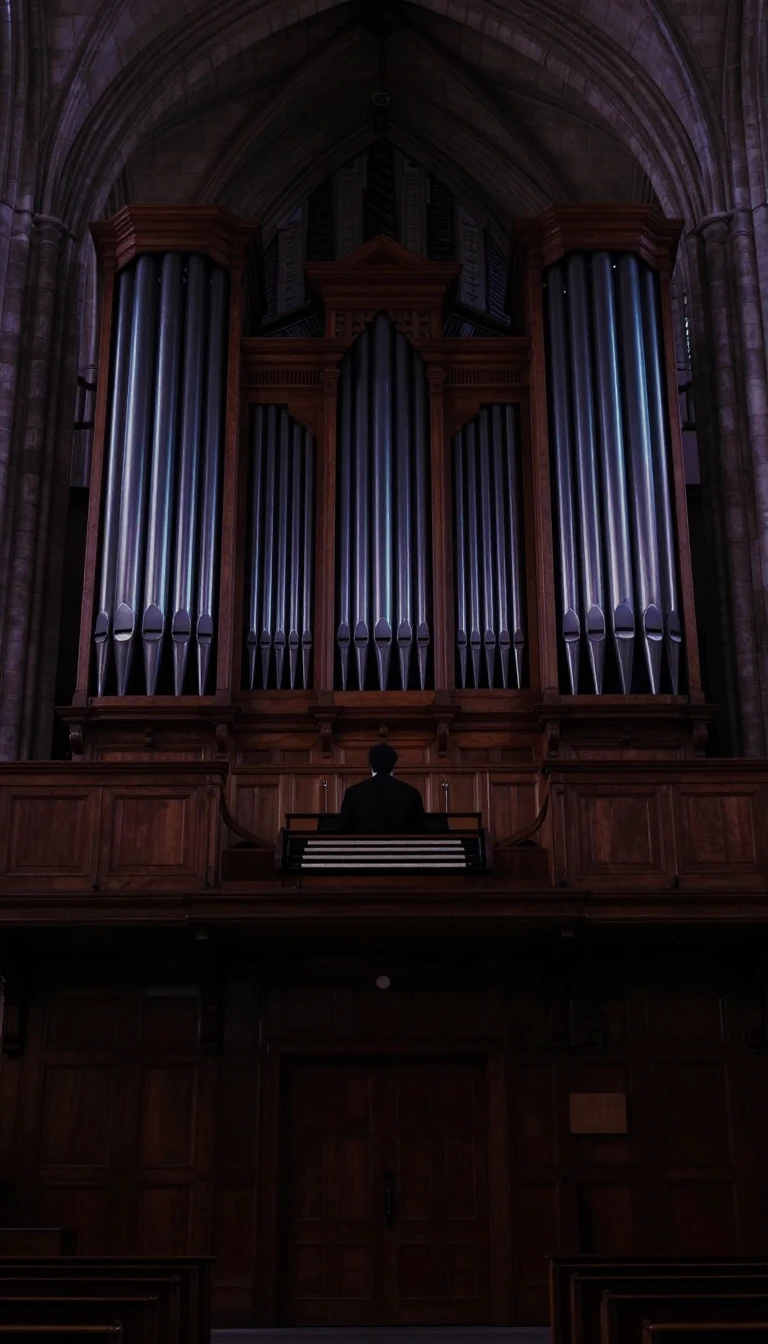
In short: Giovanni Gabrieli transformed the acoustics of St Mark's Basilica into a musical instrument. By placing choirs and instrumentalists in separate lofts, he pioneered the polychoral style that defined the early Baroque. His innovations in dynamics and instrumentation drew students from across Europe, setting the stage for J.S. Bach.
Born in Venice around 1554, Giovanni Gabrieli was a central figure in the transition from Renaissance to Baroque idioms. He likely studied under his uncle, Andrea Gabrieli, a composer at St Mark's Basilica, and later spent time in Munich learning from Orlando de Lassus. By 1585, Giovanni had secured the position of principal organist at St Mark's, later adding the role of principal composer. He also served as organist at the Scuola Grande di San Rocco, a wealthy confraternity that rivaled St Mark's in musical prestige.
Gabrieli’s most significant contribution was his mastery of spatial sound. St Mark's Basilica featured two choir lofts facing each other, which Gabrieli utilized to create striking antiphonal effects. While the polychoral style existed before him, Gabrieli pioneered the use of precisely specified instrumentation and multiple, spatially separated groups. He exploited the church's unique acoustics, where even a single string player could be balanced against a large brass section. His 1597 volume, Sacrae symphoniae, sparked a vogue that attracted students from across Europe, particularly Germany, who carried these techniques north.
His later works, influenced by the homophonic style of Monteverdi, introduced sections for soloists and basso continuo, as seen in the famous piece In Ecclesiis. Gabrieli’s influence was profound; his students, including Heinrich Schütz and Hans Leo Hassler, helped cement the Baroque stile concertato. By the time of his death in 1612, he had left a legacy that fundamentally altered the trajectory of Western music, bridging the gap between the Renaissance and the complex, structured productions of the later German Baroque.
The technical demands of his music remain a subject of study. St Mark's Basilica presents a challenging acoustic environment, with a reverberation time of nearly seven seconds in an empty space. Gabrieli’s compositions were designed to navigate these variables, often using echo and dialogue to create clarity. His commitment to musical development—both in his own work and in preserving his uncle's compositions—ensured that the Venetian tradition endured long after his passing.
Opens the Intellect+ feed with this card first. Swipe up for the next one.
Sources
- Summary by Intellect · source: Giovanni Gabrieli
To cite this card, link to https://intellectplus.co.uk/app/music-giovanni-gabrieli.
How we source, check and correct cards: Editorial standards.
General information, not professional advice. Spotted an error? Flag the card or see corrections and complaints.
Intellect Plus is a visual educational discovery platform for exploring fascinating facts and ideas. Brain Food, Not Brain Rot. What is Intellect Plus?
Related
More in Musicians and composers · More in Music · Latest · A–Z · All topics
