Minimal music: How a radical rejection of complexity redefined the sound of modern life
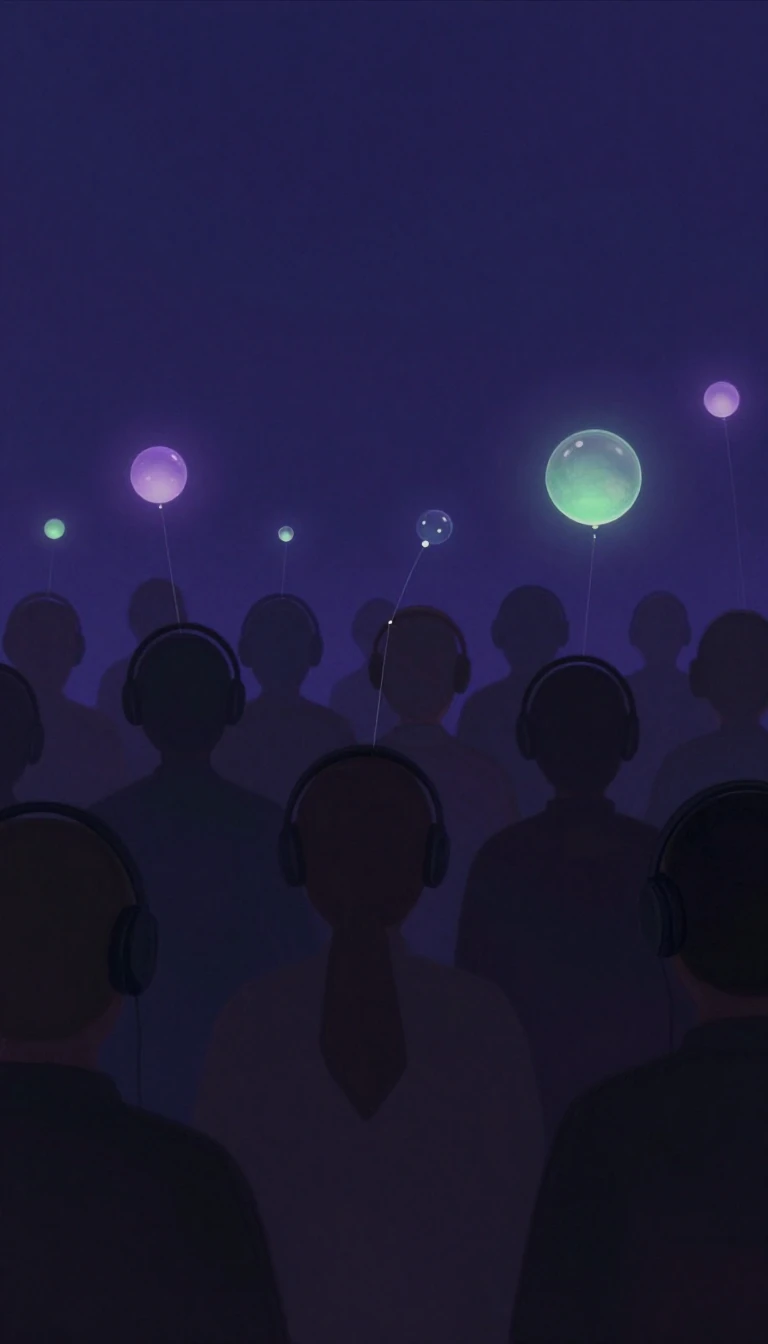
In short: Emerging from the American West Coast in the late 1950s, minimal music stripped composition down to its barest essentials. By embracing repetitive pulses, steady drones, and strict process-based rules, pioneers like Steve Reich and Philip Glass challenged the era's obsession with complexity, sparking intense debate about art, consumerism, and culture.
Minimal music, or minimalism, is defined by the use of limited materials—whether a few notes, sustained electronic rumbles, or recordings of natural sounds. Unlike traditional Western compositions that rely on goal-oriented motion, minimalist works often favor stasis, non-narrative structures, and repetitive patterns. This approach forces the listener to focus on the internal mechanics of the sound rather than a dramatic arc. Early innovators like La Monte Young, Terry Riley, and Steve Reich developed these techniques in the late 1950s and early 1960s, moving from the West Coast to the New York Downtown scene, where their work was initially categorized as experimental.
The movement was not without its detractors. Critics like Elliott Carter famously dismissed minimalism as a form of social pathology, comparing its repetitive nature to political propaganda and advertising. Others, such as Ian MacDonald, labeled it an emotionally blank soundtrack for the Machine Age. Conversely, proponents like Kyle Gann argue that minimalism was a necessary, predictable reaction to the extreme complexity of earlier serialist music. He suggests that just as the Baroque continuo followed Renaissance polyphony, minimalism provided a return to simplicity after the mid-century avant-garde had reached its limits.
Beyond the concert hall, minimalism left a lasting mark on popular culture. Its influence ripples through genres ranging from krautrock and post-rock to modern electronic dance music. While some similarities in electronic music may be coincidental due to loop-based technology, artists like The Orb have explicitly sampled minimalist works. Today, the movement is recognized not just as a stylistic choice, but as a significant shift in how we perceive time and structure in music, proving that even the most austere frameworks can hold profound depth.
Opens the Intellect+ feed with this card first. Swipe up for the next one.
Sources
- Summary by Intellect · source: Minimal music
To cite this card, link to https://intellectplus.co.uk/app/music-minimal-music.
How we source, check and correct cards: Editorial standards.
General information, not professional advice. Spotted an error? Flag the card or see corrections and complaints.
Intellect Plus is a visual educational discovery platform for exploring fascinating facts and ideas. Brain Food, Not Brain Rot. What is Intellect Plus?
Related
More in Music · More in Music · Latest · A–Z · All topics
