Tomás Luis de Victoria fused Renaissance counterpoint with a uniquely intense, mystical Spanish spirit.
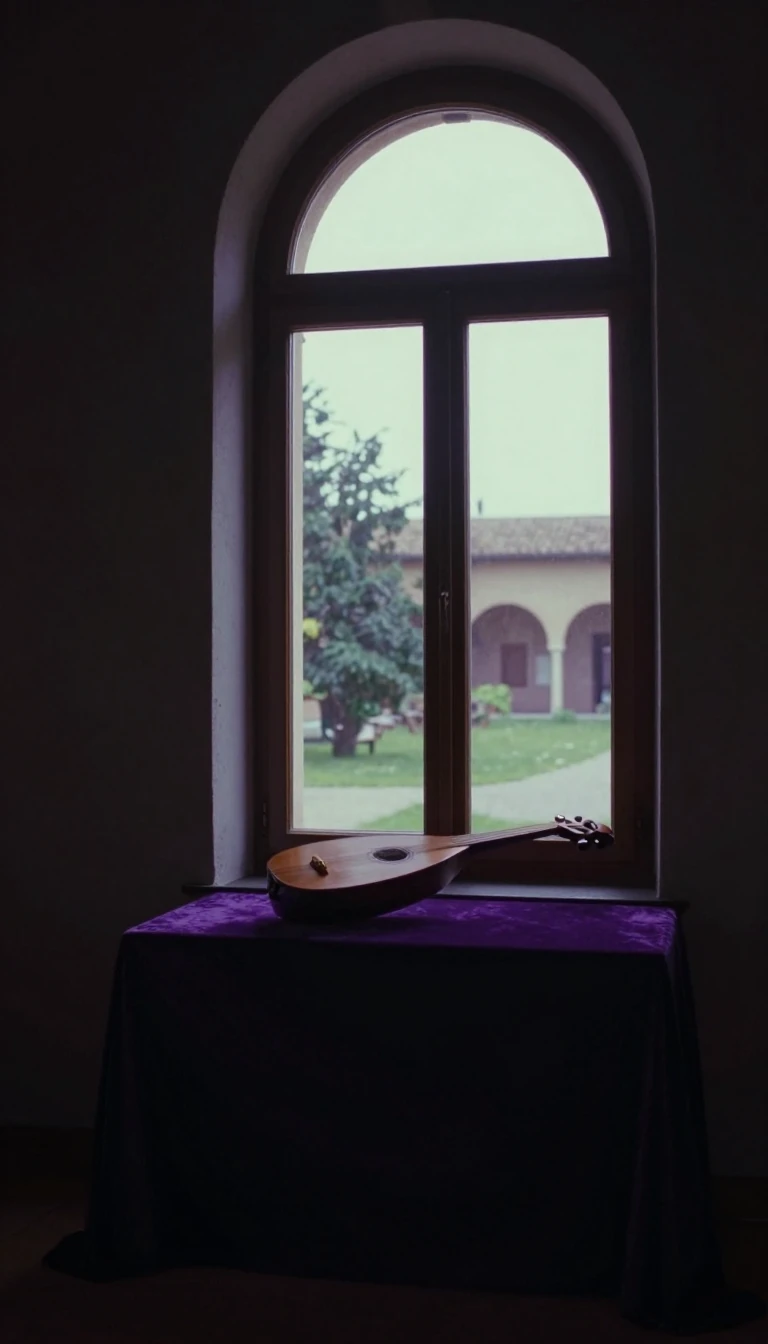
In short: Ranking among the greatest composers of the 16th century, Tomás Luis de Victoria transformed sacred music. By blending the technical mastery of Roman polyphony with a deeply personal, dramatic fervor, he created works that foreshadowed the emotional intensity of the Baroque era, leaving an indelible mark on Western musical history.
Born around 1548 in Ávila, Spain, Tomás Luis de Victoria emerged as a central figure of the late Renaissance. Sent to Rome in 1565 by King Philip II to prepare for holy orders, he immersed himself in the city's musical life. He likely studied under the renowned Giovanni da Palestrina, eventually succeeding him as director of music at the Roman Seminary. Victoria’s career was defined by his dual identity as a dedicated Catholic priest and a prolific composer, roles he balanced while serving in various prestigious positions, including chaplain to the dowager empress Maria in Madrid.
Victoria’s compositional style is celebrated for its dramatic, almost mystical quality, which some scholars compare to the spiritual intensity of St. Teresa of Avila. While he mastered the complex contrapuntal techniques of his contemporaries, he infused his music with a distinctively Spanish emotional weight. He was an innovator who utilized modern devices for his time, such as pictorial writing that vividly portrayed scenes—most notably in his motet 'Cum beatus Ignatius'—and repeated notes that anticipated the Florentine interest in recitative. His polychoral works also adopted the Venetian manner, and his inclusion of written organ parts served as a precursor to the Baroque continuo.
His surviving output is almost exclusively sacred, consisting of 21 masses, 44 motets, psalm settings, hymns, and various offices for the dead. His final masterpiece, the Requiem of 1605, was written in memory of empress Maria. Beyond his technical skill, Victoria’s music is noted for a remarkable sense of tonal contrast, which hinted at the major-minor tonal concepts that would later dominate Western music. By the time he settled permanently in Madrid in 1594, he had solidified his legacy as a master of canonic devices and a composer whose work bridged the gap between the Renaissance and the emerging Baroque style.
Opens the Intellect+ feed with this card first. Swipe up for the next one.
Sources
- Summary by Intellect · source: Tomás Luis de Victoria | Composer, Works, Renaissance Polyphony, Sacred Music, & Motets | Britannica
- Also: Tomás Luis de Victoria
To cite this card, link to https://intellectplus.co.uk/app/music-tom-s-luis-de-victoria.
How we source, check and correct cards: Editorial standards.
General information, not professional advice. Spotted an error? Flag the card or see corrections and complaints.
Intellect Plus is a visual educational discovery platform for exploring fascinating facts and ideas. Brain Food, Not Brain Rot. What is Intellect Plus?
Related
More in Musicians and composers · More in Music · Latest · A–Z · All topics
