How the Earth creates new land by pulling itself apart at the seams
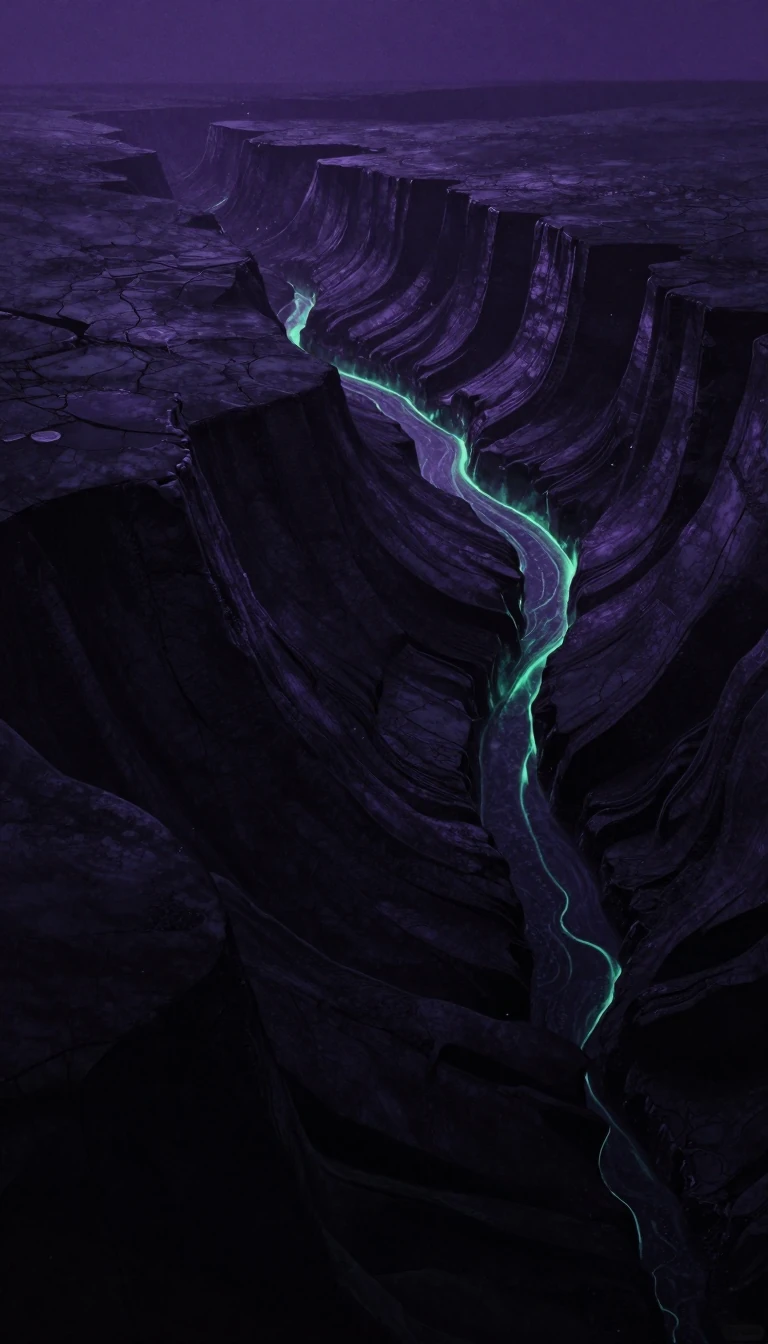
In short: Divergent boundaries are the planet's construction zones, where tectonic plates drift away from each other to make room for new crust. Driven by mantle convection, these gaps are filled by molten magma that rises from below, cooling to form fresh rock and expanding the seafloor in a continuous, rhythmic process.
At a divergent boundary, two tectonic plates move in opposite directions, creating a linear gap that is immediately filled by molten material. This process is fueled by complex convection within the Earth's mantle, which brings intense heat and lower pressure to the base of the lithosphere. This environment melts rock from the asthenosphere, resulting in massive lava flows that solidify into new crust. While these boundaries are most common as mid-oceanic ridges, they also appear on continents, where they initially form rifts that can eventually evolve into deep rift valleys, such as the East African Great Rift Valley.
The movement at these boundaries is rarely uniform, leading to the formation of massive transform faults where adjacent ridge blocks spread at different rates. These fracture zones are significant sources of submarine earthquakes and create a distinct, blocky pattern on the seafloor. Over millions of years, plates can shift hundreds of kilometers from the center. Consequently, the geological age of the crust is predictable: rocks located closest to the boundary are the youngest, while those further away are older and deeper, having subsided over time due to thermal contraction.
One of the most compelling proofs for this mechanism is the pattern of magnetic reversals found on the seafloor. Airborne surveys revealed symmetrical magnetic bands on opposite sides of ridge centers, a phenomenon explained by the Morley–Vine–Matthews hypothesis. As magma cools into rock, it records the Earth's magnetic polarity at that moment. Because these bands match perfectly on either side of the ridge, they provide a precise historical map of both polar reversals and the rate of seafloor spreading. This discovery was instrumental in confirming the theory of plate tectonics, proving that the ocean floor is not a static feature but a dynamic, growing surface.
The birth of these boundaries is often linked to hotspots, where large convective cells deliver immense quantities of hot material toward the surface. The kinetic energy generated by these cells is believed to be powerful enough to fracture the lithosphere, initiating the separation of plates. Whether through the slow, steady growth of the Mid-Atlantic Ridge or the incipient rifting seen in the Baikal Rift Zone, these boundaries represent the fundamental way the Earth recycles its surface and expands its crustal footprint.
Opens the Intellect+ feed with this card first. Swipe up for the next one.
Sources
- Summary by Intellect · source: Divergent boundary
To cite this card, link to https://intellectplus.co.uk/app/nature-divergent-boundary.
How we source, check and correct cards: Editorial standards.
General information, not professional advice. Spotted an error? Flag the card or see corrections and complaints.
Intellect Plus is a visual educational discovery platform for exploring fascinating facts and ideas. Brain Food, Not Brain Rot. What is Intellect Plus?
Related
More in Geology · More in Nature · Latest · A–Z · All topics
