Earth's atmosphere does not end at a line; it leaks into space forever.
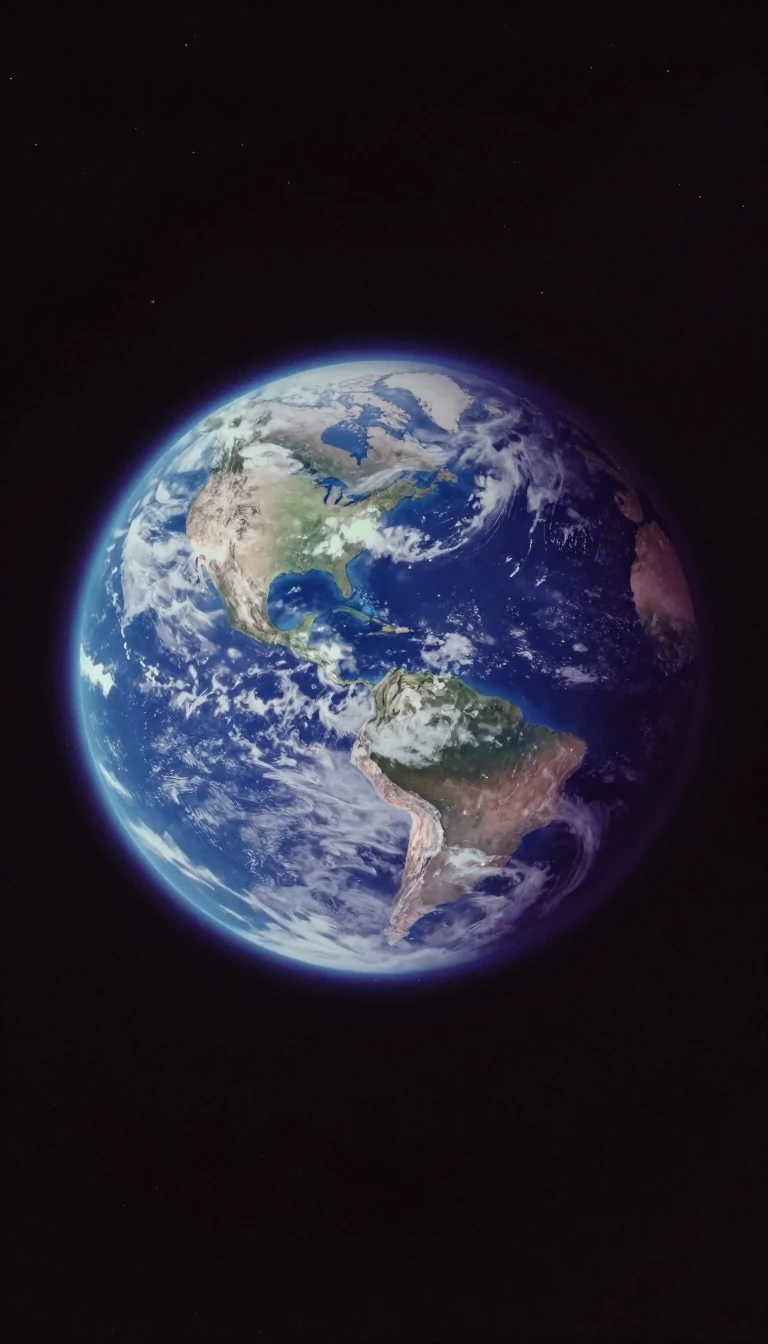
In short: The exosphere is the final, ghostly frontier of our atmosphere, where air is so thin that atoms rarely collide. It is a place of ballistic arcs and slow escape, where Earth's gravity loses its grip and particles drift into the void, creating a faint, glowing halo around our planet.
The exosphere begins at the exobase, or thermopause, typically situated between 500 and 1,000 kilometers above Earth's surface. This boundary is not fixed; its altitude fluctuates based on solar activity, specifically the intensity of incoming X-ray and ultraviolet radiation. Because the air here is incredibly sparse, the traditional rules of barometric pressure no longer apply. Instead, the region is defined by a lack of molecular collisions, allowing light gases like hydrogen and helium to dominate the composition.
Particles in this layer follow ballistic trajectories, arcing through space like thrown cannonballs. While most are eventually pulled back toward Earth by gravity, the fastest-moving atoms reach escape velocity and drift away, causing a small, continuous leakage of our atmosphere into space. This region also hosts the geocorona, a faint ultraviolet glow produced by hydrogen atoms, which has been detected as far as 100,000 kilometers from the surface. Some scientists argue that because the exosphere merges seamlessly into the interplanetary medium, it is more accurate to describe it as part of outer space rather than Earth's atmosphere.
The influence of this layer extends far beyond the reach of satellites. At its theoretical outer limit—roughly 190,000 kilometers away, or halfway to the Moon—the pressure from sunlight becomes stronger than Earth's gravitational pull. Even at much lower altitudes, the thin air exerts a drag force on orbiting objects like the International Space Station. Orbiting at an average altitude of 330 kilometers, the station loses about 2 kilometers of altitude every month, requiring periodic boosts to prevent it from decaying and burning up upon re-entry.
Opens the Intellect+ feed with this card first. Swipe up for the next one.
Sources
- Summary by Intellect · source: The Exosphere | Center for Science Education
- Also: Exosphere
To cite this card, link to https://intellectplus.co.uk/app/nature-exosphere.
How we source, check and correct cards: Editorial standards.
General information, not professional advice. Spotted an error? Flag the card or see corrections and complaints.
Intellect Plus is a visual educational discovery platform for exploring fascinating facts and ideas. Brain Food, Not Brain Rot. What is Intellect Plus?
Related
More in Air · More in Nature · Latest · A–Z · All topics
