Khonsu: The Ancient Egyptian Moon God Who Governed Time and the Creation of Life
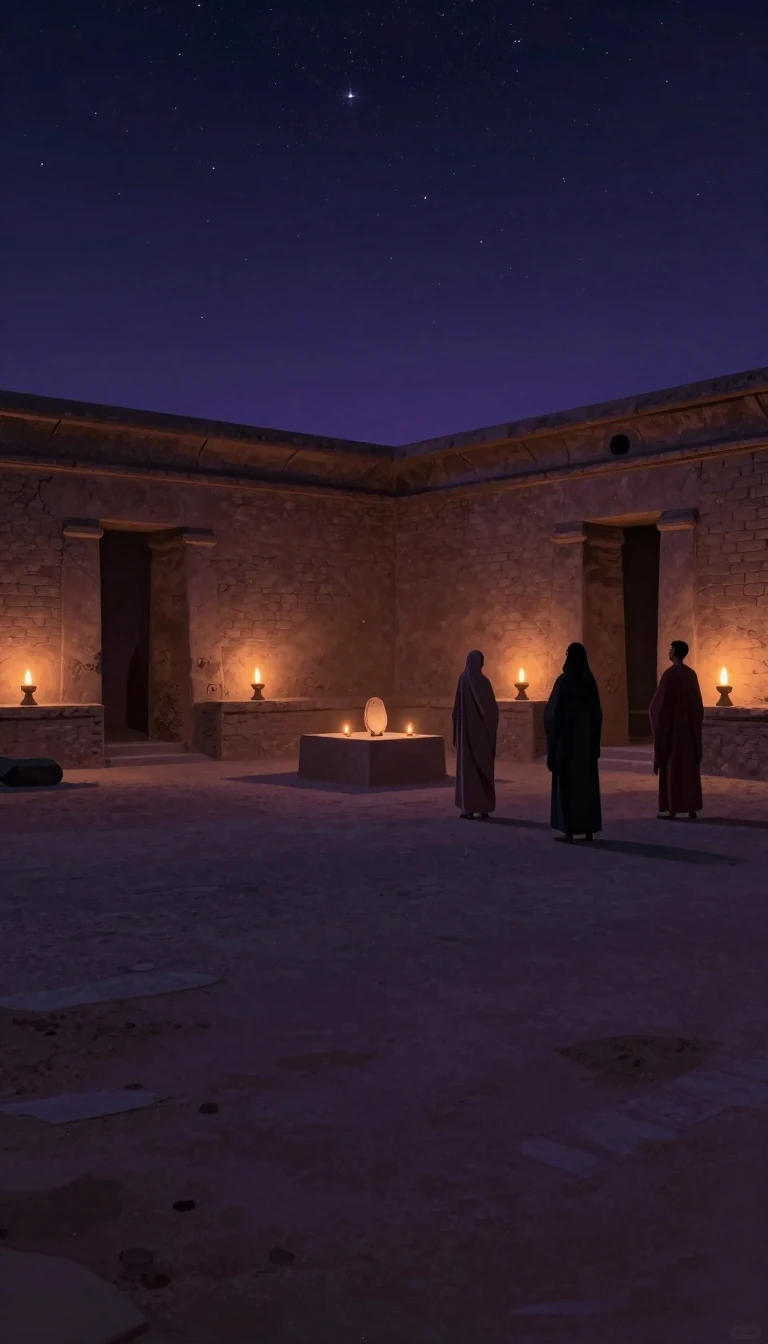
In short: Known as the traveller, Khonsu was a central figure in the Egyptian pantheon, serving as a deity of the Moon. Beyond his celestial movements, he held profound influence over the progression of time and the biological spark of existence, acting as a vital architect for all living creatures across the land.
Khonsu, whose name translates to traveller, was primarily revered as an ancient Egyptian god of the Moon. This title likely stems from the observable nightly journey of the lunar body as it traverses the celestial expanse. While his primary domain was the night sky, his influence extended deeply into the mechanics of the natural world and the human experience of time.
In the religious landscape of Thebes, Khonsu occupied a significant position within the Theban Triad. He was considered the son of Amun, his father, and Mut, his mother. This family unit formed the bedrock of local worship, anchoring Khonsu within a lineage of major deities. His role was not merely symbolic; he was believed to be instrumental in the creation of new life, actively fostering the development of all living creatures.
Beyond his creative capacity, Khonsu functioned as a regulator of temporal progression. Alongside Thoth, another deity associated with wisdom and measurement, he tracked the passage of time. This connection to time and the Moon also linked him to baboons, animals often associated with lunar cycles and divine order in Egyptian iconography. His multifaceted nature as both a celestial traveller and a life-giver highlights the complex ways ancient cultures interpreted the intersection of astronomical phenomena and biological reality.
The legacy of Khonsu remains a testament to how ancient civilizations synthesized their observations of the natural world into a structured belief system. By attributing the movement of the Moon and the emergence of life to a single divine entity, the Egyptians created a cohesive narrative that explained the rhythms of their environment. His presence in the Theban Triad underscores the importance of familial structures in their theology, reflecting a society that valued both cosmic order and the continuity of life.
Opens the Intellect+ feed with this card first. Swipe up for the next one.
Sources
- Summary by Intellect · source: Khonsu
To cite this card, link to https://intellectplus.co.uk/app/nature-khonsu.
How we source, check and correct cards: Editorial standards.
General information, not professional advice. Spotted an error? Flag the card or see corrections and complaints.
Intellect Plus is a visual educational discovery platform for exploring fascinating facts and ideas. Brain Food, Not Brain Rot. What is Intellect Plus?
Related
More in Organisms · More in Nature · Latest · A–Z · All topics
