Is this tiny, pig-nosed creature the smallest mammal on the entire planet?
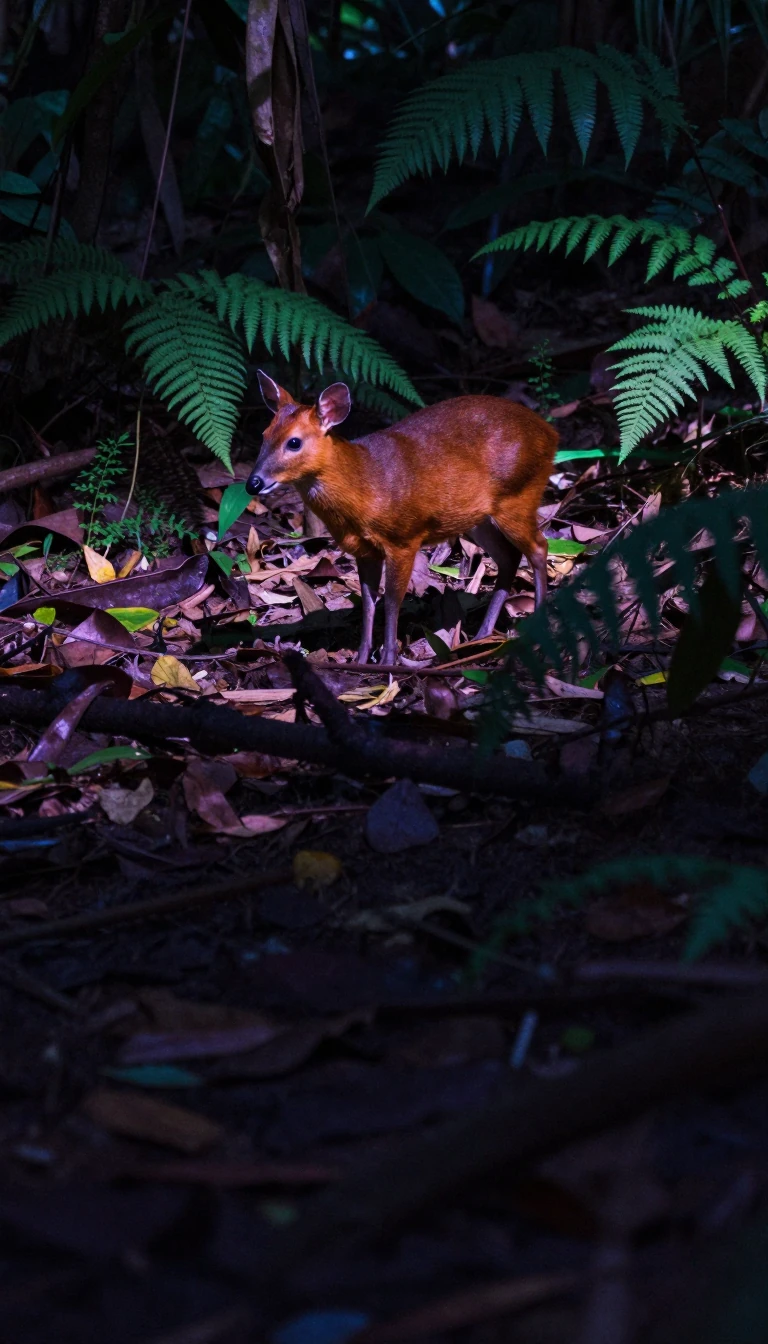
In short: Weighing only two grams, Kitti's hog-nosed bat is a contender for the title of world's smallest mammal. Often called the bumblebee bat, this elusive creature lives in limestone caves in Thailand and Myanmar. Its unique biology and fragile habitat make it a fascinating, yet highly vulnerable, evolutionary outlier.
Discovered in 1974 by Thai zoologist Kitti Thonglongya and British researcher John E. Hill, this bat is the sole surviving member of the family Craseonycteridae. It is physically distinct, featuring a swollen, pig-like snout, relatively large ears, and a reddish-brown or grey coat. Measuring just 29 to 33 millimetres in length, it competes with the Etruscan shrew for the title of the world's smallest mammal. While the shrew is often lighter, the bat is generally shorter, illustrating how definitions of size can shift based on whether one measures mass or length.
The bat's anatomy is highly specialized for its lifestyle. It possesses large wings with long tips that enable hovering, allowing it to forage for insects and spiders near bamboo clumps and teak trees. Despite having a uropatagium—a web of skin between its hind legs—it lacks a visible tail or calcars to assist in flight control. Its skeletal structure shows significant fusion, particularly in the thoracic, lumbar, and sacral regions, which may provide stability during its brief, highly sensitive activity periods at dawn and dusk.
Today, the species is classified as near-threatened, with populations restricted to specific limestone outcrops in western Thailand and southeast Myanmar. The Thai population faces significant risks from habitat degradation, including forest burning during the breeding season and potential infrastructure projects like gas pipelines. While some colonies remain protected within national parks, others exist in vulnerable, unprotected areas. Conservationists remain concerned about the species' long-term survival, especially as human activity, tourism, and even meditation practices by local monks continue to disturb their secluded roosting sites.
Opens the Intellect+ feed with this card first. Swipe up for the next one.
Sources
- Summary by Intellect · source: Kitti's hog-nosed bat
- Also: iNaturalist — Bumblebee Bat (Craseonycteris thonglongyai) · CC BY-SA 4.0 (Wikipedia summary)
To cite this card, link to https://intellectplus.co.uk/app/nature-kitti-s-hog-nosed-bat.
How we source, check and correct cards: Editorial standards.
General information, not professional advice. Spotted an error? Flag the card or see corrections and complaints.
Intellect Plus is a visual educational discovery platform for exploring fascinating facts and ideas. Brain Food, Not Brain Rot. What is Intellect Plus?
Related
More in Vertebrates · More in Nature · Latest · A–Z · All topics
