At 4,600 meters, this sacred Tibetan lake is a nexus of four major religions.
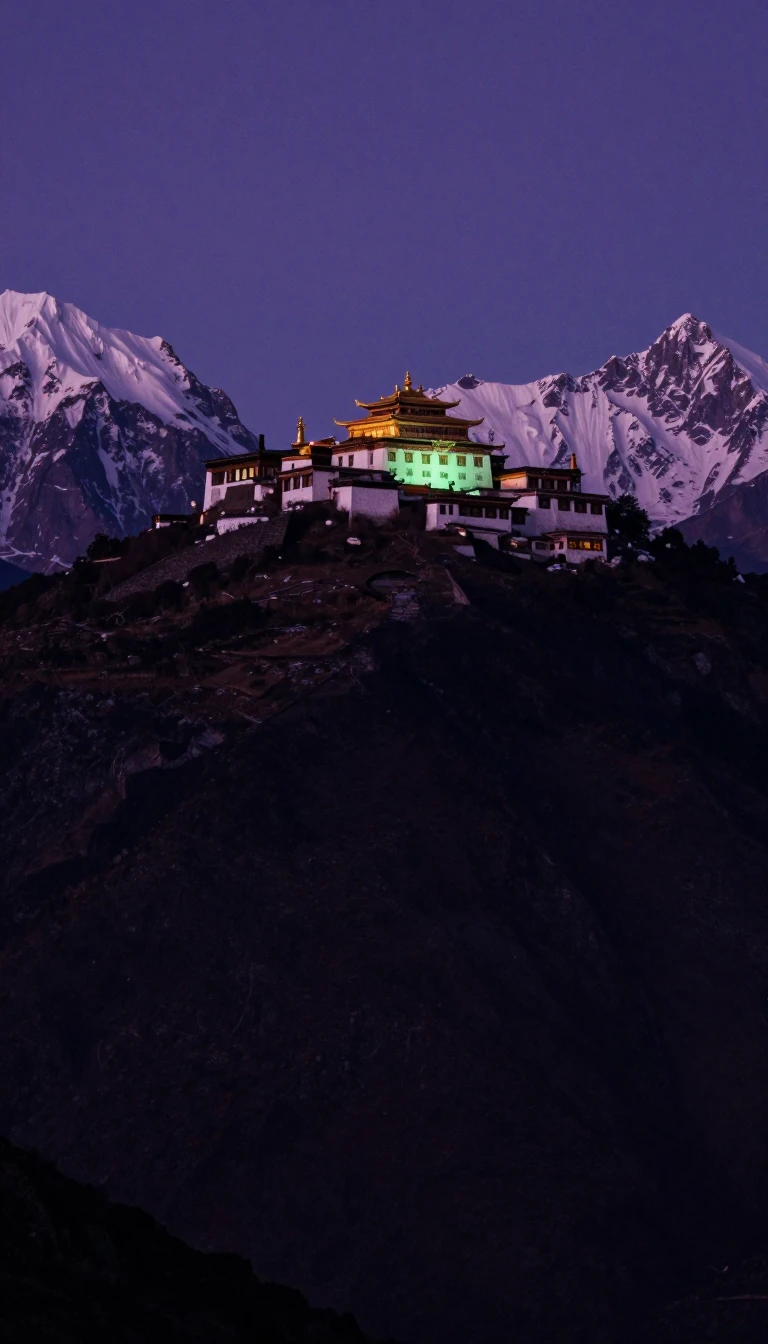
In short: Lake Manasarovar sits at the roof of the world, a high-altitude freshwater basin near Mount Kailash. Revered by Hindus, Buddhists, Jains, and Bon practitioners, it is a site of profound spiritual significance where ancient mythology meets the harsh, changing realities of the Tibetan Plateau's fragile, warming ecosystem.
Located in Tibet’s Ngari Prefecture at an elevation of 4,600 meters, Lake Manasarovar is one of Asia’s highest freshwater lakes. Spanning 320 square kilometers with a maximum depth of 100 meters, it serves as a vital hydrological hub. It overflows into the saline Rakshastal lake via the Ganga Chhu channel and sits near the headwaters of the Indus, Sutlej, Brahmaputra, and Karnali rivers. Despite its prominence, the region is currently under environmental stress; the Tibetan Plateau is warming rapidly, leading to retreating glaciers and thawing permafrost that threaten the area's water security.
The lake’s name derives from the Sanskrit words for mind and lake, reflecting its status as a creation of Brahma’s consciousness. While modern tradition places it at the center of sacred geography, historical evidence suggests this status evolved over time. Early Vedic literature lacks explicit mentions of the lake as a pilgrimage site, and archaeological records show a notable absence of permanent religious infrastructure—such as temples or ashrams—in the region until well after the 1930s. Scholars like Alex McKay suggest that a synthesis of esoteric Buddhism and Shaivism may have eventually unified the site’s importance for both traditions.
Pilgrimage, or yatra, remains central to the lake's identity. Devotees perform a clockwise circumambulation of the adjacent Mount Kailash, while Bon practitioners travel counterclockwise. Access has been historically volatile, shaped by the 1962 Sino-Indian War, the 1959 Tibetan uprising, and more recently, the 2020 COVID-19 pandemic. Today, pilgrims navigate complex geopolitical routes through India, Nepal, and China. Despite the destruction of many historical structures during the Cultural Revolution between 1966 and 1976, the lake remains a powerful symbol of purification, where bathing is believed to cleanse sins and, for the Khas people of Humla, grant shamanic powers.
Opens the Intellect+ feed with this card first. Swipe up for the next one.
Sources
- Summary by Intellect · source: Lake Manasarovar
To cite this card, link to https://intellectplus.co.uk/app/nature-lake-manasarovar.
How we source, check and correct cards: Editorial standards.
General information, not professional advice. Spotted an error? Flag the card or see corrections and complaints.
Intellect Plus is a visual educational discovery platform for exploring fascinating facts and ideas. Brain Food, Not Brain Rot. What is Intellect Plus?
Related
More in Physical geography · More in Nature · Latest · A–Z · All topics
