How a Roman consul's tomb became an architectural marvel of the ancient world
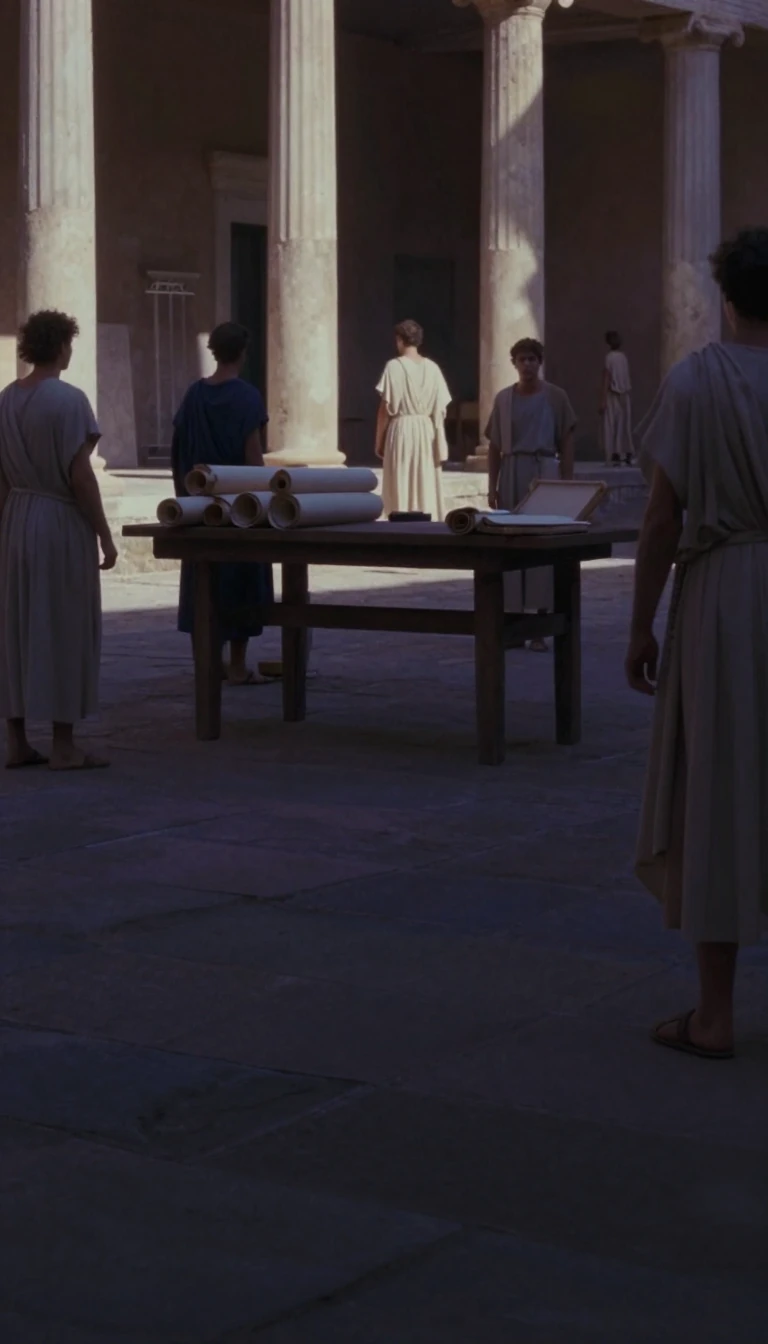
In short: Commissioned as a funerary monument for a Roman proconsul, the Library of Celsus in Ephesus was an architectural triumph of the second century. By blending Greek and Roman building techniques, it served as both a grand mausoleum and a public repository for thousands of ancient papyrus scrolls.
The Library of Celsus was commissioned in the 110s CE by Tiberius Julius Aquila Polemaeanus to honor his father, Tiberius Julius Celsus Polemaeanus, a former proconsul of Asia. Celsus was a trailblazer in Roman politics, potentially the first Greek to serve as a senator and one of the earliest from the eastern provinces to reach the consulship. His burial in a marble sarcophagus beneath the library floor was a rare honor, as interments within city limits were generally prohibited in Roman culture.
Architecturally, the building is celebrated for its 'scenographic' façade, which utilized the Greek technique of false perspective. By making the inner columns longer and the outer columns higher, the structure appeared larger and more imposing than its actual interior dimensions of roughly 180 square metres. The façade was adorned with statues representing virtues like wisdom and knowledge, reflecting the library's dual role as a scholarly hub and a memorial. Inside, the library likely housed around 12,000 scrolls, though some estimates suggest a capacity of up to 16,000.
The library's history is marked by both grandeur and destruction. It functioned as a public space until 262 CE, when a fire—possibly caused by a Gothic invasion or an earthquake—decimated its interior. The façade survived until a later earthquake in the 10th or 11th century. It remained in ruins for centuries until a major reconstruction campaign between 1970 and 1978, led by archaeologist Volker Michael Strocka, successfully re-erected the façade using excavated fragments. Today, the library stands as a testament to the synthesis of Roman and Greek cultural values, having even been featured on Turkish banknotes between 2001 and 2009.
Opens the Intellect+ feed with this card first. Swipe up for the next one.
Sources
- Summary by Intellect · source: Library of Celsus
To cite this card, link to https://intellectplus.co.uk/app/nature-library-of-celsus.
How we source, check and correct cards: Editorial standards.
General information, not professional advice. Spotted an error? Flag the card or see corrections and complaints.
Intellect Plus is a visual educational discovery platform for exploring fascinating facts and ideas. Brain Food, Not Brain Rot. What is Intellect Plus?
Related
More in Earth science · More in Nature · Latest · A–Z · All topics
