Why a massive earthquake can feel weaker than a minor tremor at your feet
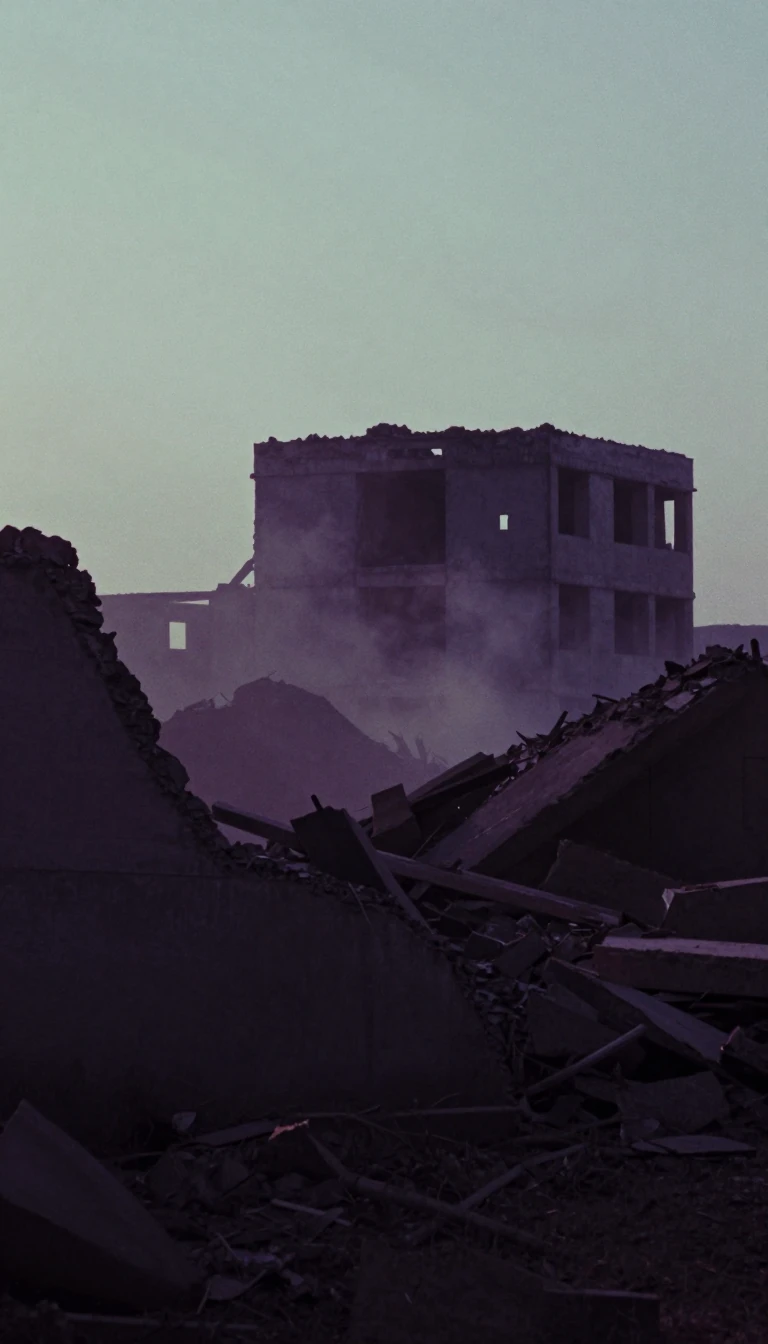
In short: Earthquake magnitude measures total energy released, but intensity measures the actual shaking you feel. A deep, high-magnitude quake might barely rattle windows, while a shallow, low-magnitude event can cause significant structural damage. Understanding this distinction is vital for assessing risk, as intensity is what truly impacts human lives.
The Modified Mercalli Intensity (MMI) scale is an empirical tool used to categorise the severity of earthquake shaking at specific locations. Unlike magnitude scales, which quantify the inherent energy released at the hypocentre, the MMI scale relies on observations of human perception and structural damage. Because intensity is localised, a single earthquake produces a range of MMI values across a region, often visualised through isoseismal maps.
The scale has evolved significantly since Giuseppe Mercalli first formulated his intensity system in 1883. By 1904, Adolfo Cancani expanded the scale to 12 degrees to account for catastrophic events, a structure later refined by August Heinrich Sieberg and eventually translated into English by Harry O. Wood and Frank Neumann in 1931. Today, agencies like the United States Geological Survey often use a version influenced by the 1993 work of Carl Stover and Jerry Coffman, which adapts criteria to account for modern construction standards and the varying reliability of historical indicators.
Crucially, intensity does not always correlate with magnitude. For instance, a 1994 earthquake in Bolivia with a magnitude of 8.2 occurred at a depth of 631.3 km, resulting in a maximum felt intensity of VI. Conversely, an 1865 event in Barrow-in-Furness, England, measured only 2.2 in magnitude but, occurring at a depth of about 1 km, reached an intensity of VIII. This discrepancy highlights how depth, distance from the epicentre, and local soil conditions—such as sedimentary basins—can amplify or dampen the energy reaching the surface.
While the MMI scale remains a primary method for assessing historical seismic events, it is not defined by objective physical measurements like peak acceleration. Instead, it serves as a bridge between raw seismic data and human experience. By categorising effects rather than measuring waves, the scale provides a practical framework for seismic hazard assessment, offering a closer link to actual risk than instrumental readings alone.
Opens the Intellect+ feed with this card first. Swipe up for the next one.
Sources
- Summary by Intellect · source: Modified Mercalli intensity scale
To cite this card, link to https://intellectplus.co.uk/app/nature-modified-mercalli-intensity-scale.
How we source, check and correct cards: Editorial standards.
General information, not professional advice. Spotted an error? Flag the card or see corrections and complaints.
Intellect Plus is a visual educational discovery platform for exploring fascinating facts and ideas. Brain Food, Not Brain Rot. What is Intellect Plus?
Related
More in Geology · More in Nature · Latest · A–Z · All topics
