Why the Richter scale is a misleading relic for measuring the world's largest earthquakes
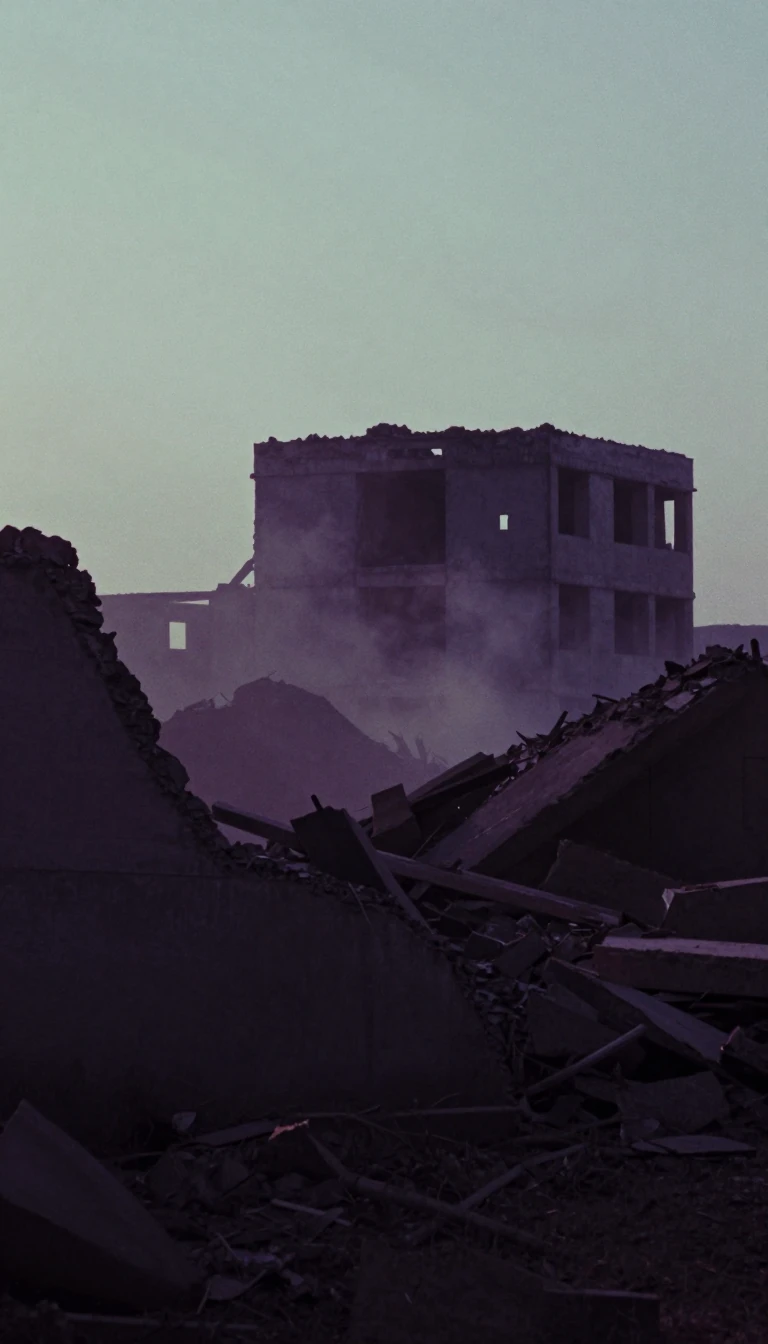
In short: While news reports frequently cite the Richter scale, it has been largely superseded by the moment magnitude scale. Developed in the 1970s, this modern method avoids the saturation issues that cause older scales to underestimate the true energy of massive seismic events, providing a more accurate global standard for earthquake measurement.
The original Richter scale, or local magnitude (ML), was devised in 1935 by Charles F. Richter and Beno Gutenberg to measure moderate earthquakes in southern California. It relied on the peak amplitude of seismic waves recorded by specific instruments within 600 km of an epicenter. Because it focused on a single wave measurement, it struggled to capture the full energy of larger events. As magnitudes exceeded 6.5, the values tended to cluster or saturate, failing to distinguish between the severity of truly massive earthquakes.
To address these limitations, Hiroo Kanamori and Thomas C. Hanks developed the moment magnitude scale (MW or M) in the late 1970s. Rather than measuring wave amplitude, this scale calculates the seismic moment—the total displacement of a fault across its entire surface multiplied by the force required to move it. This approach provides a direct link to the total energy released during a rupture, allowing scientists to accurately rank the largest earthquakes without the saturation problems that plagued earlier methods like the surface-wave magnitude scale.
Despite its technical superiority, the term 'Richter scale' persists in popular media as a catch-all for any logarithmic earthquake measurement. However, seismological authorities like the United States Geological Survey now rely on moment magnitude for reporting significant events. Because both systems use logarithmic scaling, they produce comparable results for smaller earthquakes, which explains why the distinction often goes unnoticed by the public. Yet, for great earthquakes, the difference is profound; for instance, the 1960 Chile earthquake was assigned a Richter magnitude of 8.6, while its moment magnitude was measured at 9.5, reflecting a far greater release of energy.
Understanding this shift is essential for grasping how geologists quantify the invisible forces shaping our planet. By moving from simple wave-height observations to complex mechanical models of fault displacement, seismology has gained the precision needed to assess the true destructive potential of major seismic events. This evolution from empirical observation to physics-based calculation marks a critical advancement in our ability to monitor and prepare for the Earth's most powerful geological phenomena.
Opens the Intellect+ feed with this card first. Swipe up for the next one.
Sources
- Summary by Intellect · source: Moment magnitude | Seismology, Earthquake Measurement & Scale | Britannica
- Also: Moment magnitude scale
To cite this card, link to https://intellectplus.co.uk/app/nature-moment-magnitude-scale.
How we source, check and correct cards: Editorial standards.
General information, not professional advice. Spotted an error? Flag the card or see corrections and complaints.
Intellect Plus is a visual educational discovery platform for exploring fascinating facts and ideas. Brain Food, Not Brain Rot. What is Intellect Plus?
Related
More in Geology · More in Nature · Latest · A–Z · All topics
