Why the musk deer is not actually a deer in the traditional sense
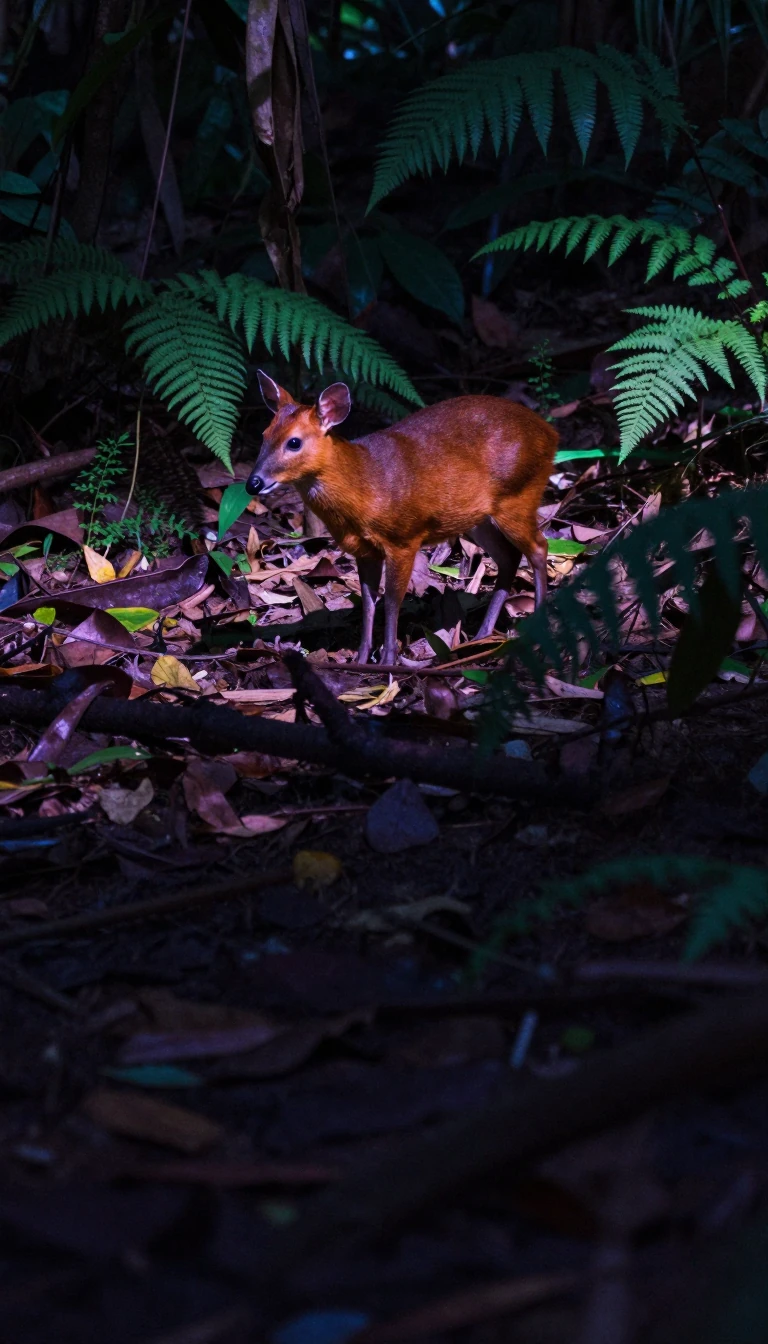
In short: Musk deer are small, shy creatures that defy standard deer classification. Lacking antlers, they sport saber-like tusks and possess a unique musk-producing organ. While they were once grouped with common deer, modern genetic analysis reveals they are more closely related to bovids like cattle and sheep than to caribou.
The family Moschidae represents a distinct lineage of even-toed ungulates. Unlike the Cervidae family, which includes moose, elk, and caribou, musk deer lack antlers, ossicones, or horns. Instead, males are defined by elongated upper canine teeth that protrude like tusks. These animals are modest in size, with the genus Moschus weighing only about 17 kilograms, or 37 pounds. Beyond their dental features, they are distinguished by the presence of a gall bladder and a specialized abdominal organ that produces musk, a substance historically harvested for the perfume and soap industries.
For years, scientists categorized musk deer as the closest relatives to true deer. However, this understanding shifted significantly in 2003. A phylogenetic study conducted by Alexandre Hassanin and his colleagues at the National Museum of Natural History in France utilized mitochondrial and nuclear DNA analysis to re-evaluate these evolutionary relationships. Their findings suggest that Moschidae and Bovidae—a group containing goats, sheep, and antelope—actually form a sister-clade to the Cervidae. This research indicates that the Cervidae lineage split from the combined Bovidae-Moschidae group approximately 27 to 28 million years ago.
The history of the Moschidae family is one of contraction. While they were once widespread across North America and Eurasia during the Miocene epoch, their diversity plummeted after that period. By the early Pleistocene, the family had dwindled to only the extant genus Moschus. Today, these animals are found in mountainous regions stretching from Siberia to the Himalayas. While some classifications still debate their exact placement, recent studies confirm that Micromeryx, Hispanomeryx, and Moschus are the only undisputed members of this ancient family, which has been documented in the fossil record for at least 18 million years.
Opens the Intellect+ feed with this card first. Swipe up for the next one.
Sources
- Summary by Intellect · source: Moschidae
- Also: Moschidae | mammal family | Britannica
To cite this card, link to https://intellectplus.co.uk/app/nature-moschidae.
How we source, check and correct cards: Editorial standards.
General information, not professional advice. Spotted an error? Flag the card or see corrections and complaints.
Intellect Plus is a visual educational discovery platform for exploring fascinating facts and ideas. Brain Food, Not Brain Rot. What is Intellect Plus?
Related
More in Vertebrates · More in Nature · Latest · A–Z · All topics
