Why these small, barking deer carry sharp tusks instead of relying on antlers alone.
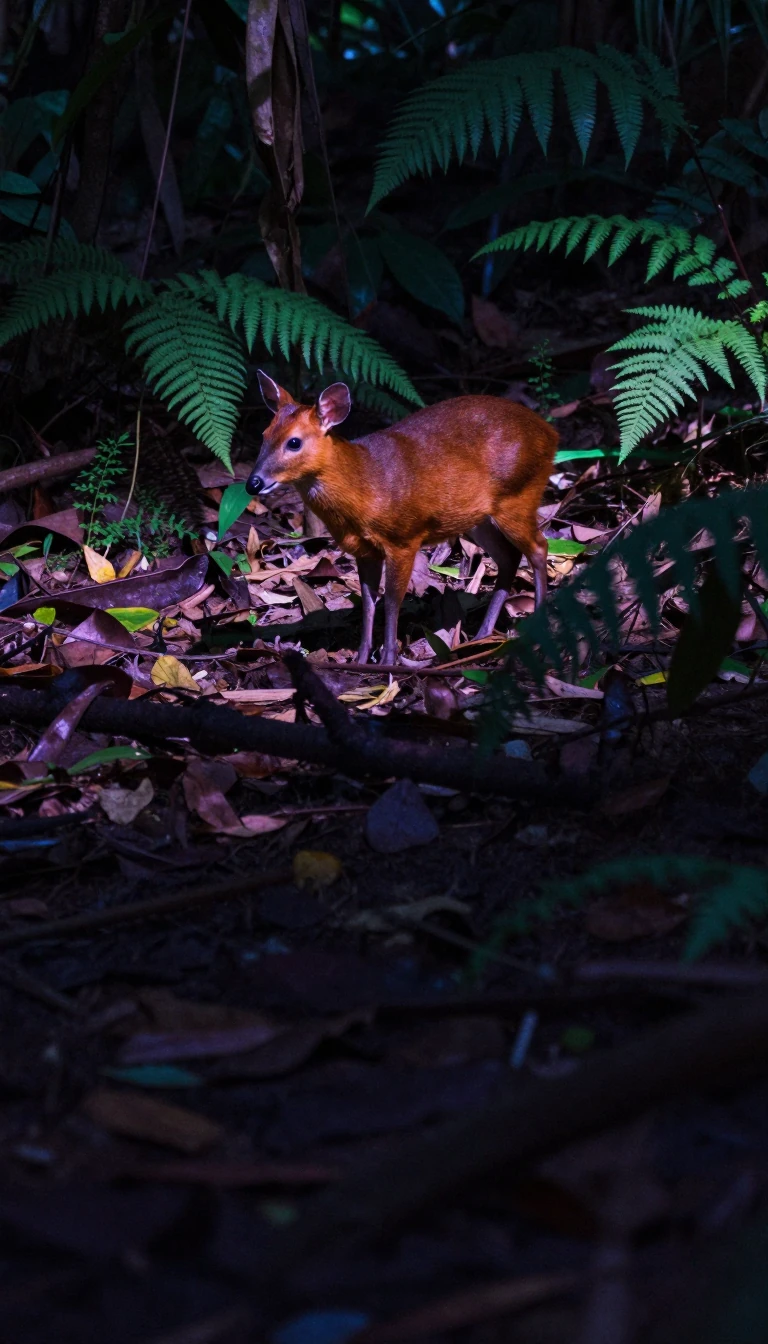
In short: Known as barking deer for their distinct alarm calls, muntjacs are solitary, nocturnal creatures native to Asian forests. Unlike most deer that rely solely on antlers for defense, these small ruminants possess sharp, protruding tusks used for territorial combat, a trait reflecting an ancient, primitive condition within the deer family.
Muntjacs belong to the genus Muntiacus, a group of about seven species of small- to medium-sized deer. While most modern deer species are defined by the presence of antlers in males, the muntjac retains a more ancestral morphology. In the primitive state of deer evolution, males were armed with long, sharp upper canines known as tusks, which served as primary weapons for slashing and stabbing during territorial disputes. While many deer species have evolved to favor larger, more complex antlers, the muntjac maintains a functional balance, utilizing both short antlers and these formidable tusks.
The biological necessity for these features is tied to the high metabolic demands of antler growth. Antlers are essentially bone horns that require significant minerals, protein, and energy to develop annually. Because these nutrients are difficult to source from coarse grasses, deer are highly specialized feeders that target high-protein, low-fiber plant matter like buds, fruit, and woody shoots. This nutritional requirement limits deer to productive habitats and drives their behavior, as they must constantly exploit disturbed ecosystems where such nutrient-rich vegetation thrives. The muntjac’s reliance on tusks for territorial defense may be an evolutionary strategy that complements their specific ecological niche.
Beyond their physical weaponry, muntjacs are noted for their solitary and nocturnal nature, often hiding in thick vegetation to avoid predators. Their evolutionary history is particularly fascinating to researchers due to extreme variations in their genetic makeup. Some species exhibit dramatic differences in chromosome numbers, making them a subject of intense interest in evolutionary biology. By occupying dense, sheltered environments and maintaining specialized feeding habits, these deer have successfully persisted as a distinct, ancient lineage within the broader Cervidae family, demonstrating a unique survival strategy that has allowed them to thrive across diverse Asian landscapes for millions of years.
Opens the Intellect+ feed with this card first. Swipe up for the next one.
Sources
- Summary by Intellect · source: Muntjac | Deer species, Asian forests, Bamboo forests | Britannica
- Also: Muntjac
To cite this card, link to https://intellectplus.co.uk/app/nature-muntjac.
How we source, check and correct cards: Editorial standards.
General information, not professional advice. Spotted an error? Flag the card or see corrections and complaints.
Intellect Plus is a visual educational discovery platform for exploring fascinating facts and ideas. Brain Food, Not Brain Rot. What is Intellect Plus?
Related
More in Vertebrates · More in Nature · Latest · A–Z · All topics
