Your brain doesn't see colors; it calculates the differences between them
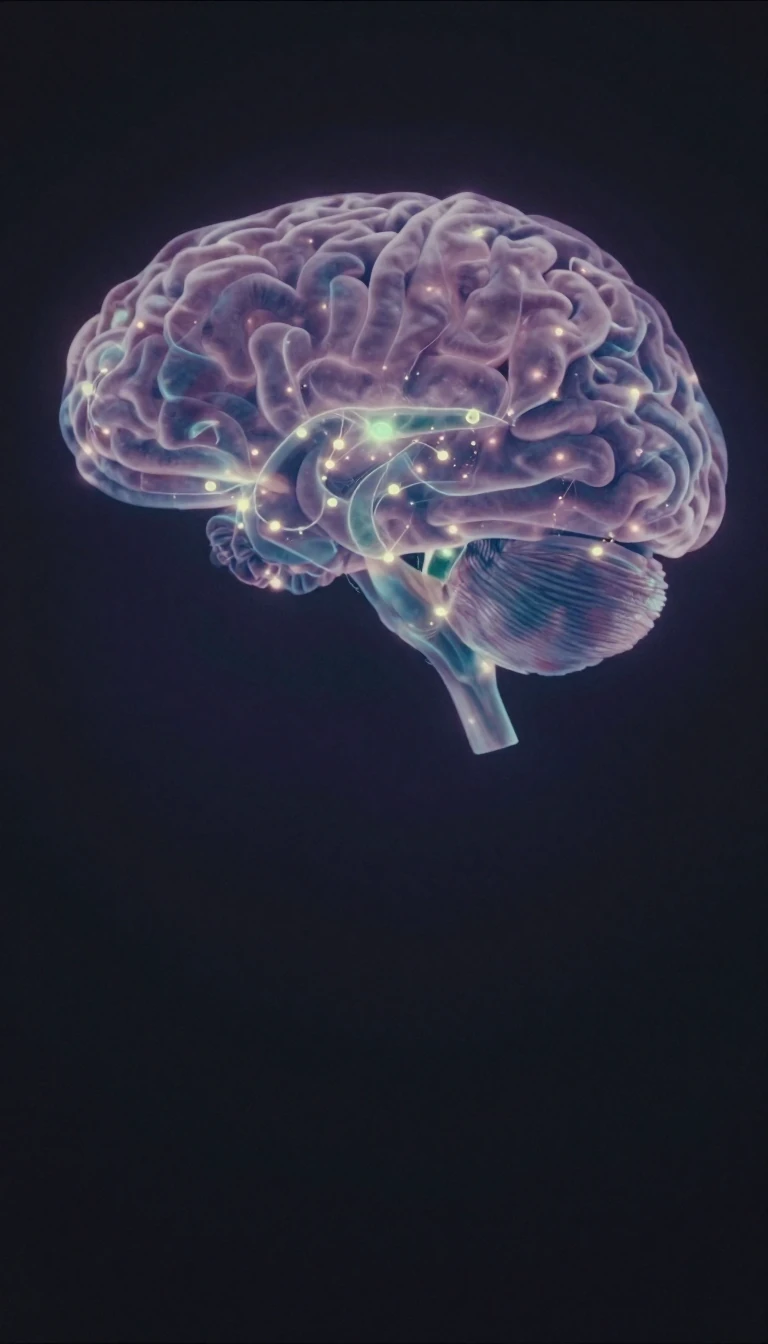
In short: When you see a vibrant red, your visual system isn't just registering a single signal. It is performing a high-speed subtraction. By processing information through antagonistic channels, your brain filters out noise to prioritize contrast, creating a sophisticated internal map of the world that favors clarity over raw data.
The human visual system operates on the 'opponent process' hypothesis. While we have three types of cone cells—L (long), M (middle), and S (short) wavelengths—the brain doesn't just read these as raw inputs. Instead, it compares them in three specific channels: L versus M (red–green), S versus L+M (blue–yellow), and a luminance channel (+ versus -). This mechanism is highly efficient; because the wavelengths these cones respond to overlap, recording the differences between them provides a wider dynamic range and sharper color contrast than recording each cone's individual response.
This physiological process is often confused with Ewald Hering's 19th-century 'Opponent Colors Theory.' Hering proposed that colors like red, green, blue, and yellow were 'unique hues' that could never be perceived simultaneously. However, modern science shows that these specific unique hues are not hardwired into our nervous system. While an individual's unique hues are consistent, they vary between people. Furthermore, the actual physiological 'poles' of the retinal neurons don't match Hering's colors; for instance, the neurons labeled 'blue–yellow' are actually most optimally tuned to purplish and lime-green.
The evidence for this neural architecture is found in the retina and the lateral geniculate nucleus (LGN) of the thalamus. In primates, different layers of the LGN handle these channels: parvocellular layers manage red–green opponency, while koniocellular layers handle blue–yellow. This system explains why complementary colors (like red and cyan) evoke strong afterimages and why they 'cancel out' to neutral gray. It is a fundamental survival mechanism that makes the visual world easier for the brain to navigate by emphasizing the most meaningful distinctions.
Interestingly, this isn't unique to humans. Most mammals, including mice and cats, possess these opponent channels. However, most mammals lack the L cone (which arose from a gene duplication in primates), meaning they still utilize the achromatic and blue–yellow channels to navigate their environments.
Opens the Intellect+ feed with this card first. Swipe up for the next one.
Sources
- Summary by Intellect · source: Opponent process
To cite this card, link to https://intellectplus.co.uk/app/nature-opponent-process.
How we source, check and correct cards: Editorial standards.
General information, not professional advice. Spotted an error? Flag the card or see corrections and complaints.
Intellect Plus is a visual educational discovery platform for exploring fascinating facts and ideas. Brain Food, Not Brain Rot. What is Intellect Plus?
Related
More in Vision · More in Nature · Latest · A–Z · All topics
