The Swabian Lindwurm: How a Misunderstood Dinosaur Redefined Our View of Ancient Life
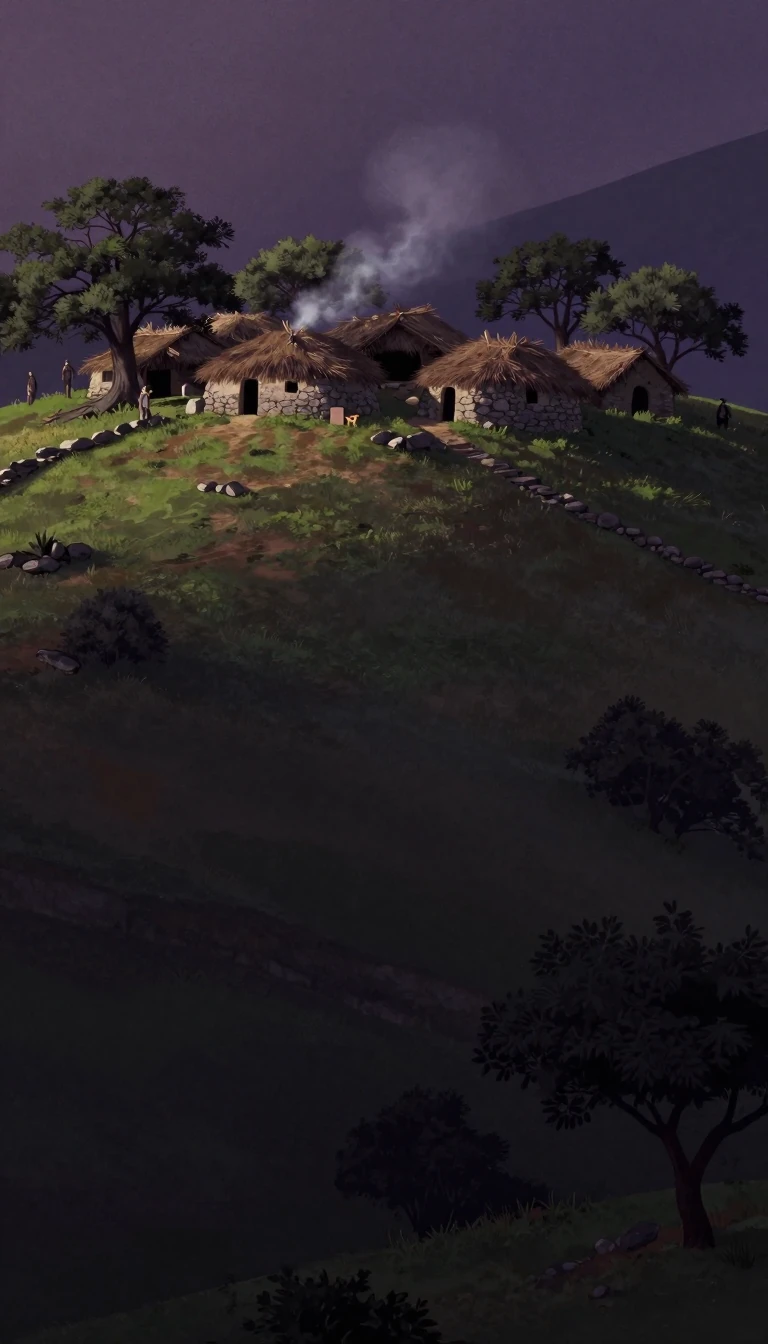
In short: Long dismissed as a clumsy, lizard-like creature, Plateosaurus was actually a sophisticated, obligate biped. Once shrouded in taxonomic chaos and conflicting reconstructions, this Late Triassic herbivore reveals how modern biomechanics and histology have transformed our understanding of how the first large dinosaurs lived, breathed, and moved across prehistoric Europe.
Discovered in 1834 by Johann Friedrich Engelhardt and formally described by Hermann von Meyer in 1837, Plateosaurus stands as one of the most significant finds in paleontological history. For decades, its identity was obscured by a 'chaotic tangle of names' and shifting interpretations. Early researchers, including Friedrich von Huene, frequently assigned new species or even genera to nearly every complete skeleton unearthed in German clay pits, such as those in Trossingen and Halberstadt. It was not until the late 20th century, particularly through the work of Markus Moser, that the taxonomy was systematically refined, leaving only three universally accepted species: P. trossingensis, P. longiceps, and P. gracilis.
The animal's posture was the subject of intense debate for over a century. Early theories ranged from sprawling, lizard-like locomotion to kangaroo-style hopping. However, a 2007 study by Bonnan and Senter proved that Plateosaurus was incapable of pronating its hands, effectively ruling out quadrupedal walking. With hind limbs roughly twice the length of its forelimbs and a center of mass positioned squarely over its hips, it is now recognized as an obligate biped. This cursorial adaptation allowed it to move efficiently, though it likely relied on high stride frequencies rather than the aerial, unsupported phases seen in modern running mammals.
Beyond its movement, Plateosaurus exhibited remarkable biological complexity. Histological analysis and the structure of its ribcage suggest it possessed an avian-style flow-through lung and was endothermic. Unlike many other dinosaurs, it displayed strong developmental plasticity, with adult lengths varying from 4.8 to 10 meters and weights ranging from 600 to 4,000 kilograms. While once thought to be a 'flat lizard'—a common mistranslation of its Greek-derived name—it is now understood as a robust, broad-boned herbivore that thrived across Europe between approximately 227 and 208.5 million years ago, serving as a critical link in the evolution of the massive sauropods that would dominate later eras.
Opens the Intellect+ feed with this card first. Swipe up for the next one.
Sources
- Summary by Intellect · source: Plateosaurus
- Also: www.britannica.com — Plateosaurus | Triassic, Herbivore, Reptile | Britannica
To cite this card, link to https://intellectplus.co.uk/app/nature-plateosaurus.
How we source, check and correct cards: Editorial standards.
General information, not professional advice. Spotted an error? Flag the card or see corrections and complaints.
Intellect Plus is a visual educational discovery platform for exploring fascinating facts and ideas. Brain Food, Not Brain Rot. What is Intellect Plus?
Related
More in Vertebrates · More in Nature · Latest · A–Z · All topics
