The Rüppell's vulture is the world's highest-flying bird, soaring at 37,000 feet.
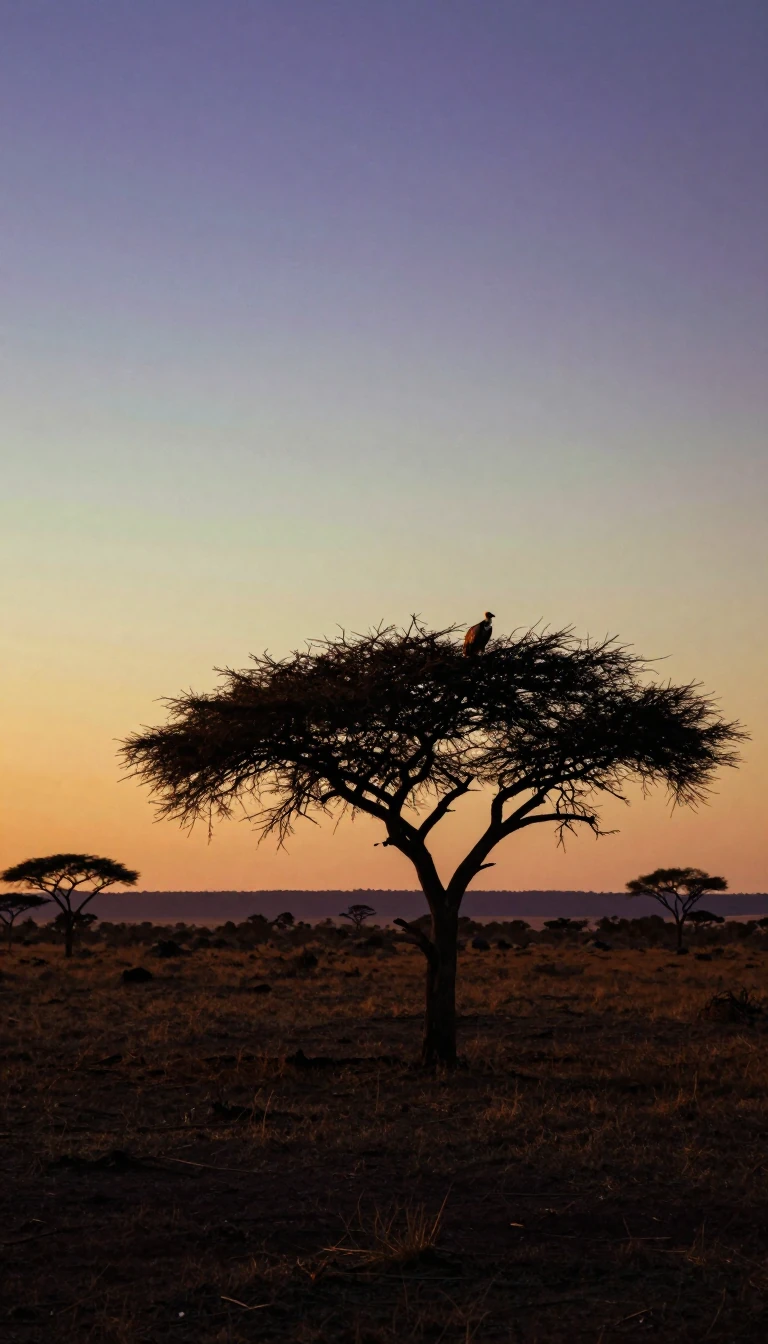
In short: At altitudes where temperatures plummet to minus 56 degrees Celsius, the Rüppell's vulture thrives. This large scavenger possesses a unique hemoglobin variant that allows it to extract oxygen from the thin, freezing air of the upper troposphere, a feat confirmed by a mid-air collision with an airplane at 11,300 meters.
Native to the Sahel and East Africa, the Rüppell's vulture is a master of extreme environments. While most birds would struggle in the upper troposphere, this species utilizes a specialized hemoglobin alphaD subunit. This protein has an exceptionally high affinity for oxygen, enabling the birds to function efficiently despite the low partial pressure found at altitudes as high as 11,300 meters. These vultures are not just high-altitude travelers; they are also endurance athletes, regularly cruising for six to seven hours a day and covering distances of over 100 kilometers in search of food.
As specialized carrion feeders, they possess remarkable physical adaptations for their diet. Their heads are featherless, preventing messes when they reach deep into carcasses, and their tongues are equipped with backward-pointing spikes to strip meat from bone. They are known to consume everything from soft tissues to hides and bones, often gorging until they are barely able to take flight. Despite their size and specialized tools, they remain social, often feeding in large groups alongside other Old World vultures.
Today, the species faces a precarious future, listed as Critically Endangered on the IUCN Red List. Their population, once estimated at 22,000 individuals, is in decline due to habitat loss, the destruction of nesting sites, and incidental poisoning. Because they identify food by sight, a single poisoned carcass—often intended for predators like lions—can kill hundreds of vultures at once. Furthermore, cultural beliefs regarding the birds' supposed clairvoyance have led to their use in traditional medicine, further accelerating their decline. Conservationists are now focusing on protecting key cliff-side nesting colonies in regions like Kenya and Tanzania to prevent the extinction of this remarkable high-altitude survivor.
Opens the Intellect+ feed with this card first. Swipe up for the next one.
Sources
- Summary by Intellect · source: Rüppell's vulture
To cite this card, link to https://intellectplus.co.uk/app/nature-r-ppell-s-vulture.
How we source, check and correct cards: Editorial standards.
General information, not professional advice. Spotted an error? Flag the card or see corrections and complaints.
Intellect Plus is a visual educational discovery platform for exploring fascinating facts and ideas. Brain Food, Not Brain Rot. What is Intellect Plus?
Related
More in Organisms · More in Nature · Latest · A–Z · All topics
