How a global powerhouse grew from a small core into a massive empire
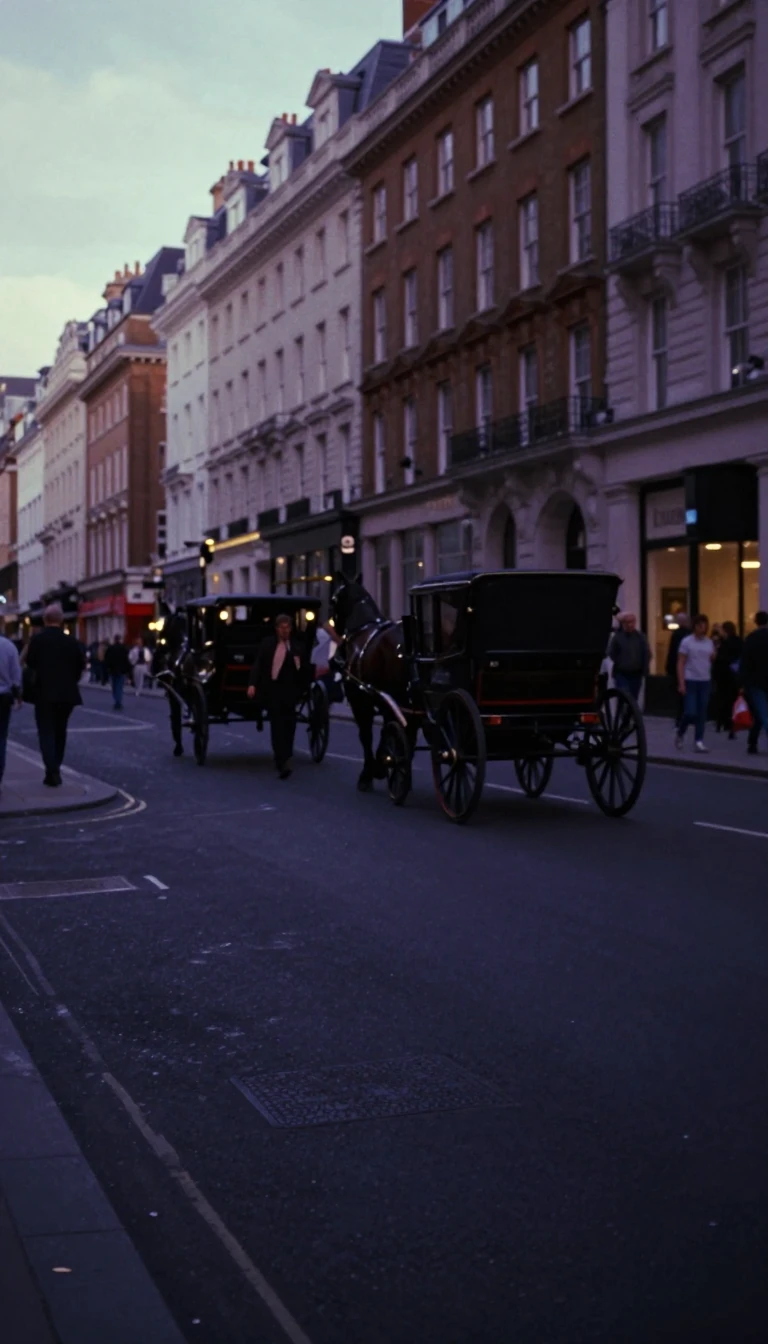
In short: By 1825, London had become the world's largest city, serving as the beating heart of international finance and trade. It was a place of staggering extremes, where immense imperial wealth coexisted with overcrowded slums, and where rapid technological leaps transformed the very landscape of the city.
The 19th century saw London undergo a radical transformation. At the start of the century, the urban core was relatively contained, bounded by Hyde Park to the west and Marylebone Road to the north. Yet, as inhabitants grew from more than 1 million in 1801 to 5.567 million by 1891, the urban area widened from 122 square miles in 1851 to 693 square miles by 1896.
This growth was fueled by London's status as a global trading hub and the capital of the British Empire. The city became a magnet for diverse populations: Irish immigrants, many fleeing the Great Famine (1845–1849), once made up about 20% of the population. Jewish communities settled in the East End, while Italian and Chinese populations established distinct neighborhoods, such as the first Chinatown in Limehouse.
Infrastructure kept pace with this expansion. The era saw the construction of the London Underground, extensive railway networks, and a modern sewer system. The Port of London also evolved significantly; to handle increasing shipping volumes, massive dock systems like the West India Docks and the technologically advanced Royal Victoria Dock were built. By 1880, the port was receiving 8 million tons of goods annually, a ten-fold increase from the 800,000 tons recorded in 1800.
However, this prosperity was not universal. While the 1851 Great Exhibition at the Crystal Palace showcased Britain's imperial dominance, millions of residents lived in unsanitary, overcrowded slums. This social divide was a defining characteristic of the Victorian era, immortalized in the literature of authors like Charles Dickens.
Opens the Intellect+ feed with this card first. Swipe up for the next one.
Sources
- Summary by Intellect · source: 19th-century London
- Also: Wikidata — 19th century London · CC0
- Also: Wikidata — 19th century London dust-yards: a case study in closed-loop resource efficiency · CC0
To cite this card, link to https://intellectplus.co.uk/app/places-19th-century-london.
How we source, check and correct cards: Editorial standards.
General information, not professional advice. Spotted an error? Flag the card or see corrections and complaints.
Intellect Plus is a visual educational discovery platform for exploring fascinating facts and ideas. Brain Food, Not Brain Rot. What is Intellect Plus?
Related
More in Historical cities, towns and archaeological sites · More in Countries & Cities · Latest · A–Z · All topics
