Angkor was the world's largest pre-industrial city, sustained by a massive hydraulic network.
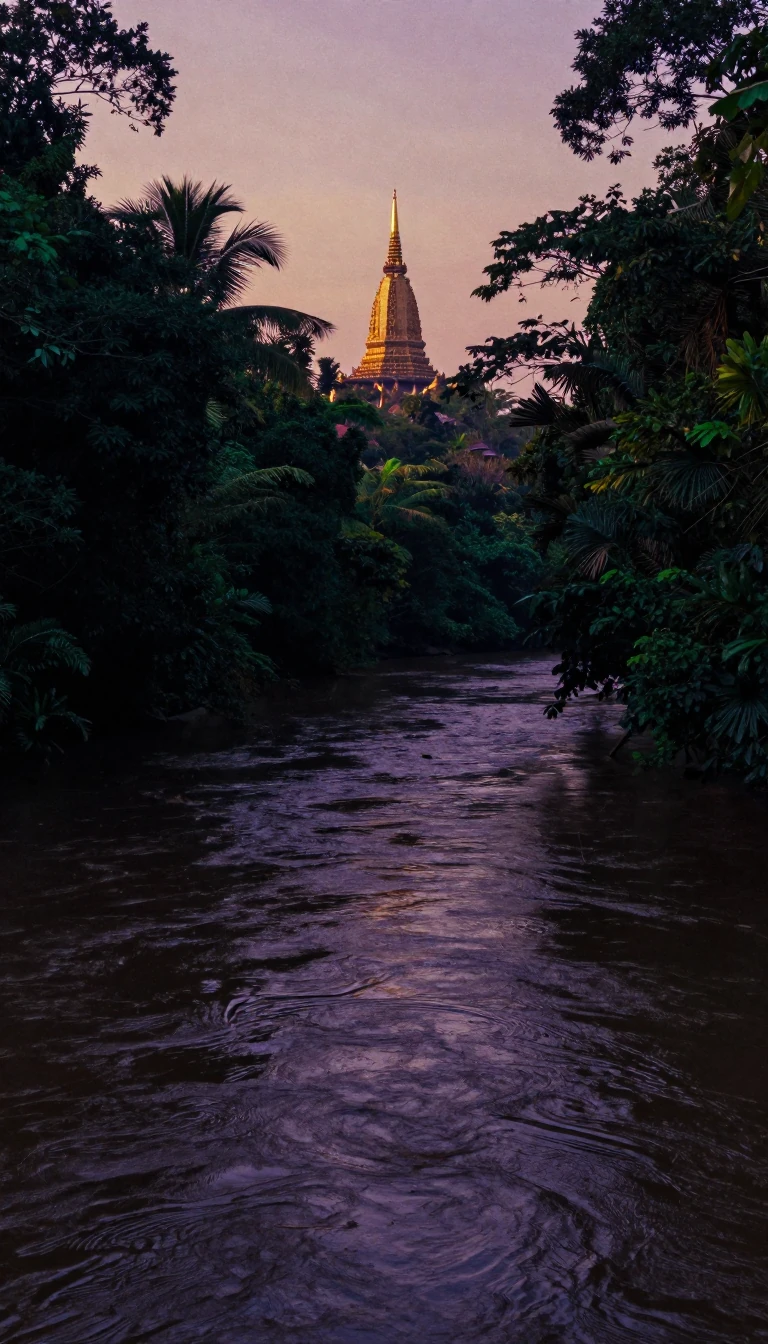
In short: Deep in the Cambodian forest lies Angkor, the former capital of the Khmer Empire. Once home to nearly a million people, this sprawling urban center functioned as a sophisticated hydraulic city. Its survival depended on an intricate system of reservoirs and canals that managed water for both irrigation and religious symbolism.
From the 9th to the 15th century, Angkor served as the royal heart of the Khmer Empire. At its peak, the city was a marvel of engineering, featuring an urban sprawl covering at least 1,000 square kilometers. The site was designed as a symbolic universe, with temple architecture mirroring Hindu cosmology. Central pyramid temples represented Mount Meru, the mythical home of the gods, while surrounding moats and reservoirs represented the cosmic oceans.
The city's lifeblood was its water management system. By capturing and storing rainwater, the Khmer rulers supported a population estimated between 750,000 and 1,000,000 people. This infrastructure was essential for rice cultivation, which acted as the empire's primary currency. However, this reliance on water may have also contributed to the city's eventual decline. Scholars suggest that environmental stressors, such as deforestation leading to sediment buildup and the failure of the water works during weak monsoon seasons, may have forced the population to relocate toward Phnom Penh.
Following the sacking of the city by the Tai state of Ayutthaya in 1431, Angkor was largely abandoned to the jungle. While it remained a site of pilgrimage for Buddhists, its grand monuments were reclaimed by nature until their rediscovery. In 1992, UNESCO designated the area a World Heritage site. It was briefly listed as endangered due to looting and land mines, but international cooperation successfully restored the site, allowing it to flourish once again as a cultural landmark.
Opens the Intellect+ feed with this card first. Swipe up for the next one.
Sources
- Summary by Intellect · source: Angkor | History, Location, & Facts | Britannica
- Also: A Guide to Angkor Wat, Cambodia
- Also: Angkor
To cite this card, link to https://intellectplus.co.uk/app/places-angkor.
How we source, check and correct cards: Editorial standards.
General information, not professional advice. Spotted an error? Flag the card or see corrections and complaints.
Intellect Plus is a visual educational discovery platform for exploring fascinating facts and ideas. Brain Food, Not Brain Rot. What is Intellect Plus?
Related
More in Historical cities, towns and archaeological sites · More in Countries & Cities · Latest · A–Z · All topics
