Afro-Eurasia is the largest contiguous landmass on Earth, holding 86% of the human population.
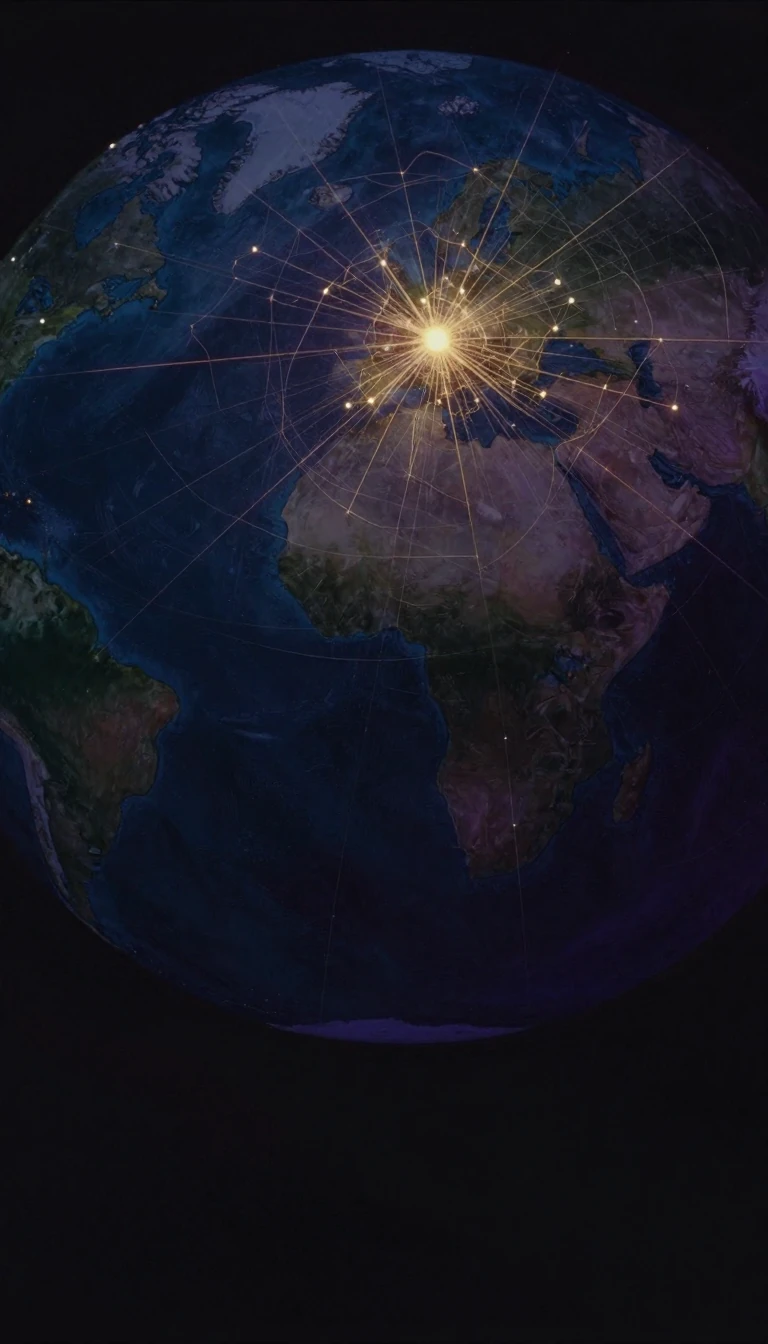
In short: Spanning over 85 million square kilometers, Afro-Eurasia is more than just a collection of continents. It is a dynamic, shifting supercontinent-in-waiting that contains the vast majority of the world's land and people. From its ancient geological roots to its future tectonic collisions, this landmass defines our human history.
Afro-Eurasia, often called the Old World, is a massive contiguous landmass comprising Africa, Asia, and Europe. It accounts for 57% of the world's total land area and is home to approximately 6.7 billion people. While often divided into separate continents for convenience, it is geologically a single, interconnected entity that serves as the largest part of the ongoing supercontinent cycle.
The geological history of this landmass is ancient and violent. Its oldest components, such as the Kaapvaal craton, date back 3 billion years to the early supercontinent Vaalbara. Over millions of years, tectonic plates have drifted, collided, and separated. The Indian plate's impact with Eurasia 50 million years ago birthed the Himalayas, while the Arabian plate's collision with the Iranian plate 19 to 12 million years ago formed the Alborz and Zagros mountain chains.
The Mediterranean Sea has been a focal point of this tectonic instability. Less than 6 million years ago, the closure of the Betic corridor caused the Messinian salinity crisis, nearly drying out the entire basin. It was only refilled 5.33 million years ago by the Zanclean Flood. Looking ahead, paleogeologist Ronald Blakey suggests that Africa will continue its northward drift, likely closing the Strait of Gibraltar again and evaporating the Mediterranean within the next 15 to 100 million years.
While the current geography feels permanent, it is merely a snapshot in time. Whether the future brings the formation of Novopangaea, Amasia, or Pangaea Proxima, the landmass will continue to evolve. Today, the complex boundaries of the African, Eurasian, and various smaller plates—like the Somali and Arabian plates—continue to shape the physical reality of the world's most populous region.
Opens the Intellect+ feed with this card first. Swipe up for the next one.
Sources
- Summary by Intellect · source: Afro-Eurasia
- Also: Wikidata — Afro-Eurasia · CC0
To cite this card, link to https://intellectplus.co.uk/app/places-afro-eurasia.
How we source, check and correct cards: Editorial standards.
General information, not professional advice. Spotted an error? Flag the card or see corrections and complaints.
Intellect Plus is a visual educational discovery platform for exploring fascinating facts and ideas. Brain Food, Not Brain Rot. What is Intellect Plus?
Related
More in Basics · More in Countries & Cities · Latest · A–Z · All topics
