Why is the world's most remote island a Norwegian nature reserve?
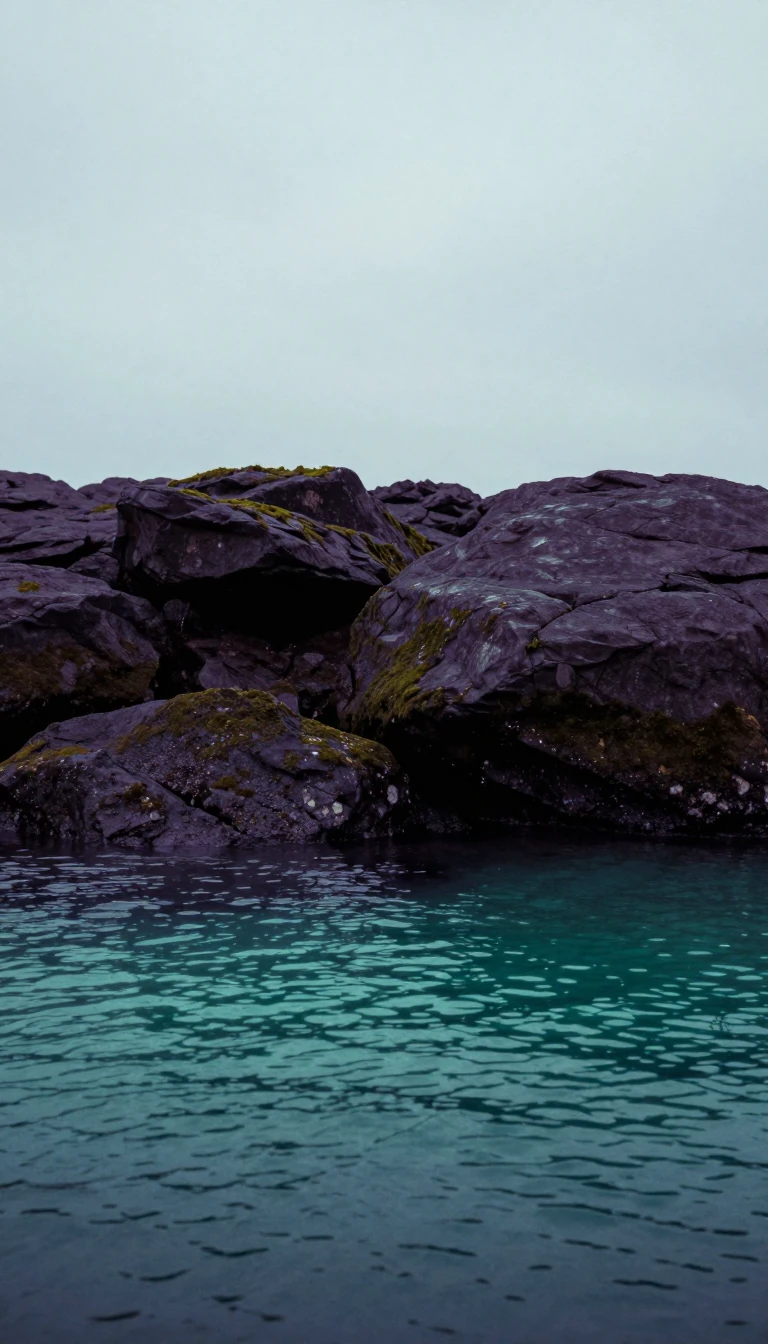
In short: Bouvet Island, a volcanic speck in the South Atlantic, sits thousands of kilometers from any continent. Covered 93 percent by glaciers and nearly impossible to land upon, this uninhabited territory remains a mysterious Norwegian dependency, home to abandoned lifeboats, secret nuclear test rumors, and vast colonies of seabirds.
Located at the southern end of the Mid-Atlantic Ridge, Bouvet Island is widely considered the most remote island on Earth. It was first spotted in 1739 by French explorer Jean-Baptiste Charles Bouvet de Lozier, who failed to land or confirm its status as an island. For nearly two centuries, it remained a phantom-like destination, with various explorers miscalculating its coordinates or claiming sightings of nearby islands that never existed. It was not until the 1927 Norvegia expedition that Norway successfully landed, claimed the territory, and established it as a dependency by 1930.
The island’s geography is as hostile as its history is complex. Measuring 49 square kilometers, it is dominated by an ice-filled volcanic crater and steep, treacherous coastlines. The only accessible landing point, Nyrøysa, was formed by a rockslide in the late 1950s. This site has hosted various research stations, including a sophisticated modular base installed in 2012. Despite its isolation, the island has been the site of bizarre incidents, such as the 1964 discovery of an abandoned lifeboat and the 1979 Vela incident, where a satellite detected a mysterious double flash suspected to be a joint nuclear test.
Today, the island is a protected nature reserve, serving as a critical breeding ground for macaroni, chinstrap, and Adélie penguins, alongside thousands of southern fulmars and various seal species. While Norway manages the island from Oslo, it remains largely uninhabited, save for the occasional scientific or amateur radio expedition. Though it holds its own country code top-level domain, .bv, the domain remains unused, reflecting the island's status as a place that exists more as a scientific frontier than a human settlement.
Opens the Intellect+ feed with this card first. Swipe up for the next one.
Sources
- Summary by Intellect · source: Bouvet Island
- Also: Wikidata — Bouvet Island · CC0
- Also: www.britannica.com — Bouvet Island | Map, History, & Facts | Britannica
- Also: NASA Science — Bouvet Island, South Atlantic Ocean - NASA Science
- Also: Wikidata — Bouvet Island marine ecoregion · CC0
To cite this card, link to https://intellectplus.co.uk/app/places-bouvet-island.
How we source, check and correct cards: Editorial standards.
General information, not professional advice. Spotted an error? Flag the card or see corrections and complaints.
Intellect Plus is a visual educational discovery platform for exploring fascinating facts and ideas. Brain Food, Not Brain Rot. What is Intellect Plus?
Related
More in Basics · More in Countries & Cities · Latest · A–Z · All topics
